
Border-country legends
Mucklestone
A small Staffordshire village where a historic church with a medieval tower, a blacksmith's anvil and the story of a fleeing queen lead into battlefield and prehistoric country.
- Best for
- Church history, battlefield memory and standing stones
- Give it
- Editorial estimate: a focused half-day with nearby stops
- Don't miss
- Kempe glass and Skelhorn's anvil at St Mary's
The Fox verdict
A tiny village with an unusually long memory
Mucklestone rewards a deliberate detour, with St Mary's as the starting point for stories stretching from Domesday to Blore Heath.
The church brings together the medieval tower, Charles Eamer Kempe glass and the legend of William Skelhorn's reversed horseshoes. Nearby, Blore Heath's battlefield landscape and the Devil's Ring and Finger widen the story to the Wars of the Roses and prehistory.
Where to go
Places in Mucklestone
Every place below is checked against a published source, listed with what it is and how long to give it.
Local signatures
3 placesSt Mary's Church
St Mary's has a mid-14th-century west tower and churchyard anvil; its interior contains Kempe stained glass and a west window commemorating Blore Heath.
- Visit length
- Editorial estimate: Allow around 45 minutes
- Locality
- Mucklestone
The Devil's Ring and Finger
The scheduled Devil's Ring and Finger stand beside a field boundary. One is grooved, the other pierced by a large hole; a Neolithic date is likely, though a Bronze Age date is possible.
- Visit length
- Editorial estimate: Allow around 30 minutes
- Locality
- Oakley Hall park edge
Fordhall Organic Farm
Visit England's first community-owned farm, saved from development by a national campaign in 2006.
- Visit length
- Editorial estimate: Allow around 75 minutes
- Locality
- Near Market Drayton
Food & drink
1 placeMarket Drayton Market
Browse Market Drayton's market, then explore the independent shops and cafés along its old streets.
- Visit length
- Editorial estimate: Allow around 1 hour
- Locality
- Market Drayton
Walks & outdoors
1 placeDorothy Clive Garden
Explore a twelve-acre garden built around a former sandstone quarry and begun in 1940 by Colonel Harry Clive for his wife Dorothy.
- Visit length
- Editorial estimate: Allow around 2 hours
- Locality
- Willoughbridge
History & heritage
1 placeAudley's Cross and Blore Heath
Walk the public footpaths around Blore Heath battlefield; Audley's Cross marks the reputed place where Lord Audley was killed and can be seen at a distance from footpaths south of the memorial in winter, but the cross itself cannot be reached.
- Visit length
- Editorial estimate: Allow around 45 minutes
- Locality
- Blore Heath
- Access
- Use the public footpaths and the small lane from Blore to the A53 to explore the battlefield. The A53 is unsuitable for walking or parking; from footpaths south of the memorial, Audley's Cross can be seen at a distance in winter but cannot be reached.
No places match this filter. Choose All places to reset the list.
Three ways to explore Mucklestone
Signature outings
Blore Heath in stained glass
St Mary's west window commemorates Blore Heath; it was given by Lady Alice Chetwode among the church's Kempe stained glass.
A garden made for Dorothy
Explore the twelve-acre garden Colonel Harry Clive began in a former sandstone quarry for his wife Dorothy.
Three eras in Market Drayton
After browsing the market, follow Market Drayton's old streets to spot Tudor, Georgian and Victorian buildings.
The village story
Mucklestone Village Guide
An anvil, a medieval tower and a queen's escape story open onto the old border country around Mucklestone.
The Anvil at the Border
In Mucklestone's churchyard stands an anvil, worn smooth and kept there as a memorial. It's said to have belonged to William Skelhorn, the village blacksmith, whose forge once stood a short walk away on a site now marked only by a plaque.
Mucklestone sits in western Staffordshire, close to the Shropshire border and surrounded by farming country. The village is a natural place to begin a visit.
A Village Without a High Street
For shops, cafés and a market, head to nearby Market Drayton. The old streets offer an easy companion stop to Mucklestone's countryside.
St Mary's mid-14th-century west tower is the oldest part still standing: three stages of sandstone with angle buttresses, reticulated tracery, a gargoyle and an embattled parapet with corner pinnacles. The rest was rebuilt in 1790 and again in 1883 by Lynam and Rickman of Stoke-on-Trent. Most of the stained glass is by Charles Eamer Kempe; the west window, given by Lady Alice Chetwode, commemorates the battle.
Margaret's Escape Story
The west window commemorates the Battle of Blore Heath on 23 September 1459. The fighting on the heath the A53 now crosses ended in a Lancastrian defeat, and local tradition holds that Queen Margaret watched from the tower. The story says that she then had the blacksmith William Skelhorn reverse her horse's shoes so pursuers would follow the hoofprints the wrong way. A plaque across from the church records the tale.
The plaque was installed by a 19th-century parish clerk whose claimed ancestor was Skelhorn. The anvil in the churchyard also keeps the village's escape story in view.
From Domesday to Blore Heath
The Domesday Book is blunter. In 1086 Mucklestone had three villagers, one priest, three ploughlands and a single working plough team, and was worth five shillings a year to its lord.
Public footpaths cross the battlefield, and Audley's Cross, which marks the reputed place where Lord Audley was killed, can be seen at a distance in winter from footpaths south of the memorial but not reached. West of Mucklestone stand the Devil's Ring and Finger, two prehistoric stones at a field boundary; the Finger is holed and the Ring is grooved. Oakley Hall, a Georgian house built in 1710, stayed with the Chetwode family — lords of the manor since around the 13th century — until they sold up in 1919.
Gardens, Roads and Old Stones
There's no railway station nearer than Wrenbury, nine or ten miles off on the Welsh Marches line; the 64 bus serves nearby Loggerheads and connects the market town with Shrewsbury and Hanley. Dorothy Clive Garden at Willoughbridge, twelve acres built into an old quarry and started in 1940 by Colonel Harry Clive for his wife Dorothy, lies within what was once Mucklestone's parish boundary.
One stone has a hole large enough for a person to pass through. What the pair once formed is uncertain: they may have belonged to a stone alignment, circle or chambered tomb.
Stay around Staffordshire
Make a longer stay of it
Travel Fox holiday homes around Staffordshire, linked directly to their property pages.
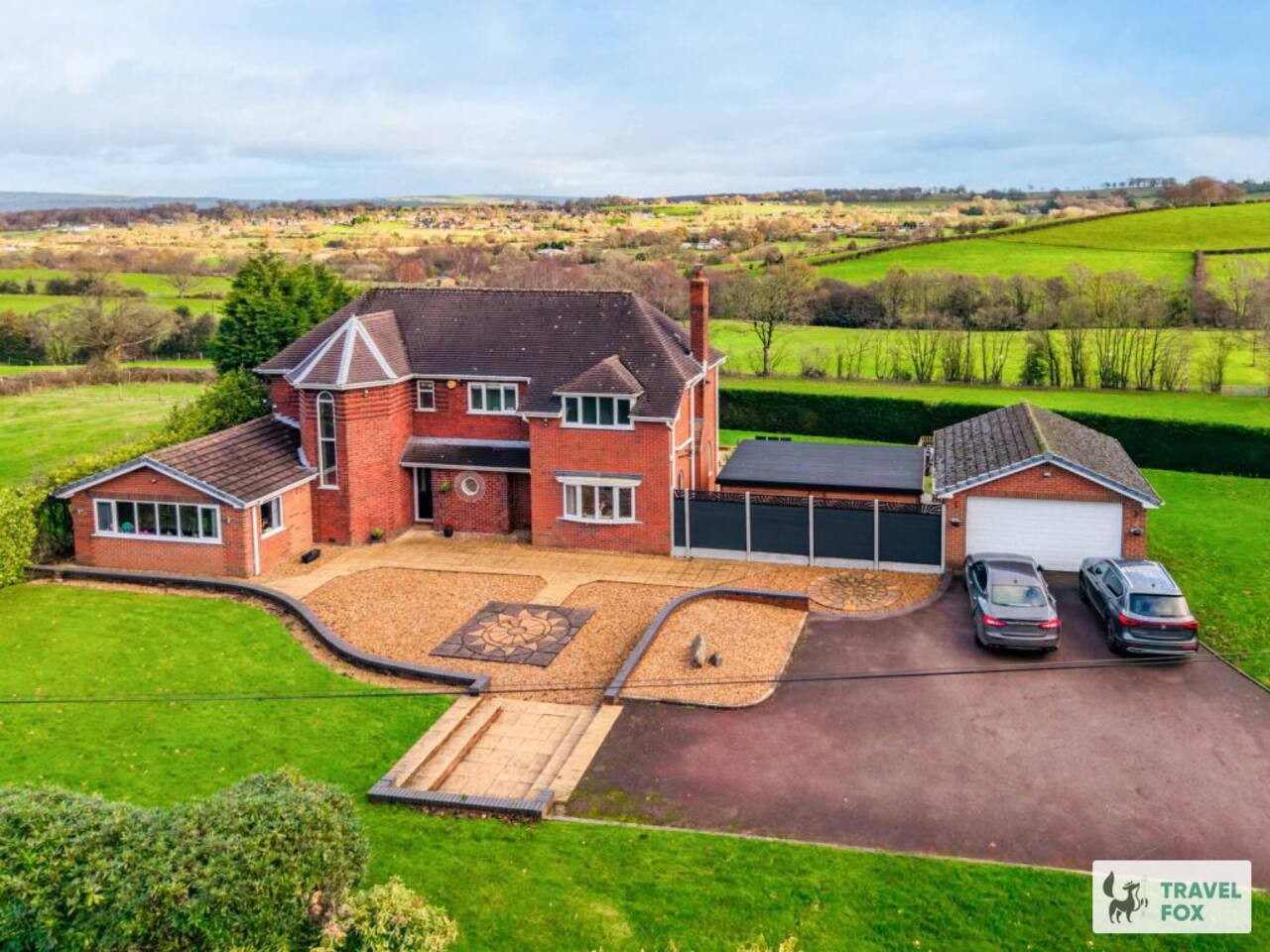
Cheddleton
Greenways House - Parking, Pool Table and Garden!
- Sleeps 10
- 4 bedrooms
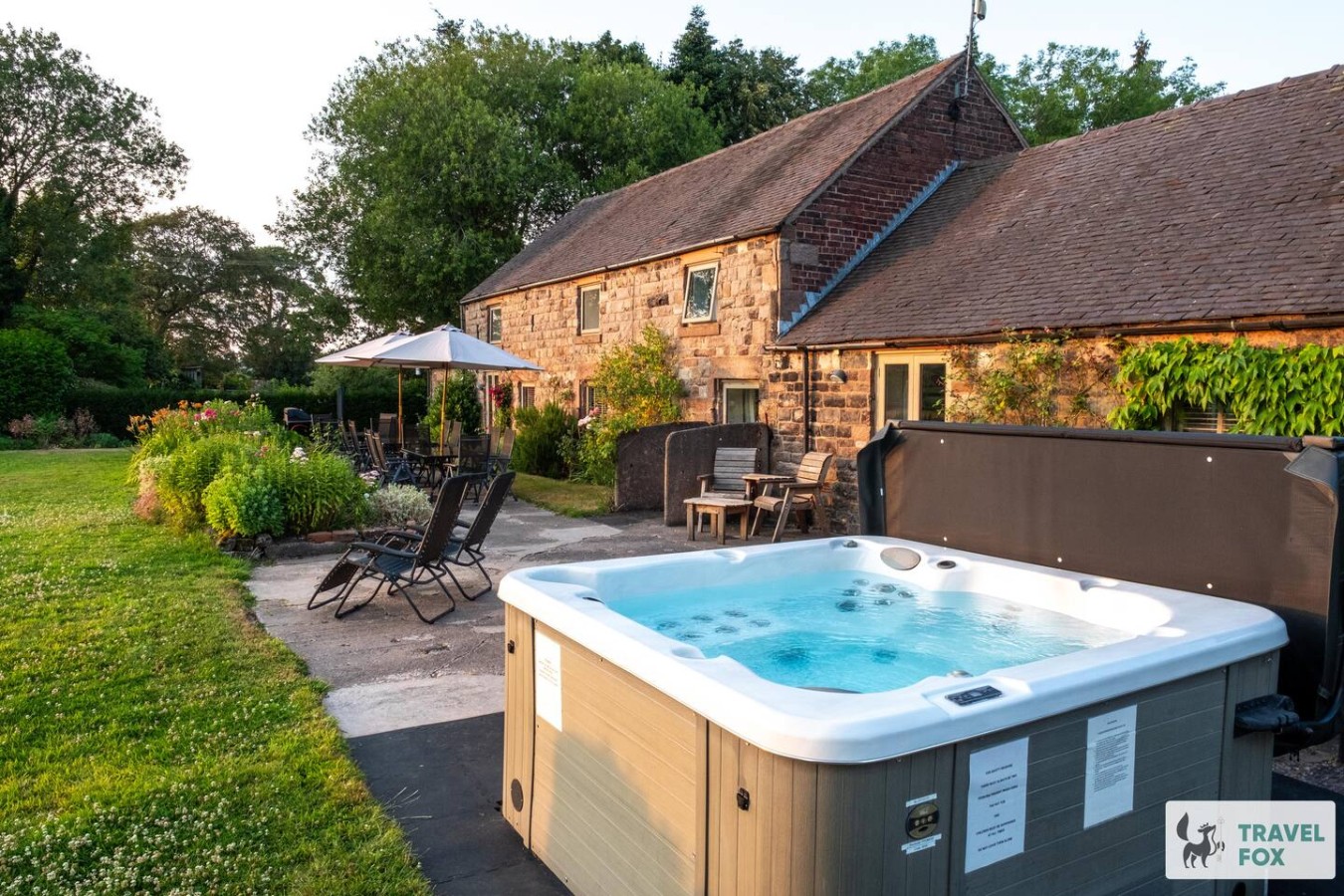
Cheddleton
Lee House Cottage + Annexe
- Sleeps 19
- 8 bedrooms

Leek
Silkwood House | Boutique 4 Bed nr. Peak District
- Sleeps 8
- 4 bedrooms
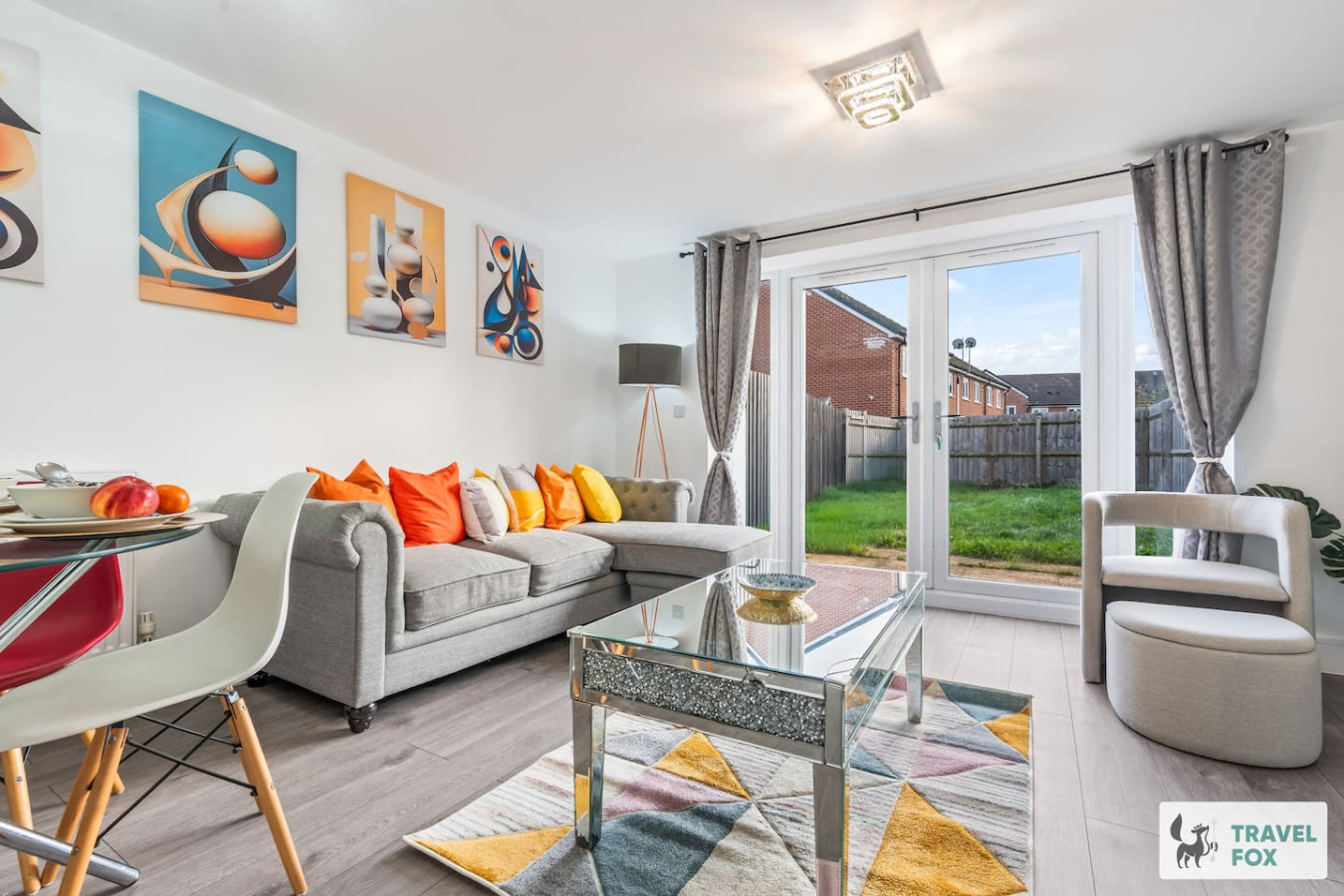
Stoke-on-Trent
Heather's House
- Sleeps 6
- 2 bedrooms
For homeowners
Own a holiday home near Mucklestone?
We manage holiday lets across Staffordshire from 12% commission, charged after cleaning costs, with no lock-in. A co-founder visits before you decide.
Holiday let management in Staffordshire →
A guide with a point of view
Written from research. Edited for real journeys.
Use the Official site links for live practical details, then use this guide for context, ideas and room to explore.
Sources
Every place on this page is checked against a published source. Each entry links the record we used and names who publishes it.
- St Mary's Church — historicengland.org.uk statutory register or public authority record not machine-readable; publisher restricts automated access
- Audley's Cross and Blore Heath — historicengland.org.uk statutory register or public authority record not machine-readable; publisher restricts automated access
- The Devil's Ring and Finger — historicengland.org.uk statutory register or public authority record not machine-readable; publisher restricts automated access
- Dorothy Clive Garden — dorothyclivegarden.co.uk operator, sector body or destination organisation
- Fordhall Organic Farm — fordhallfarm.com operator, sector body or destination organisation
- Market Drayton Market — next.shropshire.gov.uk statutory register or public authority