

Canal water and Tudor stone
Tixall
A small Staffordshire village shaped by Tixall Wide, an Elizabethan gatehouse and paths towards Shugborough.
- Best for
- Canal walking and layered local history
- Give it
- A towpath walk with time for Tixall's landmarks
- Don't miss
- The gatehouse view across Tixall Wide
Photo: Roger Kidd · CC BY-SA 2.0 · cropped
The Fox verdict
A small village with an unusually big historic view
Tixall pairs a broad, lake-like canal landscape with an Elizabethan survivor and an easy link into the Shugborough and Great Haywood area.
Come for the towpath: Tixall Wide, the gatehouse across the water and the Church of St John the Baptist give a compact village visit several distinct layers. The nearby Great Haywood circular walk, Canalside Farm and Shugborough Estate make it possible to extend that quiet core without padding the day with distant attractions.
Where to go
Places in Tixall
Every place below is checked against a published source, listed with what it is and how long to give it.
Local signatures
3 placesGreat Haywood Circular Walk
The Canal & River Trust lists this Great Haywood circular as a Wellbeing Walk, with a suggested duration of about two and a quarter hours.
- Visit length
- Editorial estimate: Allow around 2¼ hours for the full circular walk
- Locality
- Great Haywood
Canalside Farm
This family-run canal-side farm combines a shop and café with pick-your-own fruit and pumpkins, making it the most useful nearby food and family stop described in the source.
- Visit length
- Editorial estimate: Allow around 75 minutes for the shop or café, longer when using seasonal pick-your-own
- Locality
- Great Haywood
- Access
- Pick-your-own fruit and pumpkins are seasonal.
Shugborough Estate
The National Trust estate has been the seat of the Anson family since 1624. Its landscaped park and hall provide the substantial nearby heritage visit that connects naturally with Tixall's canal walks.
- Visit length
- Editorial estimate: Allow around 3 hours for a focused estate visit
- Locality
- Shugborough
Walks & outdoors
1 place
Tixall Wide
This unusually broad canal stretch was created after Thomas Clifford required the waterway to resemble a lake from Tixall Hall. The hall has gone, but the open water and gatehouse view remain the village's defining landscape.
- Visit length
- Editorial estimate: Allow around 45 minutes for a waterside pause and short towpath section
- Locality
- Staffordshire & Worcestershire Canal at Tixall
History & heritage
3 placesTixall Gatehouse
The Grade I gatehouse is the sole survivor of Tixall Hall. Built around 1580, associated with Mary, Queen of Scots' captivity and restored by the Landmark Trust, it is now bookable accommodation sleeping eight.
- Visit length
- Editorial estimate: Allow around 30 minutes for the towpath view; overnight access is by booking
- Locality
- Tixall
- Access
- The restored building operates as a Landmark Trust holiday let.

Church of St John the Baptist
The Grade II church was built in 1848–49 on a site with a much older chapel history. Local sandstone, a Staffordshire blue-tile roof, Minton floor tiles and nineteenth-century stained glass give the small building unusual detail.
- Visit length
- Editorial estimate: Allow around 30 minutes for the church and churchyard
- Locality
- Tixall
Tixall Obelisk
A Grade II sandstone monument associated with Thomas Clifford, the obelisk marks the road junction and carries a historic Stafford mileage inscription.
- Visit length
- Editorial estimate: Allow around 10 minutes for this compact roadside landmark
- Locality
- Tixall road junction
No places match this filter. Choose All places to reset the list.
Three ways to explore Tixall
Signature outings
Frame the gatehouse across the water
Tixall Hall disappeared in 1927, but its Elizabethan gatehouse still commands the view across Tixall Wide.
Find the canal that became a lake
The canal opens into a broad sheet of water because Thomas Clifford required it to resemble a lake from his hall.
Look beyond the church's small scale
Local sandstone, blue roof tiles, Minton floor tiles and stained glass reward a closer look at Tixall's parish church.
The village story
Tixall Village Guide
Water, stone and long layers of history meet in a quiet Staffordshire village.
Gatehouse Views and Nearby Food
Tixall Gatehouse stands across the water at Tixall Wide, rows of Doric and Corinthian pillars, oriel windows catching the light, seashells and knights and angels carved into the stone.
There's no pub in Tixall itself. The Wolseley Arms at Wolseley Bridge, toward Rugeley, is about 3.1 miles from Tixall in a straight line; the road journey is longer. This coaching inn was once known as The Roebuck, where more than a hundred horses were stabled for long-distance changes. Great Haywood, to the east, has its own pubs and food, plus Canalside Farm, a family-run farm shop and café on the Trent and Mersey Canal with pick-your-own fruit in season and pumpkins in autumn.
Canal Walks and the Parish Church
Walking is the main occupation here. The Shugborough and Staffs and Worcs Canal Walk runs about 4.3 miles from Milford Common, along both canal towpaths, past Tixall Lock and out onto Tixall Wide itself, with a view of the gatehouse across the water at the Wide. There's a longer circular route of around 7.5 miles over the Satnall Hills, and the Canal & River Trust's Great Haywood Circular "Wellbeing Walk" takes a gentler two and a quarter hours. Tixall and neighbouring Ingestre both sit inside the Cannock Chase Area of Outstanding Natural Beauty.
The Church of St John the Baptist, Grade II, was built in 1848–49 at the expense of the Hon. John Chetwynd Talbot, replacing a Georgian church on a site that had held a chapel since the 12th century. Built of local sandstone with a blue-tile roof and Minton floor tiles, it was originally meant to house Talbot's private mausoleum. The oldest grave in the churchyard is dated 1627 — older than the building it sits beside.
Water, Hall and Royal Captivity
Tixall Wide exists because Thomas Clifford, who owned Tixall Hall when the canal was dug in 1771, agreed to let it cross his land only if it was widened "to look like a lake from the house." The Hall is long gone, demolished in 1927, but the lake his vanity requested is still there — one of the most distinctive spots on the whole canal, and a beloved boaters' landmark.
Tixall Hall was built around 1555 for Sir Edward Aston; the gatehouse followed around 1580. The Astons were Roman Catholics, and it was to Tixall that Mary, Queen of Scots was brought on 11 August 1586, held for two weeks while her rooms at Chartley were searched during the unravelling of the Babington Plot. Leaving, she is said to have told the poor gathered at the gate: "I have nothing for you, I am a beggar as well as you, all is taken from me." The Landmark Trust took the derelict gatehouse on in 1968 and has since restored it as a holiday let sleeping eight, across four en-suite bedrooms, including turret bedrooms.
Old Names and Modern Connections
The Domesday Book records the village as Ticheshale — "the hollow of the goats." Stafford, three or four miles off, has the nearest station, on the West Coast Main Line, and the Chaserider 828 bus runs through hourly, Monday to Saturday.
Barrows and Parish Life
Two Bronze Age barrows survive nearby too — King's Low still stands nine feet high in Blackheath Covert, older than the Hall, the gatehouse, and the canal put together. The village hall, shared with Ingestre, runs to yoga, coffee mornings and produce sales, with a grassed area outside for afterwards.
Stay around Staffordshire
Make a longer stay of it
Travel Fox holiday homes around Staffordshire, linked directly to their property pages.
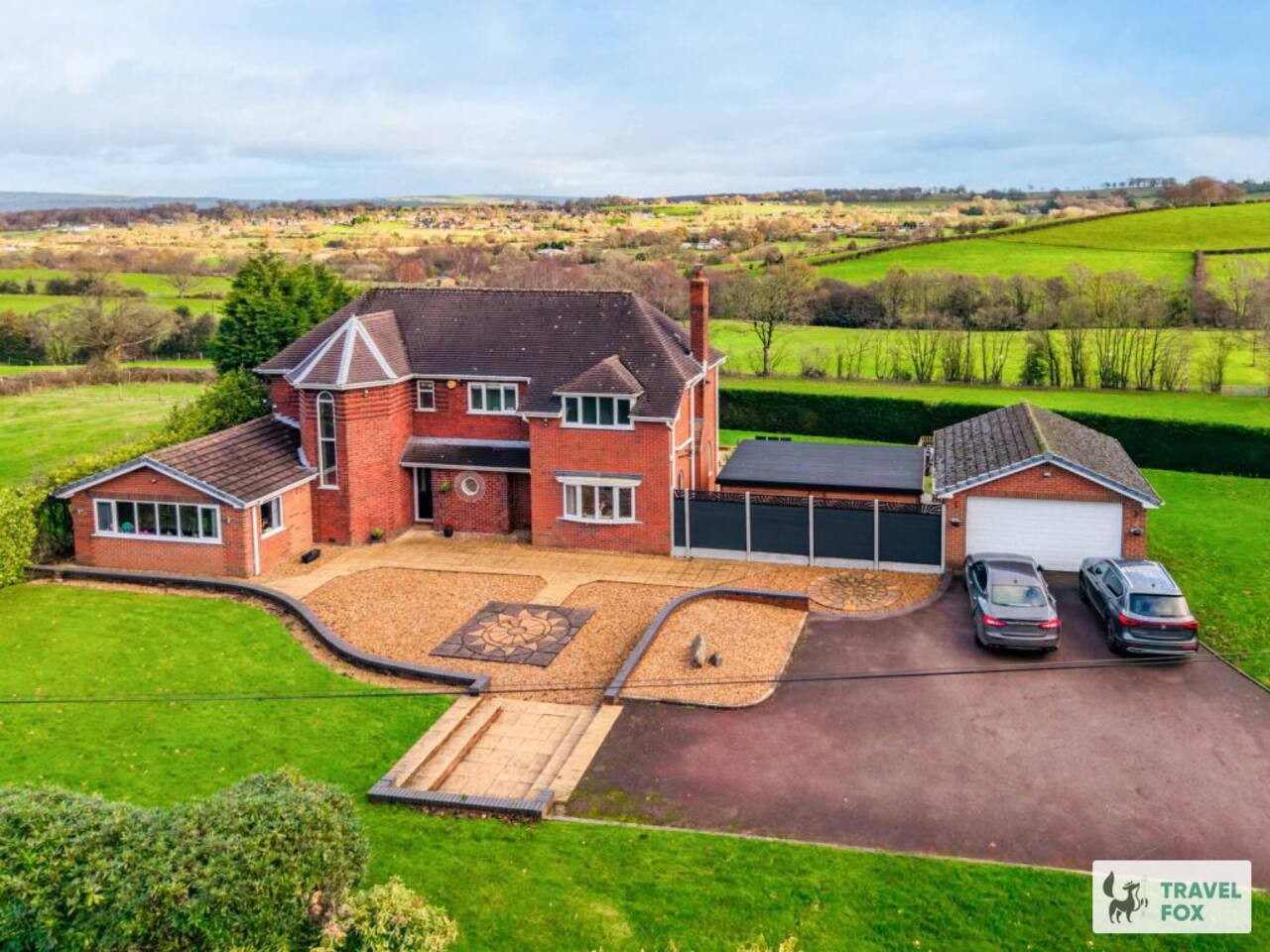
Cheddleton
Greenways House - Parking, Pool Table and Garden!
- Sleeps 10
- 4 bedrooms
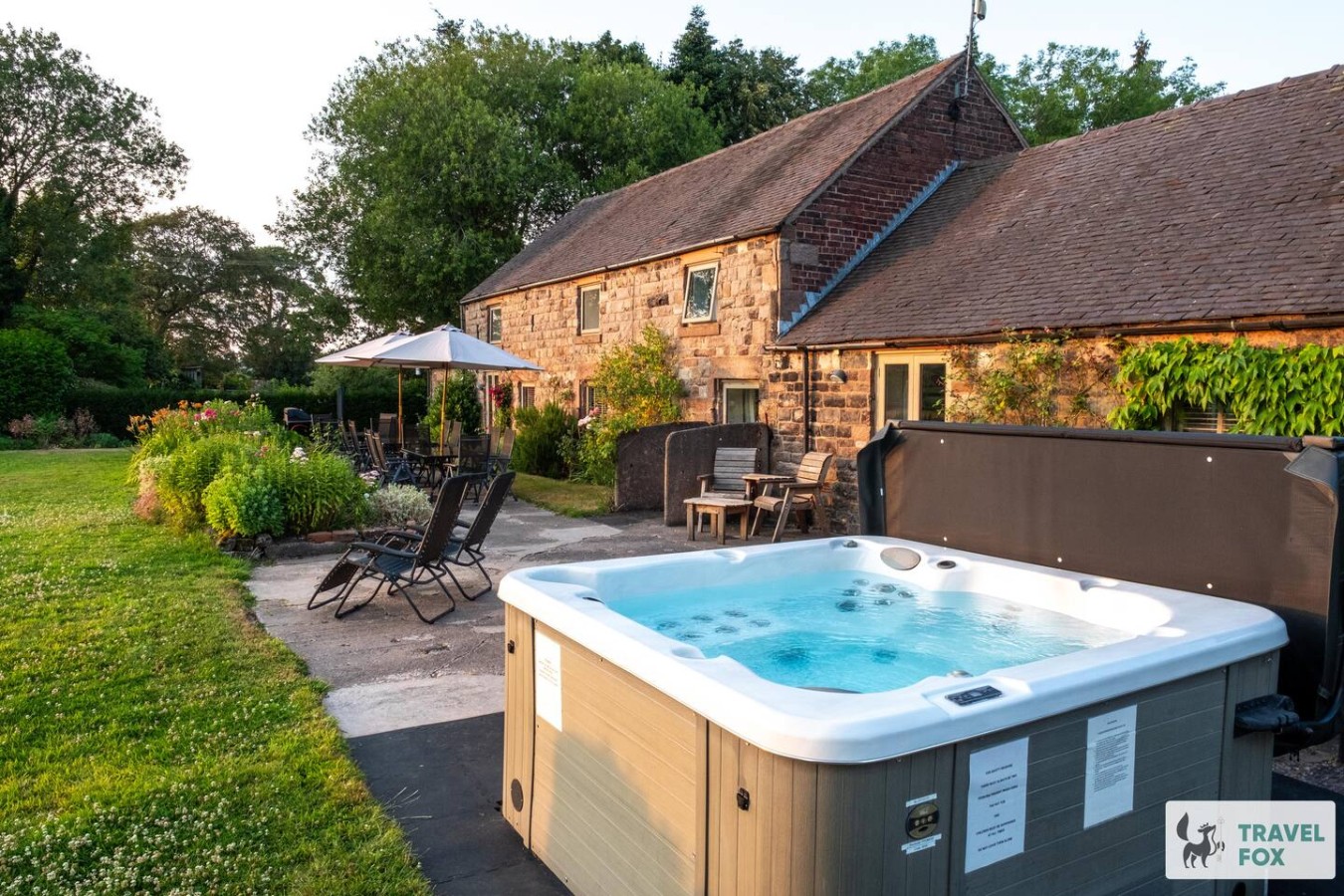
Cheddleton
Lee House Cottage + Annexe
- Sleeps 19
- 8 bedrooms

Leek
Silkwood House | Boutique 4 Bed nr. Peak District
- Sleeps 8
- 4 bedrooms
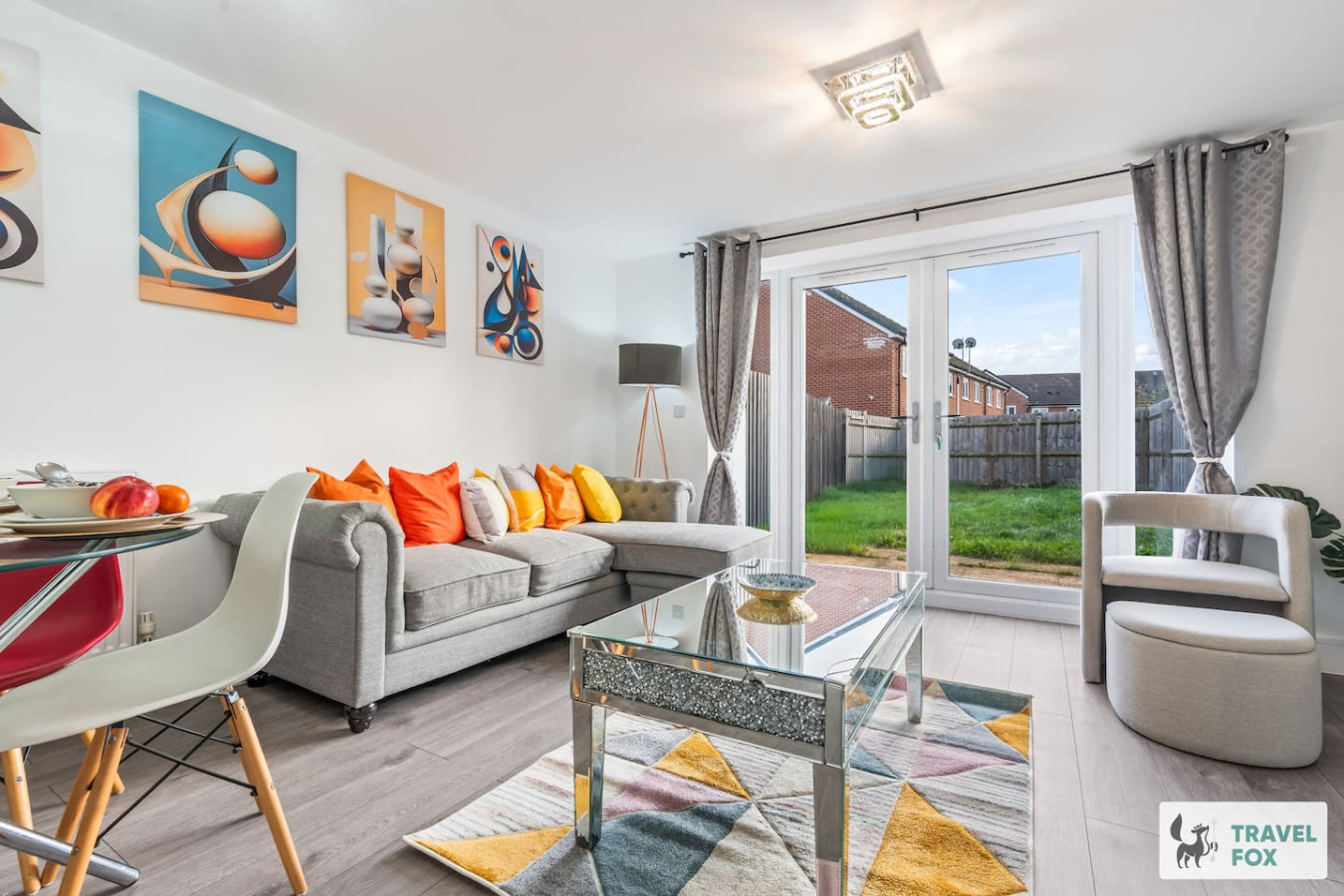
Stoke-on-Trent
Heather's House
- Sleeps 6
- 2 bedrooms
For homeowners
Own a holiday home near Tixall?
We manage holiday lets across Staffordshire from 12% commission, charged after cleaning costs, with no lock-in. A co-founder visits before you decide.
Holiday let management in Staffordshire →
A guide with a point of view
Written from research. Edited for real journeys.
Use the Official site links for live practical details, then use this guide for context, ideas and room to explore.
Photography credits & licences
Third-party photographs are credited to their named creators and reused under the linked Creative Commons licence or public-domain dedication. Travel Fox stores an optimised local copy; the file-specific changes and any browser-applied display crop are disclosed below. Reused photographs link both to the Wikimedia Commons source record and to the declared source image; Travel Fox's own photographs carry no such record and are marked as ours. These image licences do not cover Travel Fox text, branding or page design.
- File:Tixall Wide, Staffordshire - geograph.org.uk - 2662492.jpg — photograph by Roger Kidd; Tixall Wide, Staffordshire by Roger Kidd. Source record on Wikimedia Commons. Declared source image. Licence: CC BY-SA 2.0. File changes: Downloaded from Wikimedia Commons, resized to a maximum 1920px edge and encoded as an optimised JPEG. Display changes: Displayed with responsive CSS cropping.
- File:St John the Baptist's Church, Tixall.jpg — photograph by Tim Heaton; Tim Heaton. Source record on Wikimedia Commons. Declared source image. Licence: CC BY-SA 2.0. File changes: Downloaded from Wikimedia Commons, resized to a maximum 1920px edge and encoded as an optimised JPEG. Display changes: Displayed with responsive CSS cropping.
Sources
Every place on this page is checked against a published source. Each entry links the record we used and names who publishes it.
- Tixall Gatehouse — landmarktrust.org.uk other published source record not machine-readable; publisher restricts automated access
- Tixall Wide — canalrivertrust.org.uk national body or asset manager
- Church of St John the Baptist — historicengland.org.uk statutory register or public authority record not machine-readable; publisher restricts automated access
- Tixall Obelisk — historicengland.org.uk statutory register or public authority record not machine-readable; publisher restricts automated access
- Great Haywood Circular Walk — canalrivertrust.org.uk national body or asset manager
- Canalside Farm — canalsidefarm.co.uk operator, sector body or destination organisation
- Shugborough Estate — nationaltrust.org.uk national body or asset manager