

A Staffordshire village above the Dove
Tutbury
Norman carving, small-scale village life and a river marking the county boundary meet in Tutbury.
- Best for
- Layered history and easy village exploring
- Give it
- Time for St Mary's, a Dove-side walk and local history
- Don't miss
- St Mary's carved Norman west doorway
Photo: Martin Richard Phelan · CC BY-SA 2.0 · cropped
The Fox verdict
Follow Tutbury's story through the village
Tutbury links Norman church stone, medieval earthworks, riverside paths and an old coaching street.
The village is compact enough for an unhurried history-led visit, while paths by the Dove give families and walkers room to change the pace.
Where to go
Places in Tutbury
Every place below is checked against a published source, listed with what it is and how long to give it.
Local signatures
3 placesPriory Church of St Mary the Virgin
Look closely at the Grade I church's richly carved Norman west doorway, which includes an early use of local alabaster dating from around 1160.
- Visit length
- Editorial estimate: Allow around 45 minutes
- Locality
- Tutbury, below the wooded ridge
- Access
- Visitor access includes Thursday, Saturday and Sunday mornings; contact the churchwarden for a historical tour.
Tutbury Heritage Walk
Follow a circular walk around Tutbury's medieval Park Pale. Surviving banks and ditches appear in separate stretches south and west of the village centre.
- Visit length
- Editorial estimate: Allow around 90 minutes for the circuit
- Locality
- Circular walk around Tutbury
- Access
- The circular walk follows paths around the village; the earthworks survive in separate stretches.
Cask & Pottle
Drop into East Staffordshire's first micropub, a small room in a former sweet shop with changing real ales served from a stillage rather than a bar counter.
- Visit length
- Editorial estimate: Allow around 45 minutes
- Locality
- High Street, Tutbury
Food & drink
1 place
Dog & Partridge
Take a meal or drink in Tutbury's Grade II* half-timbered coaching inn, whose fabric spans the 16th to 18th centuries and whose story reaches back to John of Gaunt.
- Visit length
- Editorial estimate: Allow around 60 minutes
- Locality
- High Street, Tutbury
History & heritage
1 placeFauld Crater Memorial
Pause at the memorial to the 70 people killed in the 1944 RAF Fauld explosion, whose crater remains visible in the countryside near Hanbury.
- Visit length
- Editorial estimate: Allow around 45 minutes
- Locality
- Beside the Fauld Crater near Hanbury
No places match this filter. Choose All places to reset the list.
Three ways to explore Tutbury
Signature outings
Stand at the Fauld crater
Visit the memorial to the 70 people killed in the 1944 RAF Fauld explosion, whose crater remains visible near Hanbury.
Decode the Norman doorway
Pick out birds, beasts, imps, flowers and chevrons around St Mary's west door, including its exceptional local-alabaster arch.
Settle into the coaching street
Pause for British pub food inside the half-timbered Dog & Partridge, a High Street inn shaped by the old Liverpool–London coaching route.
The village story
Tutbury: Carved Stone, the Dove and Village Life
A village of conversation, carved stone and royal trouble, gathered above the River Dove.
A High Street Built for Conversation
The Cask & Pottle is a micropub in a former sweet shop at the end of the High Street. Its small room has no bar counter and a view of the stillage at the rear. It opened in October 2013 as East Staffordshire's first micropub. Its changing real ales give the room a different focus from a conventional pub bar.
The High Street runs towards the River Dove, with Hatton across the county boundary in Derbyshire. From Tutbury & Hatton station, the approach crosses the river and climbs towards the village. The wooded ridge above the northwest edge overlooks the floodplain.
The Dog & Partridge is a Grade II* listed High Street inn with substantial 16th- and 17th-century timber framing and later coaching-era additions. Its history is associated with John of Gaunt and the Liverpool–London coaching route. Today it trades as a Chef & Brewer pub, with guest rooms as well as food and drink.
The Cross Keys on Burton Street is a family-run free house with a separate dining room. Its extended rear patio looks across the Dove valley, and the pub serves food.
Pubs Along the Old Streets
The Vine Inn on Ludgate Street has a public bar, lounge, garden, darts and dominoes.
Further along Ludgate Street, the New Inn was bought by Black Country Ales, fully refurbished and reopened in August 2023 with twelve hand pumps — typically nine beers and three ciders, six of them rotating and often including something from Black Country Ales itself or a Titanic beer. The food side is simpler: locally sourced filled cobs, pork pies, sausage rolls, a cheese night, and a monthly Thursday curry night.
The Leopard on Monk Street occupies a building formed from four former cottages. Its long room has a pool table and photographs of old Tutbury. The Hourglass on the High Street adds to the village's choice of pubs.
Glassmaking and Norman Stone
Glassmaking shaped Tutbury's history. Tutbury Crystal's village factory was demolished in 2007; the separate Georgian Crystal works closed in 2011, while Tutbury Crystal now operates from Stourbridge and lists a contact address in Wordsley. Glassmaking remains part of the village's story.
The Grade I listed Priory Church of St Mary the Virgin has a richly carved Norman west doorway. Its second receding arch uses local alabaster dating from around 1160, an unusually early use of the stone on an exterior.
Much of St Mary's surviving fabric dates to the thirteenth century, while its Norman west front is older. A weathered carving above the south doorway shows a boar hunt. The north aisle was added in 1820–22, and George Edmund Street replaced the chancel and apsidal sanctuary in 1866. After the Dissolution, the priory buildings and part of the church were dismantled; the parish church remains as a link to Tutbury's former monastic complex.
Queens, Coins and Community Memory
The first Duke of Lancaster was created in 1351. In 1399 the Lancaster inheritance was set apart from other Crown possessions, and Tutbury Castle became the administrative centre of one of the Duchy's great estates. Mary, Queen of Scots was imprisoned at the castle during several periods between 1569 and 1585. After leaving Tutbury for Chartley, she became implicated in the Babington Plot of 1586.
The River Dove below the village holds another medieval story. The Tutbury Hoard was discovered in 1831, and estimates of its original size range from 100,000 to 300,000 silver coins. The Duchy Commission recovered about 1,500 coins for examination after most of the find had already dispersed. The examined coins were probably distributed among public and private recipients. The hoard's burial near the river has been linked to Thomas of Lancaster's defeat in 1322.
About 1.9 miles away in a straight line, on 27 November 1944, an RAF ammunition store at Fauld exploded — between 3,500 and 4,000 tonnes of high explosive going up at once, the largest explosion in British history, killing 70 people and leaving a crater 100 feet deep and over 1,000 feet across. The likely cause, an official inquiry concluded, was an airman using the wrong kind of chisel on a bomb detonator. The crater is still there, marked with a memorial.
Paths Along the Dove
The Park Pale earthworks mark separate stretches of Tutbury's medieval town boundary south and west of the centre; a footpath passes one section.
For anyone using Tutbury as a base rather than a destination, Alton Towers and Lichfield Cathedral — the only medieval English cathedral with three spires — are options for a day out. Buses run on the 401 route between Uttoxeter, Tutbury and Burton upon Trent; the station is on the Crewe–Derby line, a 15–20-minute walk from the centre, and the village itself sits just off the A50, four miles north of Burton.
Back in the village, old pub buildings and the wooded ridge give Tutbury's history a visible shape. Aubrey Bailey assembled a local history collection, while Bob and Jeanne Minchin compiled a family-history index running past 75,000 references across some 2,500 surnames.
Stay around Staffordshire
Make a longer stay of it
Travel Fox holiday homes around Staffordshire, linked directly to their property pages.
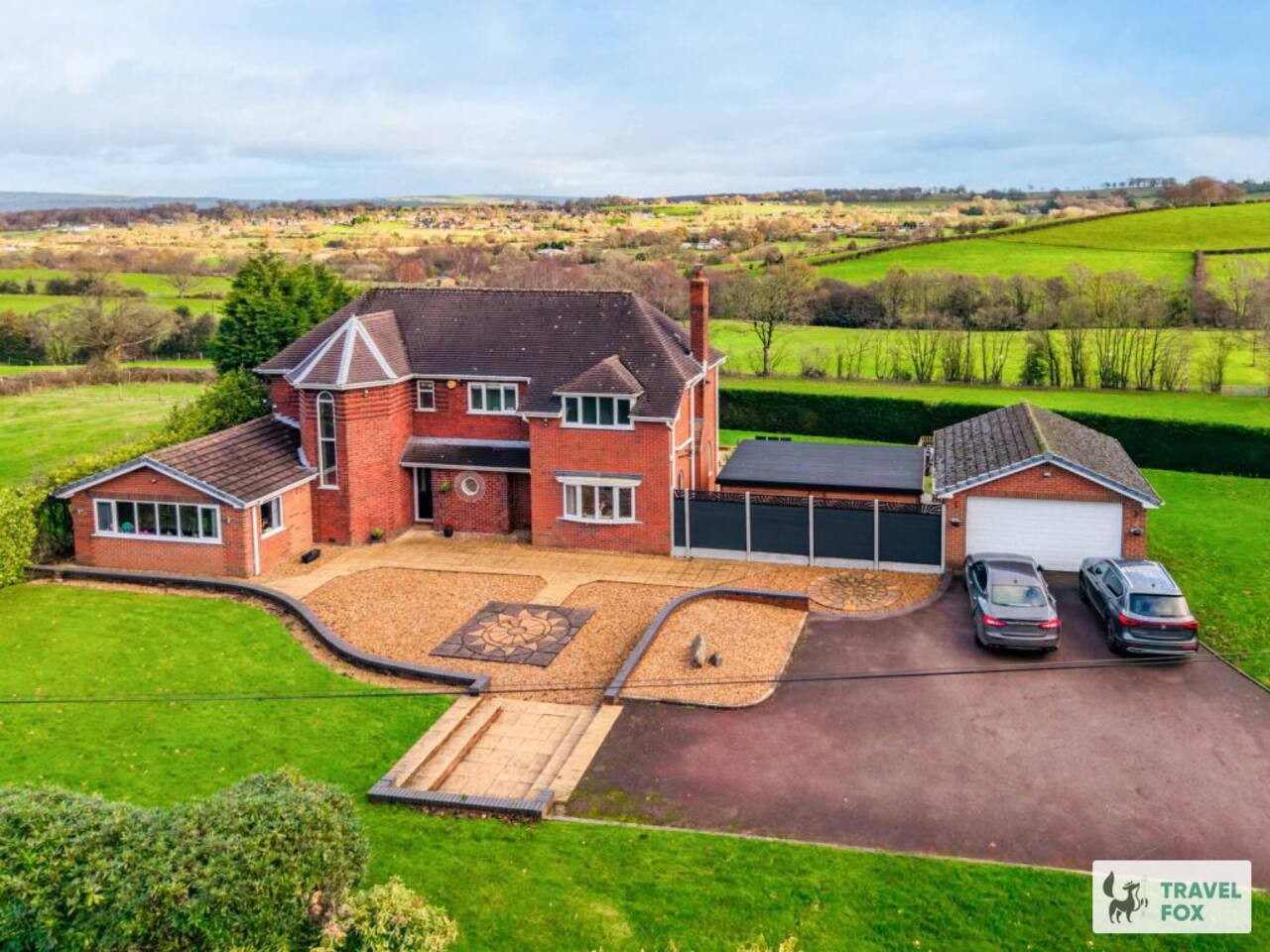
Cheddleton
Greenways House - Parking, Pool Table and Garden!
- Sleeps 10
- 4 bedrooms
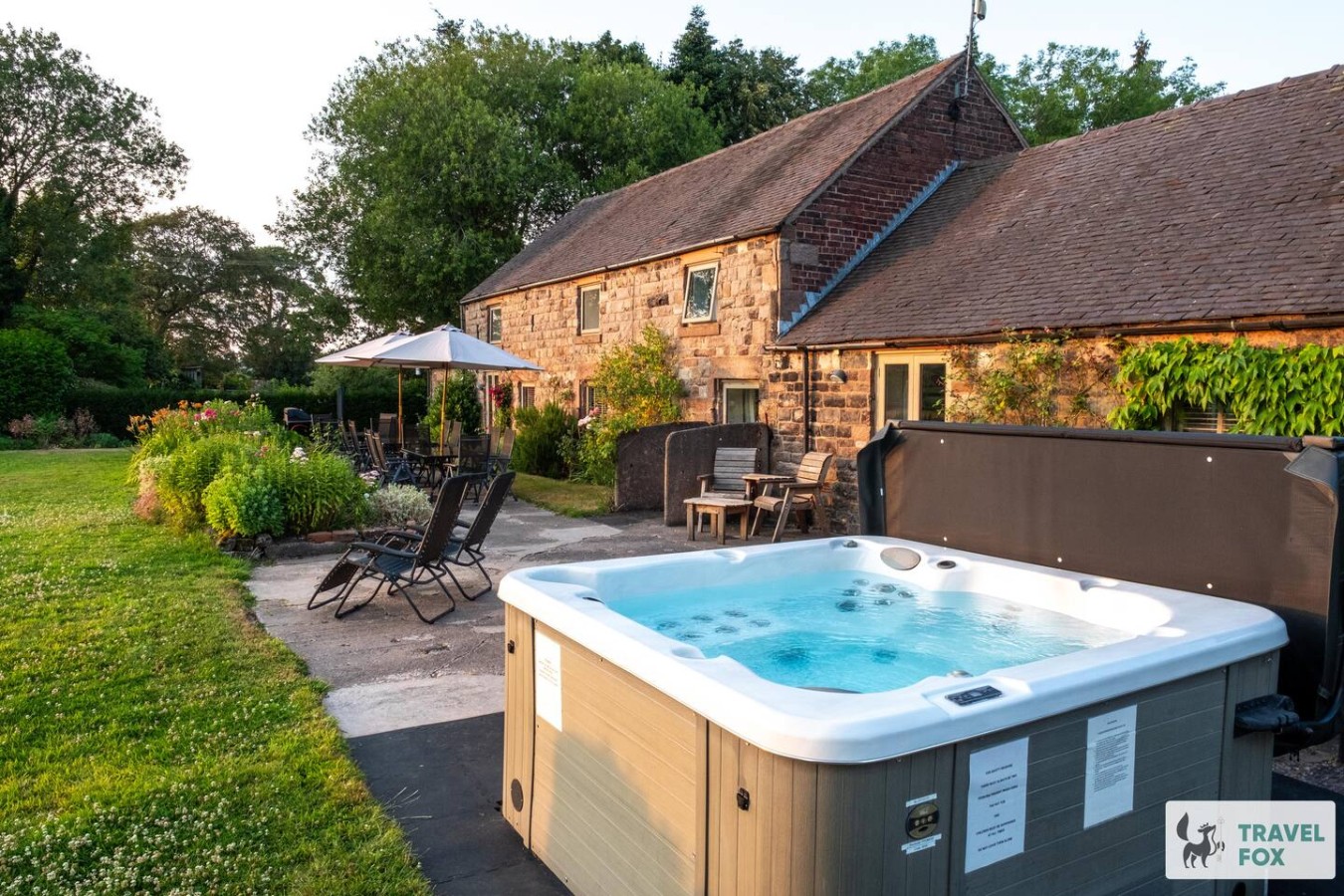
Cheddleton
Lee House Cottage + Annexe
- Sleeps 19
- 8 bedrooms

Leek
Silkwood House | Boutique 4 Bed nr. Peak District
- Sleeps 8
- 4 bedrooms
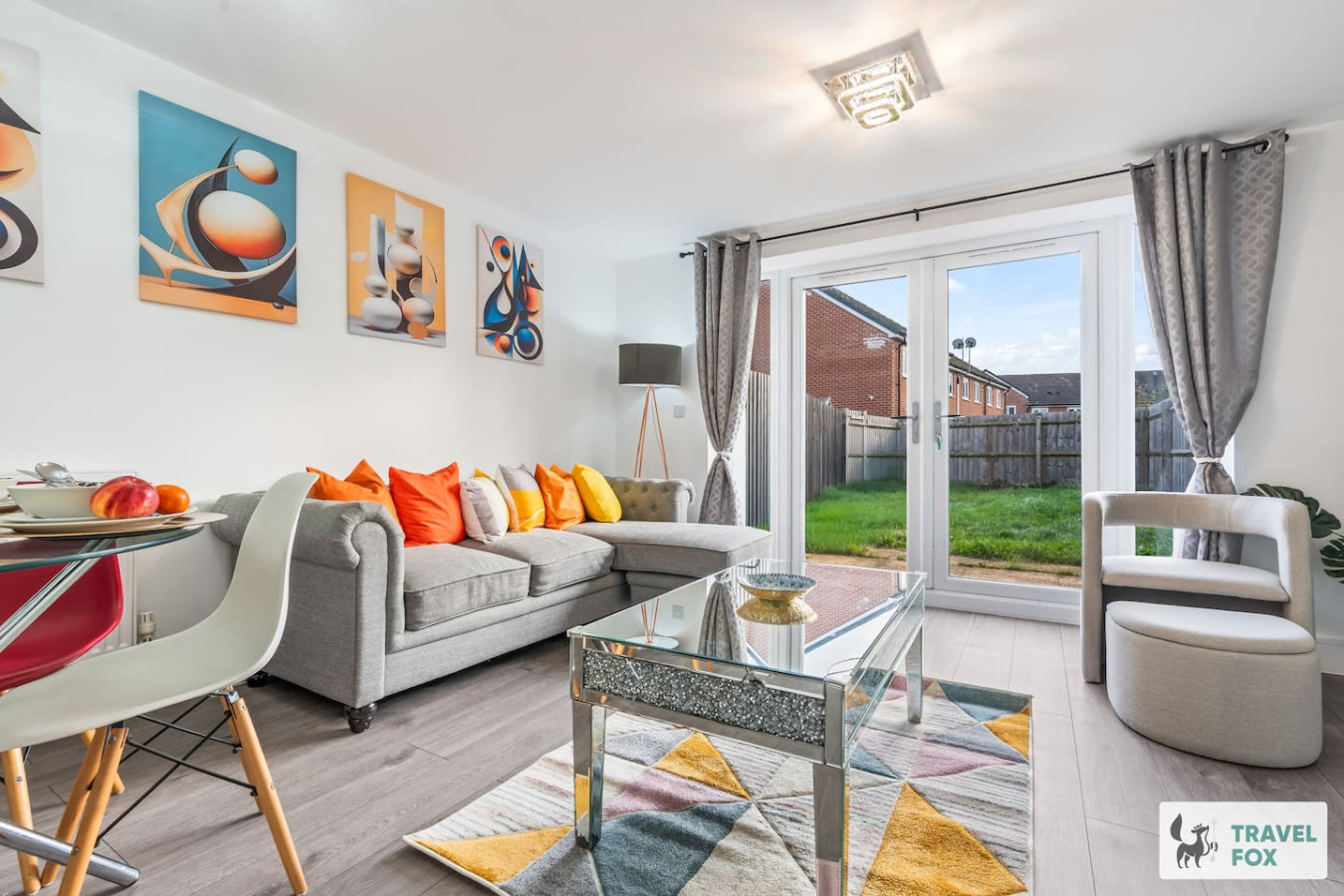
Stoke-on-Trent
Heather's House
- Sleeps 6
- 2 bedrooms
For homeowners
Own a holiday home near Tutbury?
We manage holiday lets across Staffordshire from 12% commission, charged after cleaning costs, with no lock-in. A co-founder visits before you decide.
Holiday let management in Staffordshire →
A guide with a point of view
Written from research. Edited for real journeys.
Use the Official site links for live practical details, then use this guide for context, ideas and room to explore.
Photography credits & licences
Third-party photographs are credited to their named creators and reused under the linked Creative Commons licence or public-domain dedication. Travel Fox stores an optimised local copy; the file-specific changes and any browser-applied display crop are disclosed below. Reused photographs link both to the Wikimedia Commons source record and to the declared source image; Travel Fox's own photographs carry no such record and are marked as ours. These image licences do not cover Travel Fox text, branding or page design.
- File:Castle from east - Tutbury, Staffordshire - geograph.org.uk - 5226042.jpg — photograph by Martin Richard Phelan; Castle from east - Tutbury, Staffordshire by Martin Richard Phelan. Source record on Wikimedia Commons. Declared source image. Licence: CC BY-SA 2.0. File changes: Downloaded from Wikimedia Commons, resized to a maximum 1920px edge and encoded as an optimised JPEG. Display changes: Displayed with responsive CSS cropping.
- File:Dog & Partridge - Tutbury, Staffordshire - geograph.org.uk - 5225947.jpg — photograph by Martin Richard Phelan; Dog & Partridge - Tutbury, Staffordshire by Martin Richard Phelan. Source record on Wikimedia Commons. Declared source image. Licence: CC BY-SA 2.0. File changes: Downloaded from Wikimedia Commons, resized to a maximum 1920px edge and encoded as an optimised JPEG. Display changes: Displayed with responsive CSS cropping.
Sources
Every place on this page is checked against a published source. Each entry links the record we used and names who publishes it.
- Priory Church of St Mary the Virgin — achurchnearyou.com national body or asset manager
- Tutbury Heritage Walk — thetrentvalley.org.uk operator, sector body or destination organisation
- Dog & Partridge — historicengland.org.uk national body or asset manager record not machine-readable; publisher restricts automated access
- Cask & Pottle — camra.org.uk operator, sector body or destination organisation
- Fauld Crater Memorial — memorials.iwm.org.uk other published source