
Pubs, Pugin and the Churnet Valley
Alton
A Staffordshire village with the community-run White Hart, wooded valley walks and centuries of history beside the River Churnet.
- Best for
- Pub history, valley walks and medieval ruins
- Give it
- A half-day plan or a longer woodland outing
- Don't miss
- The community story behind the White Hart
The Fox verdict
A village with far more than a famous neighbour
Alton combines long pub stories and Pugin-era landmarks with wooded Churnet Valley routes and nearby Cistercian ruins.
Come for the contrast: a community-owned pub saved by local shareholders, a church with surviving medieval fabric, and walking country shaped by the River Churnet. Dimmingsdale and Consall extend the choice into the valley, while Croxden Abbey adds a substantial historic outing nearby.
Where to go
Places in Alton
Every place below is checked against a published source, listed with what it is and how long to give it.
Local signatures
3 placesPeakstones Inn
Part of this country pub is around 500 years old and was formerly the gatekeeper's lodge for the Alton Towers estate; it later grew from a farm bar into a full pub and B&B.
- Visit length
- Editorial estimate: allow around 75 minutes
- Locality
- Cheadle Road, west of Alton village
St Peter's Church
The Grade II* church has a 12th-century north arcade and a 13th-century west tower with later alterations; it was restored and enlarged in 1831.
- Visit length
- Editorial estimate: allow around 45 minutes
- Locality
- Alton
Denstone Hall Farm Shop & Café
A nearby farm shop with an on-site butchery and deli counter, café, gift shop and a selection of local suppliers.
- Visit length
- Editorial estimate: allow around 75 minutes
- Locality
- Denstone, on the Staffordshire/Derbyshire border by the River Churnet
Food & drink
2 placesWhite Hart
Bought by community shareholders in late 2014, the White Hart has Thai street food, a pool room and guest ales.
- Visit length
- Editorial estimate: allow around 75 minutes
- Locality
- 18 High Street, ST10 4AQ
- Access
- Booking is advised for the Thai menu.
Bulls Head
A 17th-century coaching inn extended into the former village Co-op, with stone-baked pizzas, steaks, vegetarian dishes and a Smoke House menu.
- Visit length
- Editorial estimate: allow around 75 minutes
- Locality
- 2 High Street, Stoke-on-Trent, ST10 4AQ
Walks & outdoors
2 placesDimmingsdale and the Ramblers' Retreat
Dimmingsdale has several woodland paths from its car park near the Ramblers' Retreat tearoom. The trails are not waymarked.
- Visit length
- Editorial estimate: allow around 150 minutes
- Locality
- Dimmingsdale, part of the Churnet Valley
Consall Nature Park
Consall Nature Park has waymarked walks in the Churnet Valley, from a short circuit of the ponds to longer routes with steep gradients and valley views.
- Visit length
- Editorial estimate: allow around 30 minutes for the pond circuit
- Locality
- Consall, beside the River Churnet and Caldon Canal
History & heritage
1 placeCroxden Abbey
Substantial ruins of a Cistercian abbey begun in 1179 after Bertram de Verdun granted land to the monks in 1176. It housed around seventy monks at its 13th-century peak before its suppression in 1538.
- Visit length
- Editorial estimate: allow around 60 minutes
- Locality
- Croxden
- Access
- Free to visit.
No places match this filter. Choose All places to reset the list.
Three ways to explore Alton
Signature outings
Find a Dimmingsdale path
Choose a low-level stroll around the pools or head onto steeper ground in Dimmingsdale's woodland.
Visit the community's pub
Visit the White Hart's pool room for free pool on Mondays, a benefit offered by the pub bought by local shareholders in late 2014.
Walk through Croxden Abbey
Approach Croxden Abbey via Croxden Lane and expect uneven grassy ground, slopes and steps among the ruins.
The village story
Alton: Pubs and Paths by the Churnet
Community pubs, Pugin's Gothic legacy and wooded Churnet Valley routes give Alton a story far larger than its size.
Pubs and the Churnet Valley
The White Hart on the High Street hosts Thai street food and offers free pool on Mondays. After Marston's put the pub up for sale, villagers organised a buyout; seventy shareholders bought it in late 2014, and it is now run by the Alton White Hart Community Interest Company. The pub has a pool room, a log burner, guest ales and renovated self-contained apartments. CAMRA named it Pub of the Season in spring 2019.
Alton sits in the Churnet Valley on the edge of the Staffordshire Moorlands, close enough to the Peak District boundary that the two blur into one another. The valley here runs to steep wooded slopes and stream cuts rather than open farmland. There were 1,226 people at the 2011 census, spread through a conservation area shared with the neighbouring hamlet of Farley, reachable on foot across the fields on a footpath off Farley Lane. Sixty-three buildings in the parish are listed, one of them Grade I. The village sits off the B5032, with the A52 and A50 the nearest main roads toward Uttoxeter and Stoke-on-Trent.
The Bulls Head, further along the High Street, is a 17th-century coaching inn that has swallowed the building next door — the old village Co-op is now part of the pub. It stood closed for a while before James Miller, who grew up in Alton, and his wife Gemma took it on and spent over £100,000 rebuilding it, reopening on a Friday in June with a new oak bar built into the old Co-op shell. There's a snug with Chesterfield sofas and a log burner, a function room that does weddings and live music, stone-baked pizzas, steaks, a Smoke House menu of ribs and wings, up to four real ales, craft beer from the UK, the US and Europe, and over seventy speciality gins. Dogs are welcome, there's a patio and a car park round the back, and the building is Grade II listed.
Down on Station Road, the Talbot spent sixteen years closed and derelict before reopening in June 2018. It first appears in the parish register in 1827 under Thomas and Ann Weston. After Thomas died, Ann ran it until 1863, followed by their son Matthew, William and Margaret Green, and William and Hannah Parrington. William gave free drinks to unemployed men during the Depression and coached the local cricket team. After his death in 1942, Hannah ran the pub until 1950, when their son Bill and his wife Sheila took over, along with the family parrot, Polly, who became an attraction for customers. Bill died in 1975; Sheila retired in 1981. Around 1900, the pub advertised its short walk from the railway station and sold Worthington's Burton ales and Guinness stout. The menu includes fish and chips, a Talbot burger, pie of the day and a Sunday carvery. Five handpulls serve regular and guest ales, with real cider also on tap. The pub has an open fire, welcomes dogs and shares a garden with the Alton Bridge Hotel that runs down to the River Churnet. It received CAMRA's Rising Star award in 2019 and Pub of the Season awards in 2019 and 2023.
Village Life and Local Tables
Out on Cheadle Road, about 1.2 miles from Alton village centre in a straight line, the Peakstones Inn occupies a building with parts dating back around 500 years. It began as a gatekeeper's lodge for the Alton Towers estate, then grew from a small farm bar in the mid-1970s into a pub with two open fires, a hexagonal revolving pool table, camping and static caravans. Its Piggery restaurant recalls the site's time as a pig farm. The inn serves home-cooked meals; real ale is not always available.
Once a year the pubs join forces for the Alton Beer Festival, with a classic car show, street food and live music alongside it, the proceeds going to local charities.
The post office is on Smithy Bank. Londis, also on Smithy Bank, sells groceries and everyday essentials. For a larger farm-shop visit, Denstone Hall Farm Shop & Café in neighbouring Denstone has a butchery, deli, café and gift shop.
The Hurstones on Hurstons Lane is the village hall — a playing field, a play area, a full-size football pitch, a stage and a fitted bar, kept going by a charity set up for exactly that purpose.
Pugin, Castle and Church
St Peter's Church is Grade II* listed. Its north arcade dates from the 12th century; the three-stage west tower dates from the 13th century and has later alterations. The church was restored and enlarged in 1831, then extended in 1884–85 by J. R. Naylor.
Above the river, Alton Castle has had two entirely different lives. Bertram de Verdun built the first stone fortress here in the 12th century, on a site fortified in timber since Saxon times; in 1176 he also granted land to Cistercian monks. The castle gained a gatehouse in the early 14th century, was substantially rebuilt in the 15th and was slighted by Parliamentary troops in 1643 so it could not be held again. It stood as a ruin for two centuries until John Talbot, 16th Earl of Shrewsbury, rebuilt it from 1847 to 1852 to designs by A. W. N. Pugin. The Sisters of Mercy moved into the old presbytery as a convent in 1855; the Archdiocese of Birmingham bought the site in 1995, and it has served as a Catholic youth retreat centre since September 1996. Pugin also designed the castle chapel, the Catholic Church of St John the Baptist, and neighbouring St John's School, a Grade II* building with corner towers, an embattled parapet and a semi-octagonal chapel end, originally built as a house before becoming a school.
Across the valley, on the other side of the Churnet, are the ruins of Alton Mansion, the building most people mean when they say Alton Towers. Several architects transformed the house: Thomas Hopper and William Hollins worked on an early phase, Thomas Allason was chiefly responsible for its crenellated form, and A. W. N. Pugin later altered rooms and designed interiors. The gardens were developed from around 1814 under the 15th Earl, with work by Robert Abraham and Allason. The house later fell into disrepair and now stands within Alton Towers Resort.
Legends, Industry and Valley Walks
Near the estate stands the Chained Oak, an ancient tree whose branches are bound in iron. In the legend, an Earl of Shrewsbury refused alms to a beggar woman, who cursed his family so that one member would die whenever a branch fell. After a storm broke a branch and a family member reportedly died, the Earl had the remaining branches chained. The tale has been told with different Earls and dates. The tree inspired the theme park's Hex ride.
The Domesday survey of 1086 recorded Alton as waste, with two ploughlands, no villagers and King William I as both tenant-in-chief and lord. The village lock-up, the Round House, was built in 1819 by the Earl of Shrewsbury to hold drunks and vagrants overnight. Its single circular cell is about four metres across, beneath a domed roof with a ball finial; it is Grade II listed and a scheduled monument. A 17th-century document links Alton Mill in Farley to earlier ownership by Croxden Abbey. By the early 18th century, it had become a brass wire and slitting mill; an 1817 account put its workforce at fifty. On Malthouse Road, the late-17th-century Grade II* Malt House has brick walls with stone dressings, an underground malt kiln and cellars, a Tuscan portico and an adjoining two-storey granary. Three stone piers with pyramidal caps belong to the separate wall enclosing its rear yard.
Walking routes fan out from Alton. The 5.6-mile Walk Around Alton passes the Gothic Revival castle and Dimmingsdale, using part of the Staffordshire Way. From the Ramblers' Retreat tearoom, paths cross Dimmingsdale's woodland, with steep sections and gentler strolls around the pools; the trails are not waymarked. The Oakamoor and Whiston circular covers about eight miles of Churnet Valley countryside with several steep, muddy sections. For a separate outing about 6.1 miles from Alton village centre in a straight line, Consall Nature Park has waymarked routes from a short circuit of the ponds to longer walks with steep gradients and valley views; the road journey is longer.
Abbey Ruins, Arrivals and Continuity
Croxden Abbey, begun in 1179 after Bertram de Verdun granted land in 1176, is free to visit and run by English Heritage. It held around seventy monks at its 13th-century peak before its suppression in 1538. Uttoxeter has outdoor markets on Wednesdays and Saturdays. Cheadle, in the other direction, has a JCB factory; the company is headquartered at nearby Rocester.
Alton had its own station from 1849 until the North Staffordshire Railway's Churnet Valley line closed in January 1965. Stoke-on-Trent's mainline station is about fifteen miles away.
Uttoxeter is now the nearest railway station, about eight miles away by road. D&G Bus's 32A links Uttoxeter and Stoke railway stations via the theme park. The Station Road bus stop is about a three-minute walk from the village centre.
Stay around Alton Towers
Make a longer stay of it
Travel Fox holiday homes around Alton Towers, linked directly to their property pages.
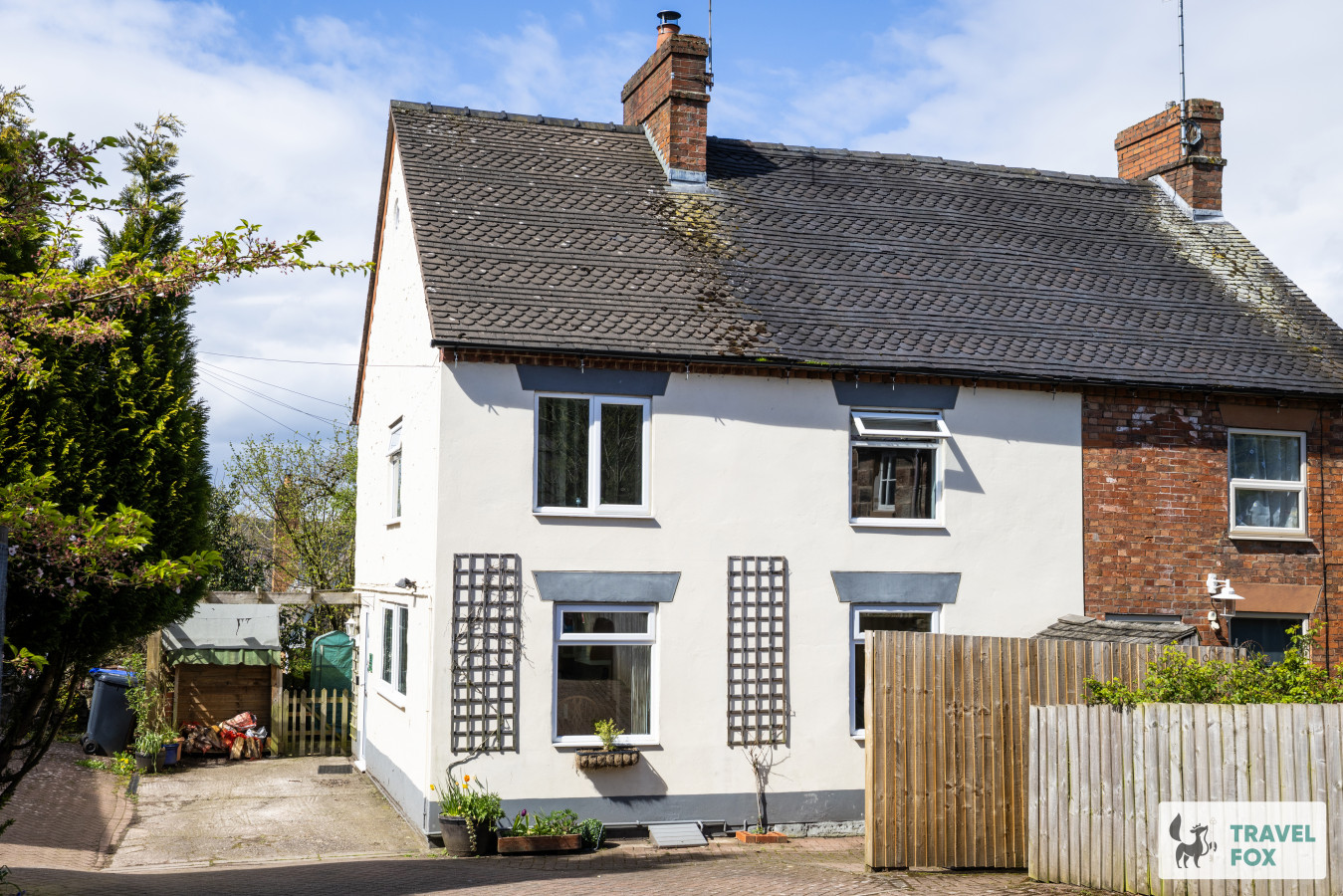
Alton
Smithy Bank Cottage - with free parking!
- Sleeps 8
- 3 bedrooms

Alton
The Old Post Office: Alton Towers
- Sleeps 8
- 3 bedrooms
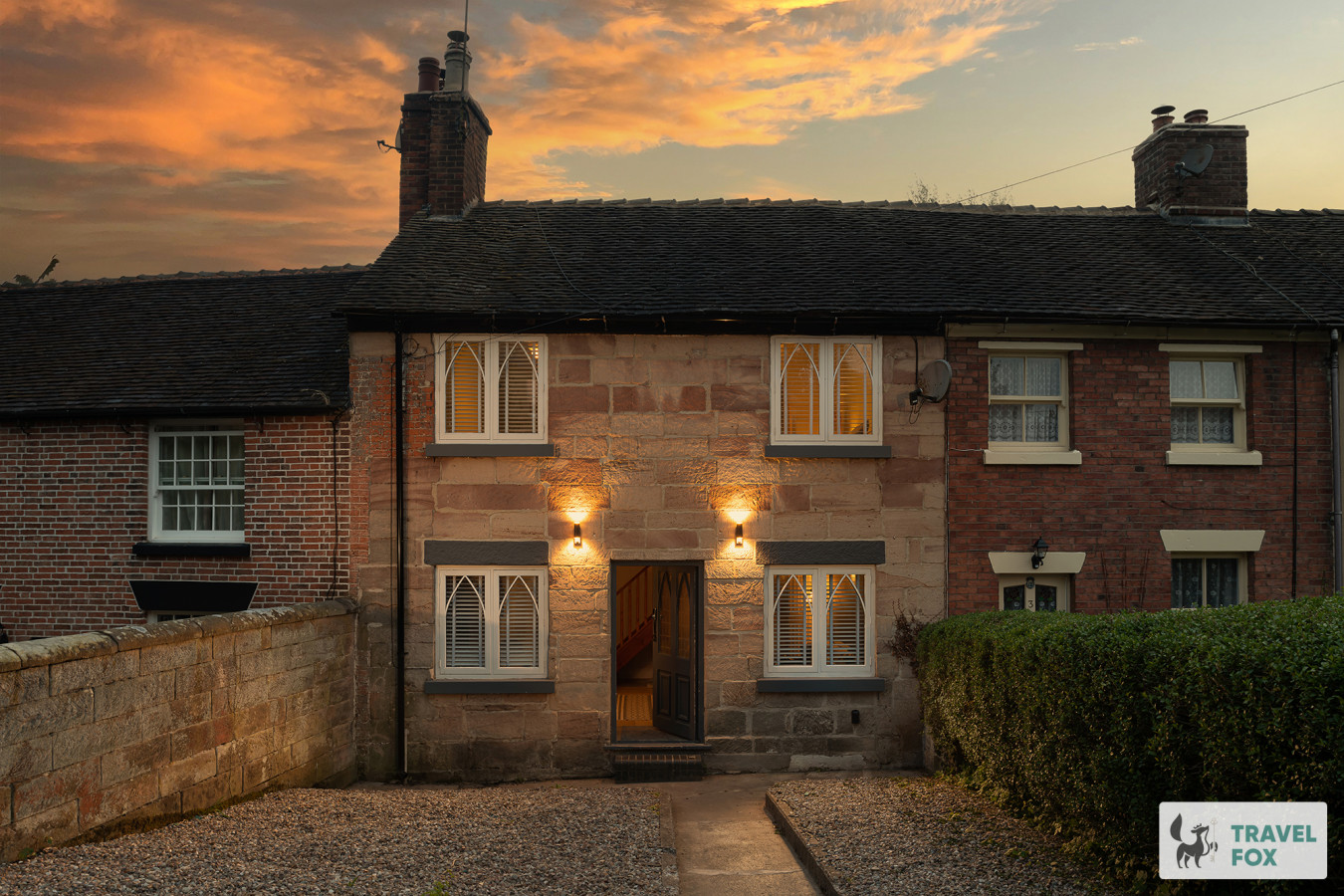
Alton
Angel Cottage - 5 mins drive to Alton Towers!
- Sleeps 10
- 4 bedrooms
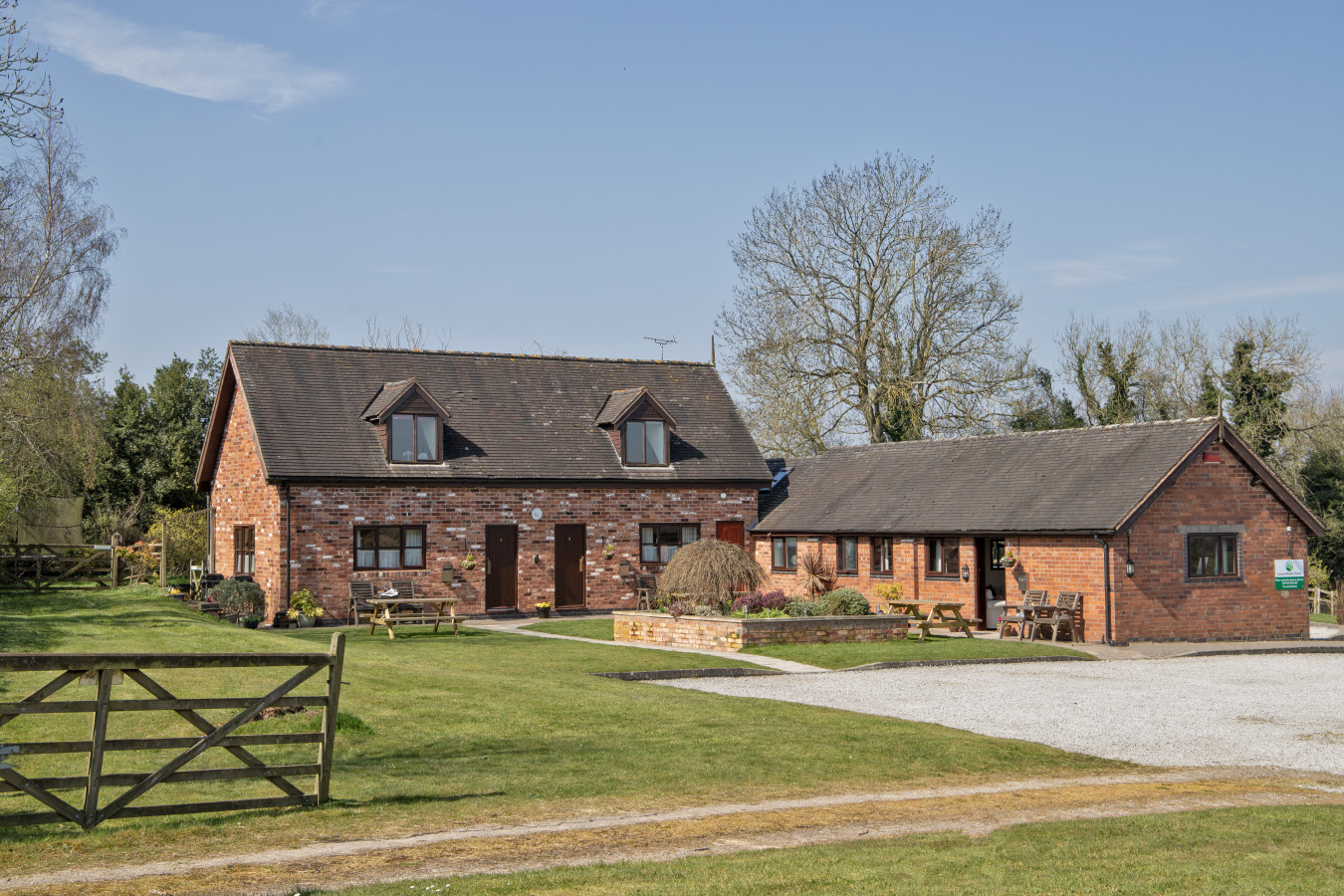
Croxden
Zoe's Cottage - 7 mins drive to Alton + Alpacas!
- Sleeps 6
- 2 bedrooms
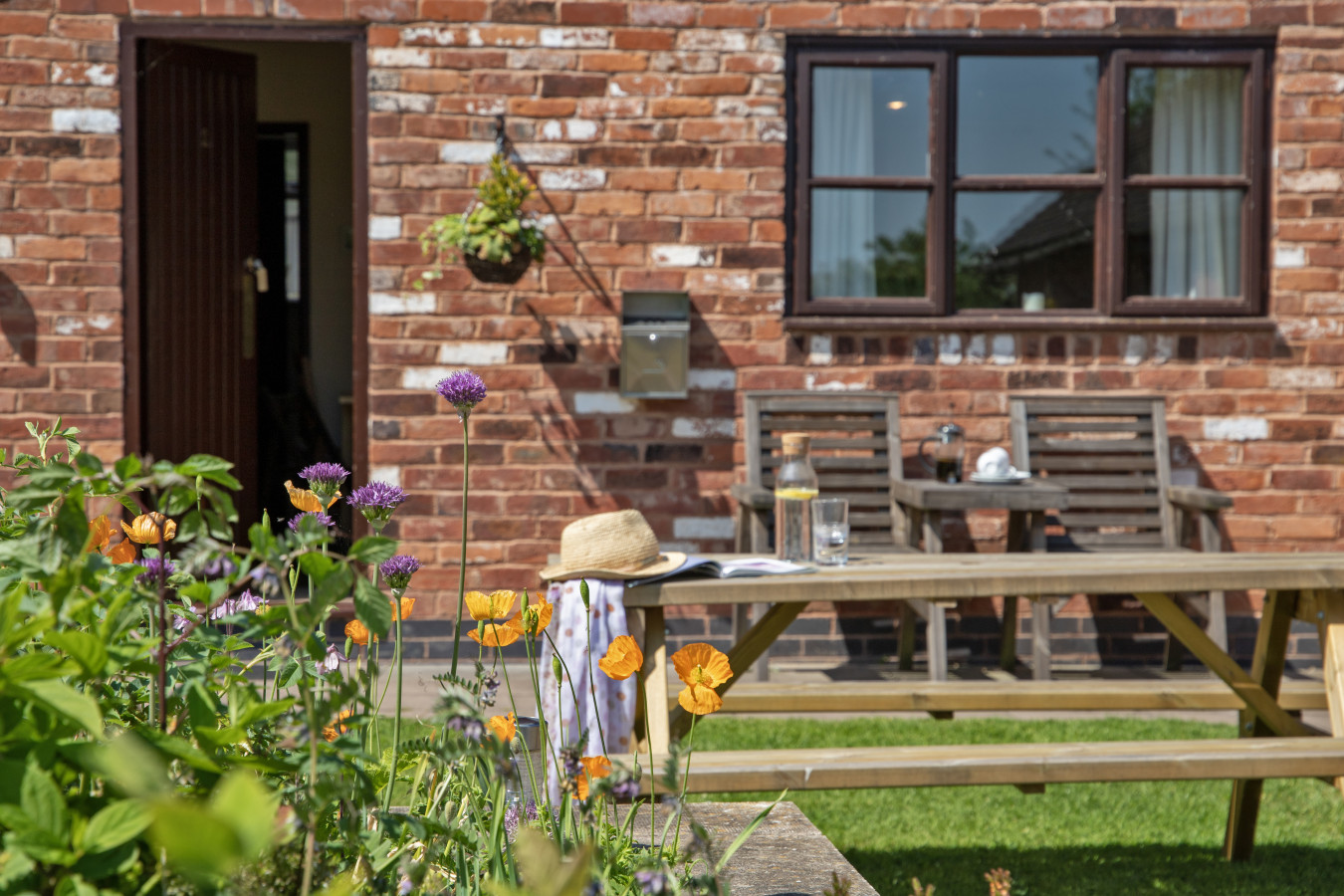
Croxden
Alpaca Cottage - 7mins to Alton Towers!
- Sleeps 5
- 2 bedrooms
For homeowners
Own a holiday home near Alton?
We manage holiday lets across Staffordshire from 12% commission, charged after cleaning costs, with no lock-in. A co-founder visits before you decide.
Holiday let management in Staffordshire →
A guide with a point of view
Written from research. Edited for real journeys.
Use the Official site links for live practical details, then use this guide for context, ideas and room to explore.
Sources
Every place on this page is checked against a published source. Each entry links the record we used and names who publishes it.
- White Hart — altonwhitehart.co.uk operator, sector body or destination organisation
- Bulls Head — bullsheadinnalton.co.uk operator, sector body or destination organisation
- Peakstones Inn — peakstones-inn.co.uk operator, sector body or destination organisation
- St Peter's Church — historicengland.org.uk statutory register or public authority record not machine-readable; publisher restricts automated access
- Dimmingsdale and the Ramblers' Retreat — forestryengland.uk national body or asset manager
- Croxden Abbey — english-heritage.org.uk national body or asset manager
- Denstone Hall Farm Shop & Café — denstonehall.co.uk operator, sector body or destination organisation
- Consall Nature Park — staffordshire.gov.uk statutory register or public authority