
Fields beside the Towers
Farley
A scattered farming hamlet where a steep lane, open countryside and the wooded edge of Alton Towers meet.
- Best for
- A Churnet Valley walk and Alton Towers days
- Give it
- A full day with a short drive for food
- Don't miss
- The Oakamoor and Whiston circuit
The Fox verdict
A rural edge with two very different scales
Farley is tiny and agricultural, yet its parish contains Alton Towers and opens directly onto the Churnet Valley countryside.
Come for Farley's farmland beside the Towers estate, then take a moderately difficult Churnet Valley walk starting in Oakamoor. The theme park and water park are within Farley parish, with food stops in Cotton, Denstone and Ellastone.
Where to go
Places in Farley
Every place below is checked against a published source, listed with what it is and how long to give it.
Local signatures
3 placesAlton Towers Waterpark
The resort's water-park option, offering a distinct family activity within the Farley parish boundary.
- Visit length
- Editorial estimate: about 2 hours 30 minutes
- Locality
- Alton Towers Resort, near Farley
- Access
- Enter through Splash Landings Hotel reception.
The Star at Cotton
A nearby Cotton pub that gives walkers and Farley visitors a practical place for a pint or a proper meal.
- Visit length
- Editorial estimate: about 1 hour 15 minutes
- Locality
- Cotton, by Oakamoor
- Access
- Dogs are welcome, and there is a beer garden.
Denstone Hall Farm Shop & Café
A combined farm shop and café that provides a practical nearby stop for food and shopping.
- Visit length
- Editorial estimate: about 1 hour
- Locality
- Denstone
- Access
- The shop and café have a level entrance, with paved paths from the accessible parking bays.
Food & drink
2 placesThe Tavern at Denstone
A Denstone pub serving food and drink on College Road.
- Visit length
- Editorial estimate: about 1 hour 15 minutes
- Locality
- Denstone
- Access
- Dogs are welcome in the bar area.
The Duncombe Arms
A pub and dining stop in Ellastone for visitors exploring the villages around Farley.
- Visit length
- Editorial estimate: about 1 hour 30 minutes
- Locality
- Ellastone
- Access
- On the B5032 through Ellastone.
History & heritage
1 placeSt Peter's Church, Alton
Farley's historic parish church in Alton, founded in the 12th century and marked by an embattled west tower.
- Visit length
- Editorial estimate: about 30 minutes
- Locality
- Alton village
- Access
- On High Street in Alton village.
Things to do
1 placeAlton Towers Theme Park
The parish's major family attraction, combining the theme park and CBeebies Land with the historic Towers estate around it.
- Visit length
- Editorial estimate: about 4 hours
- Locality
- Alton Towers Resort near Farley
- Access
- Follow the signs from the resort car parks to the theme park entrance.
No places match this filter. Choose All places to reset the list.
Three ways to explore Farley
Signature outings
The Towers contrast
Move from the theme park to the substantially ruined historic house within the same Farley parish.
The Tavern at Denstone
Use the nearby village pub for a meal or drink after exploring Farley's lanes and the wider Churnet Valley.
St Peter's in Alton
Visitors are welcome at St Peter's in Alton, a useful stop before the climb up Farley Lane.
The village story
Farley: fields beside the Towers
Farmland, a steep lane and an extraordinary estate boundary in the Churnet Valley.
Farley Lane and the Churnet Valley
Farley Lane climbs steeply out of Alton village, past a scatter of cottages and farms, and forms the western boundary of the Alton Towers estate. Farley is a farming hamlet; for a meal or supplies, plan a stop in a nearby village.
Farley lies in the Churnet Valley in the Staffordshire Moorlands, with the Weaver Hills visible a few miles to the north-east. These limestone hills mark the southern end of the Pennines; their highest point, The Walk, is topped by a trig point.
Food nearby and the long walk
For a pint or a meal, The Star at Cotton is on Star Bank in Cotton, near Oakamoor. The Tavern is in Denstone, as is Denstone Hall Farm Shop & Café; The Duncombe Arms is in Ellastone. These nearby villages offer several stops to pair with a Farley visit.
An eight-mile Oakamoor and Whiston circuit passes through Cotton Dell and Hawksmoor. Several steep, muddy sections make the walk moderately difficult. Start at the Oakamoor picnic site car park and follow the published directions.
Chapel, hall and medieval origins
In nearby Ramshorn, Ramsor Primitive Methodist Chapel, known as the Jubilee Chapel, was built in 1887 to mark Victoria's Golden Jubilee. Its pulpit came from a former chapel at Gun End, near Leek. The chapel still hosts occasional worship.
Richard Bill of Norbury acquired the Farley estate by marriage in 1607 and built Farley Hall shortly afterwards; his family later worked as land agents for the Earls of Shrewsbury and Gower. Farley has its own entry in the Domesday index under Totmonslow hundred, recording zero households.
The Towers estate and ways in
Five Grade II* listed structures stand within the Alton Towers estate: the house with its attached garden walls and gatehouse, Robert Abraham's Conservatory, the Gothic Prospect Tower, the Pagoda Fountain of about 1832, and the memorial to the 15th Earl of Shrewsbury. The estate's Grade II listings also include walls, bridges, fountains, an orangery and stables.
The nearest working station is Uttoxeter, about ten miles away. Alton's own station, opened 1849 on the Churnet Valley line, closed to passengers in 1965 and is now Landmark Trust holiday accommodation. The D&G Bus AT3 links Blythe Bridge station to Alton Towers via Ramshorn Road and Cotton, but is open to employees only. Alton village, down the hill, has Alton Castle, rebuilt for the 16th Earl by Pugin and now a Catholic youth retreat centre; the Peak District begins about ten miles north.
Refuge at Farley Hall
In May 1939, Farley Hall took in around 38 Sudeten Czech refugees — clerical and engineering workers who'd fled the German occupation — after the youth hostel at Ilam Hall, where they'd first been placed, turned out to be fully booked over Easter by paying holidaymakers. They stayed at Farley Hall, then home to Major C.F. Bill, while Europe collapsed around them.
Stay around Alton Towers
Make a longer stay of it
Travel Fox holiday homes around Alton Towers, linked directly to their property pages.
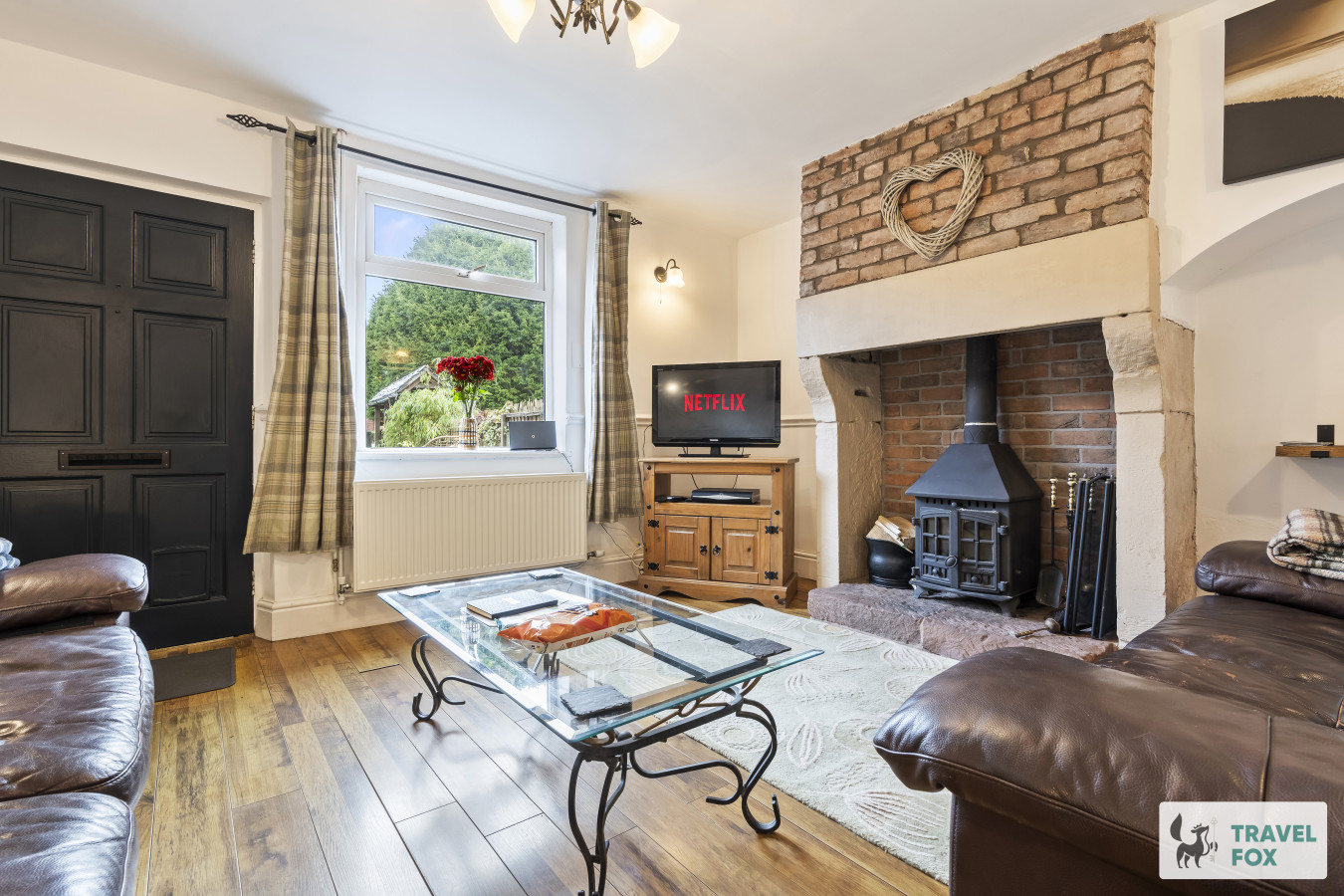
Oakamoor
Christina's House
- Sleeps 4
- 2 bedrooms
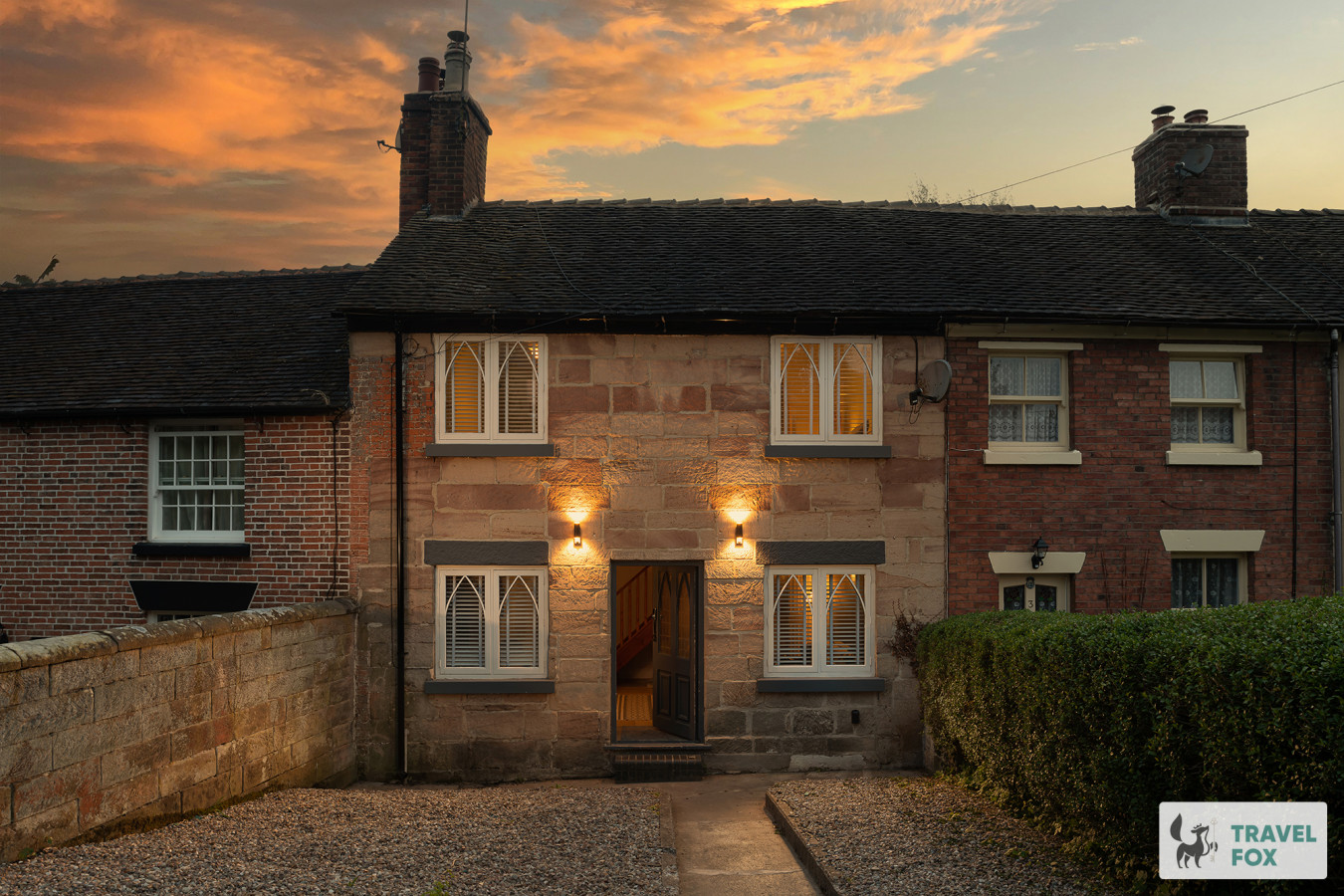
Alton
Angel Cottage - 5 mins drive to Alton Towers!
- Sleeps 10
- 4 bedrooms
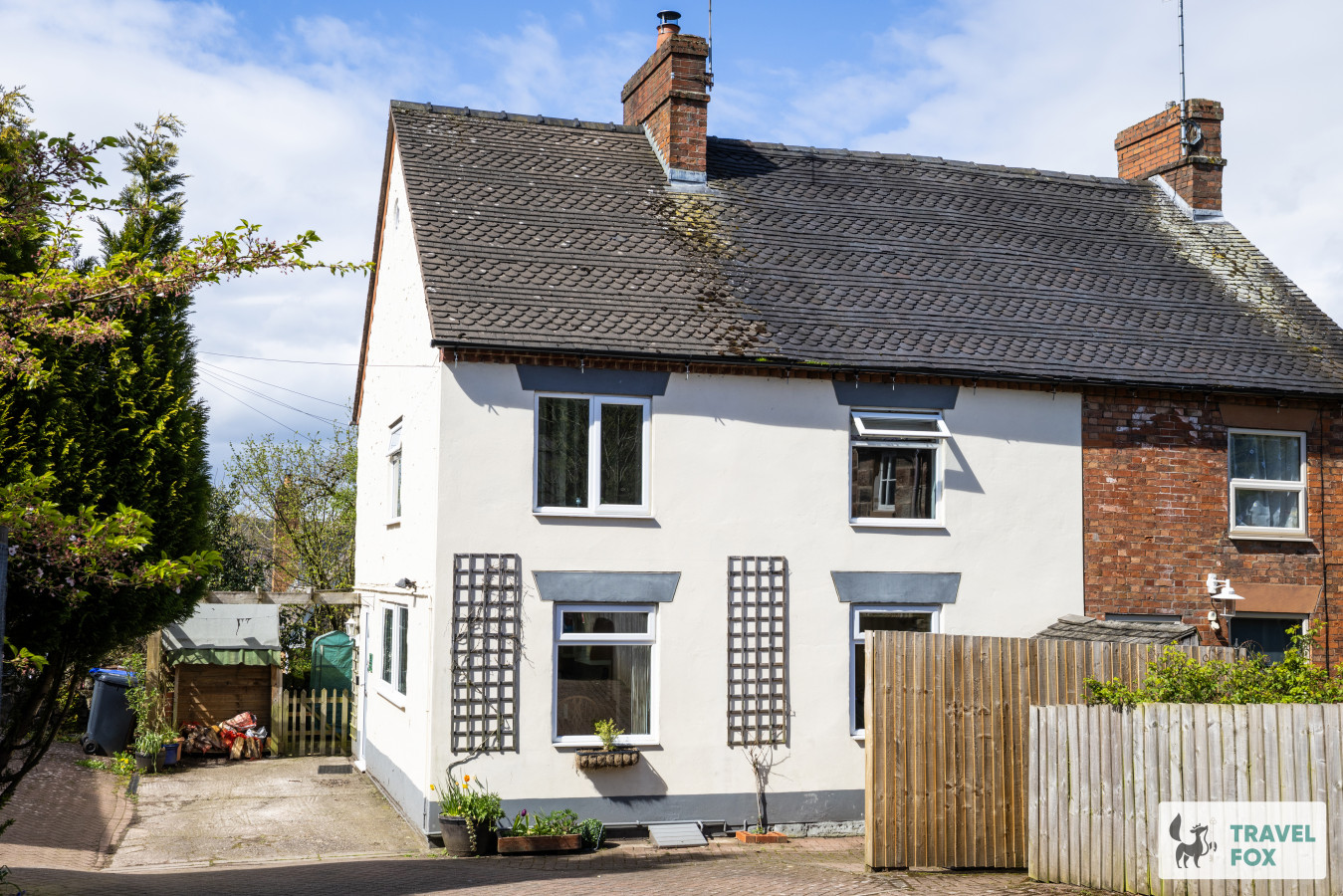
Alton
Smithy Bank Cottage - with free parking!
- Sleeps 8
- 3 bedrooms

Alton
The Old Post Office: Alton Towers
- Sleeps 8
- 3 bedrooms
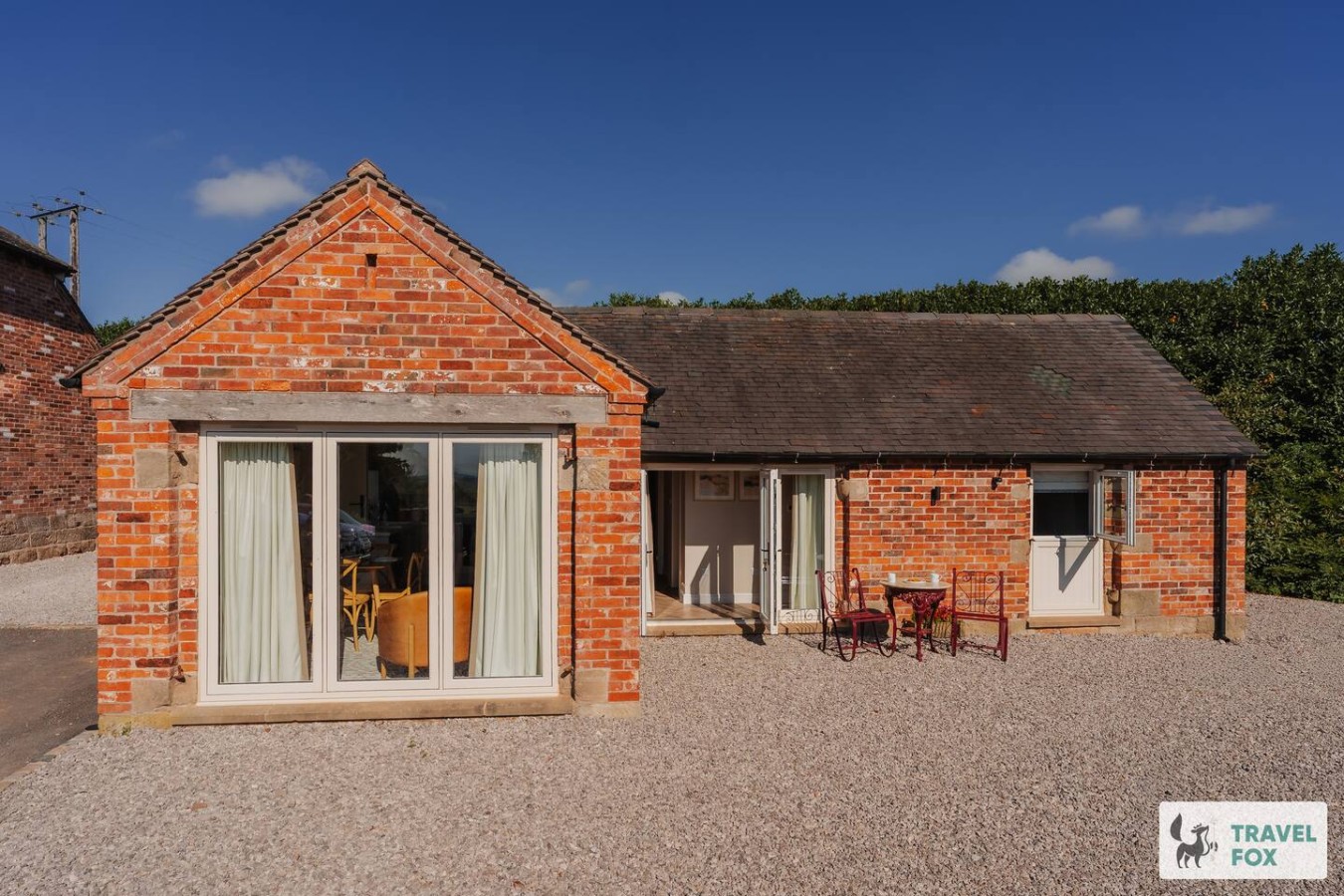
Checkley
The Old Stables
- Sleeps 4
- 2 bedrooms
For homeowners
Own a holiday home near Farley?
We manage holiday lets across Staffordshire from 12% commission, charged after cleaning costs, with no lock-in. A co-founder visits before you decide.
Holiday let management in Staffordshire →
A guide with a point of view
Written from research. Edited for real journeys.
Use the Official site links for live practical details, then use this guide for context, ideas and room to explore.
Sources
Every place on this page is checked against a published source. Each entry links the record we used and names who publishes it.
- Alton Towers Theme Park — altontowers.com operator, sector body or destination organisation record not machine-readable; publisher restricts automated access
- Alton Towers Waterpark — altontowers.com operator, sector body or destination organisation record not machine-readable; publisher restricts automated access
- St Peter's Church, Alton — achurchnearyou.com national body or asset manager
- The Star at Cotton — thestaratcotton.co.uk operator, sector body or destination organisation
- The Tavern at Denstone — thetaverndenstonepub.co.uk operator, sector body or destination organisation
- Denstone Hall Farm Shop & Café — denstonehall.co.uk operator, sector body or destination organisation
- The Duncombe Arms — duncombearms.co.uk operator, sector body or destination organisation