
Pies, Stilton and market traditions
Melton Mowbray
Pair Melton Mowbray's food traditions with medieval church architecture, local history and walks through parkland or an Iron Age hillfort.
- Best for
- Pork pies, Stilton and town history
- Give it
- A focused day, with Burrough Hill as a separate outing
- Don't miss
- St Mary's 48-window clerestory
The Fox verdict
Come hungry; leave time for stonework and open country
Melton Mowbray brings its pork pie and Stilton traditions together with a working livestock market, a medieval church and a nearby Iron Age hillfort.
Start with the town's specialist food shops and museum, choose a characterful Burton Street pub, then add either the lakes and woodland of Melton Country Park or the visible ramparts of Burrough Hill.
Where to go
Places in Melton Mowbray
Every place below is checked against a published source, listed with what it is and how long to give it.
Local signatures
3 placesMelton Carnegie Museum
Housed in the former Carnegie Library, the museum covers the Stilton and pork pie industries, fox hunting and Melton Mowbray's social history.
- Visit length
- Editorial estimate: around 60 minutes
- Locality
- Melton Mowbray
The Anne of Cleves
A historic pub with stone-flagged floors and exposed timber beams; part of the building dates to 1327 and it was later gifted to Anne of Cleves.
- Visit length
- Editorial estimate: around 60 minutes
- Locality
- Burton Street
Melton Country Park
A 137-acre park with lakes, woodland walk, stepping stones, bird hide, dog agility trails, outdoor gym and children's play areas.
- Visit length
- Editorial estimate: around 90 minutes
- Locality
- Melton Mowbray
Food & drink
3 placesYe Olde Pork Pie Shoppe
Dickinson & Morris has baked here since 1851. The shop sells handmade pork pies and local products, and its Tasting Room has a sit-in pork pie menu.
- Visit length
- Editorial estimate: around 30 minutes
- Locality
- Nottingham Street
The Melton Cheeseboard
A specialist shop with more than 150 cheese varieties, including cheese sourced directly from Long Clawson Dairy and Cropwell Bishop Creamery.
- Visit length
- Editorial estimate: around 20 minutes
- Locality
- Windsor Street
Melton Mowbray Livestock Market
One of the last remaining livestock markets in England, continuing Melton Mowbray's weekly cattle-market tradition.
- Visit length
- Editorial estimate: around 45 minutes
- Locality
- Melton Mowbray
Walks & outdoors
1 placeBurrough Hill Iron Age Hillfort
An Iron Age hillfort at 210 metres above sea level, with massive ramparts still visible and a roughly 10-kilometre circular walk.
- Visit length
- Editorial estimate: Allow about 2 hours 39 minutes for the circular walk
- Locality
- Burrough Hill, south of Melton Mowbray
History & heritage
1 placeParish Church of St Mary
This Grade I church has Norman windows in the lowest tower section, aisled transepts and a clerestory of 48 windows around the nave and transepts.
- Visit length
- Editorial estimate: around 45 minutes
- Locality
- Melton Mowbray
No places match this filter. Choose All places to reset the list.
Three ways to explore Melton Mowbray
Signature outings
Choose a hand-raised pork pie
Pick a handmade Dickinson & Morris or Mrs King's pork pie, or use the Tasting Room's sit-in menu.
Trace the unusual church plan
Start with the information on the church's history and windows available on entry, then explore the building.
Walk the hillfort ramparts
Take the roughly 10-kilometre circular walk around Burrough Hill, where the Iron Age ramparts remain visible.
The town story
Melton Mowbray: pies, markets and hunting country
The accepted Travel Fox article moves from hand-raised pork pies and medieval stone to Burton Street pubs, the livestock market and walks beyond the town.
Pies, fields and hunting country
The window of Ye Olde Pork Pie Shoppe on Nottingham Street is doing what it has done since 1851: displaying pork pies. They sit in rows behind the glass, their sides bowed outward where the hot-water pastry has slumped during baking — no mould, no hoop, just a wooden dolly and someone's hands. The pork inside is grey, not pink, because it has never been near a curing salt. This is one of the details protected by the pie's geographical indication status, granted in 2008 after a decade of legal argument. If the meat is pink, the sides are straight, or the pie was made outside a 1,800-square-mile zone bounded by the M1 and the A1, you can call it a pork pie but you cannot call it a Melton Mowbray pork pie. The shop belongs to Dickinson & Morris, who have been baking here since John Dickinson took the lease. You can watch the pies being made through the bakery window, or book a session and raise one yourself. They also do a chilli Stilton version and a black pudding variant, which suggests someone in the back room has been experimenting.
Melton Mowbray is a market town of about 27,500 people in the northeast corner of Leicestershire, set in the low rolling country of the Leicestershire Wolds. The landscape is Jurassic limestone under glacial till — not flat, not dramatic, just gently undulating farmland with long views from the tops and hedgerows thick enough to lose a horse in. This matters, because horses are how the town made its name. The territories of the Quorn, the Belvoir, and the Cottesmore hunts all converge here. For two centuries Melton was the capital of foxhunting in England, and the money that followed the hounds built much of what you see in the town centre: the coaching inns, the Georgian townhouses, the stables that have since become garages or flats.
The Market Place is pedestrianised and still holds a market on Tuesdays and Saturdays, as it has done since at least 1324, when Edward II granted the charter. A market is mentioned in Domesday, and a document from 1077 records tithes being paid on one, which means people have been buying and selling in roughly this spot for the better part of a thousand years. The Tuesday livestock market on Scalford Road is still operating — it claims to be England's largest town-centre cattle market, which in an age when most auction marts have retreated to industrial estates is either stubborn or admirable, possibly both.
Markets, medieval stone and red paint
St Mary's Church dominates the town from the south. It is Grade I listed and Pevsner called it the stateliest parish church in Leicestershire. The tower is a hundred feet tall, which is restrained by Midlands standards, but the building stretches 164 feet along its cruciform plan and has 48 clerestory windows running around both the nave and the transepts. Aisled transepts are unusual — only five parish churches in England have them. The lowest section of the tower has Norman windows from about 1170. The rest is mostly thirteenth and fourteenth century, built in local limestone that has gone the colour of strong tea. Inside there is a memorial tablet to John Ferneley, the equine painter who settled here in the early nineteenth century because this was where the hunting money was. Three of his six children also became painters.
The Domesday surveyors recorded 48 ploughlands and valued the whole manor at twenty-three pounds and ten shillings, which was a substantial holding — it had nearly tripled in value since the Conquest. The manor passed to the Mowbray family, who gave the town the second half of its name. Roger de Mowbray went on the Second Crusade in 1147. William de Mowbray, described in one source as small as a dwarf but very generous and valiant, was one of the 25 barons appointed to enforce Magna Carta. He was later taken prisoner at the Battle of Lincoln and had to surrender an entire lordship to buy his freedom.
But the town's most durable contribution to the English language may have come in 1837, when Henry Beresford, the 3rd Marquess of Waterford, arrived at the Thorpe End tollgate after a day at Croxton Park races. He and his companions seized pots of red paint from a nearby building site, attacked the tollkeeper, nailed his door shut, painted it red, then worked their way through the Beast Market, down Burton Street, and into the Market Place, painting doors and shop fronts as they went. At the Swan Inn, the Marquess was lifted up to paint the white swan sign into a red eagle. This is widely cited as the origin of the phrase "painting the town red." The Carnegie Museum on Thorpe End has an entire gallery devoted to the episode.
Museum cases and Burton Street
That museum, housed in the 1905 Carnegie Library, is worth an hour. It holds the country's only dedicated foxhunting collection, plus rooms on the Stilton and pork pie industries, Anglo-Saxon finds from the area — including two gold bracteates and an early silver-gilt sword pommel cap — and archaeological material from the recent bypass excavations, which turned up two ichthyosaur fossils moved here by glaciers roughly 200 million years ago.
The pubs run along Burton Street like beads on a string. The Anne of Cleves is a fourteenth-century building with stone-flagged floors and exposed timber beams. It was built in 1384 as a house for chantry priests who served the leper hospital at Burton Lazars. After the Dissolution it passed to Thomas Cromwell, then — after Cromwell's execution — to Anne of Cleves as part of her divorce settlement in 1540. Whether she ever visited is unclear. It is now an Everards house pulling Tiger and Old Original, with a beer garden that has won a silver from East Midlands in Bloom. The kitchen does a thing called the Cleves Sausage, made exclusively for the pub by Baileys of Melton, served on crushed potato with red wine gravy. Thursday is folk night and pie night, which feels right for a building this old. Dogs are welcome.
A few doors up, the Boat Inn is a Grade II listed single-room ale house named after the canal basin that once stood beside it. The Melton Mowbray Navigation opened in 1797, fourteen miles of locks connecting the town to the River Soar. The main cargo was coal — nearly seventeen thousand tons in the first year. The railway killed it by the 1870s, and the basin is now a council car park, but the pub remains: quarry tile floor, dark varnished wood panelling, a polished brass foot rail, old pictures of the town on the walls, and a map of the canal route. There is a log-burning fire in winter and Draught Bass on the bar. Food runs to cheese cobs and crisps. There is no kitchen. This is a drinking pub, and it knows what it is.
Pubs, cheese and the Stockyard
Noel's Arms, also on Burton Street, is the opposite proposition — a nineteenth-century pub that has been refurbished into a gastropub with seasonal menus that change daily. Recent dishes have included a Melton Farm short rib suet pudding with pot roast cabbage, and a pork cutlet with crispy black pudding and malt-glazed cheek. The reviews suggest they are serious about it. The Grapes, on Market Place, is a small traditional local with a bay window, stained glass spelling out its name on the interior doors, and Sunday dinners served upstairs that regulars describe as home-cooked.
Melton's food credentials extend well past the pie shop. The Melton Cheeseboard on Windsor Street stocks over 160 varieties and is the place to buy Stilton, though the Stilton situation deserves a sentence. The cheese is named after a village in Cambridgeshire where it was first sold in the 1730s, but under its protected designation it can only be made in Derbyshire, Leicestershire, or Nottinghamshire. Stilton cannot legally be made in Stilton. Tuxford & Tebbutt, who made it in Melton itself, closed in December 2024. Long Clawson Dairy, in Long Clawson about 5.5 miles from Melton Mowbray in a straight line (the road journey is longer), is one of four dairies permitted to make Stilton. The British Pie Awards, incidentally, are held every March inside St Mary's Church, which means that once a year the stateliest parish church in Leicestershire is full of pies.
At the Stockyard on Scalford Road, the Friday farmers' market brings fish, butchers, and local cheese. The East Midlands Food Festival takes over the cattle market site on the first weekend of October — about 200 stalls and a mention from the New York Times in 2018 as one of the five most interesting food festivals in the world, which for a town whose road signs say "Rural Capital of Food" must have felt like vindication.
Country walks and market morning
For walking, Melton Country Park is ten minutes from the town centre — 140 acres of wetland, woodland, and wildlife lakes created in 1990 when a dam was built across Scalford Brook as a flood defence. The Jubilee Way, a 21-mile path created for the 1977 Silver Jubilee, passes through the park heading north to Scalford and on through farmland to Belvoir Castle and the Vale of Belvoir. South of town, Burrough Hill is an Iron Age hillfort about 4.6 miles away in a straight line, where the Corieltauvi tribe once had their capital. The road journey is longer. The summit is about 690 feet up and gives views across the surrounding country that explain why someone built a fort here. There is a 1.2-mile walk around the ramparts from the car park, or a six-mile circular through Somerby if you want more. The Leicestershire Round, a hundred-mile path encircling the county, passes through it. Along the River Eye you can follow the old route of the Melton Mowbray Navigation — the Melton and Oakham Waterways Society has published six walks tracing the full fourteen miles from Melton to the River Soar, passing eleven of the twelve original locks, which are in remarkably good condition for structures abandoned in 1877.
The train station is on the Birmingham to Peterborough line. Leicester is sixteen minutes away. Nottingham, despite being only twenty miles off, has no direct service — the old line through Old Dalby is now a test track — so you change at Leicester, which takes about an hour and a half and feels like a small injustice. By road the A607 runs to Leicester and Grantham, the A606 to Nottingham and Oakham. The new bypass on the north and east side of town opened to traffic on 18 May 2026 and is designed to reduce congestion in the town centre.
On Tuesday mornings the cattle market is working and the street market is up and the pie shop has its first batch out of the oven. The town smells of livestock and pastry, which is as honest a summary of Melton Mowbray as any two words could manage.
Stay around Leicestershire
Make a longer stay of it
Travel Fox holiday homes around Leicestershire, linked directly to their property pages.
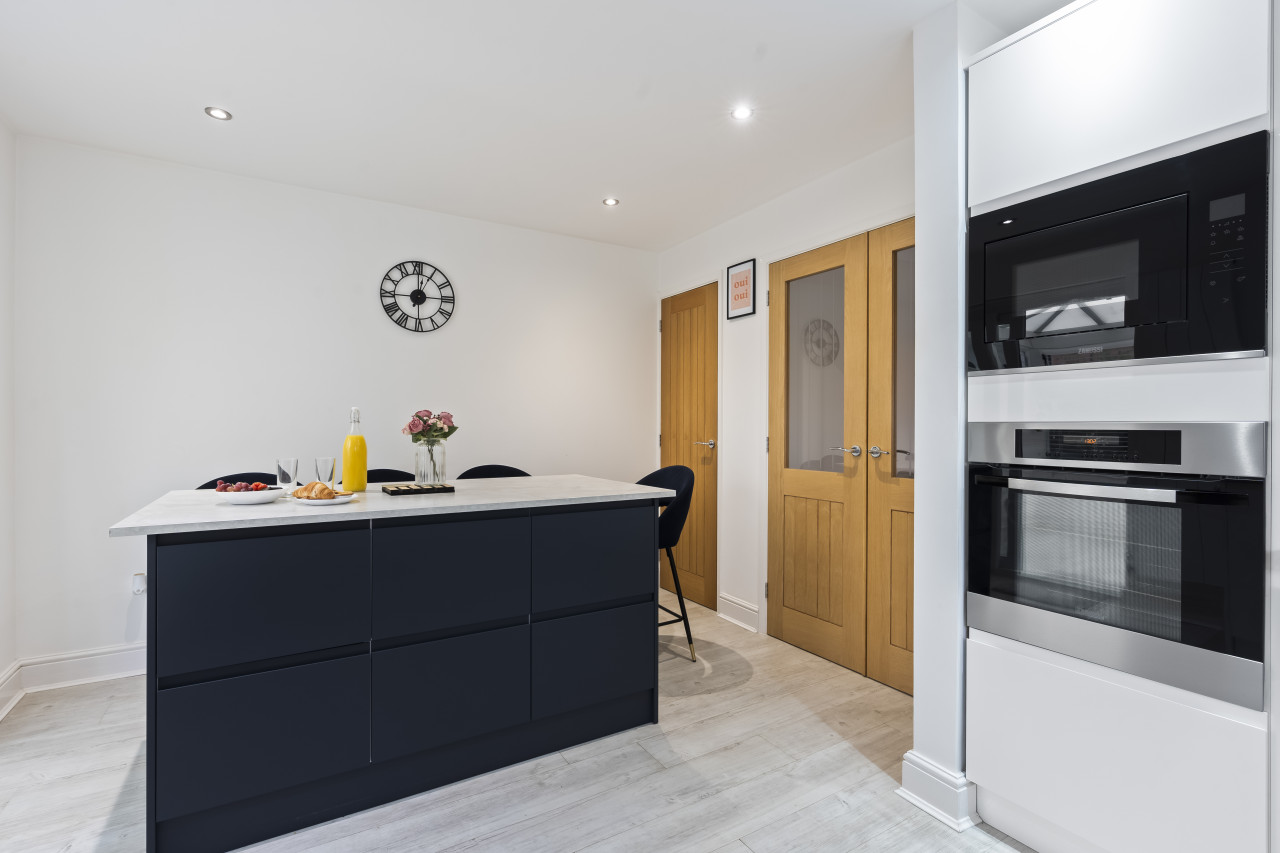
Syston
Tilly's Townhouse with Parking
- Sleeps 4
- 2 bedrooms
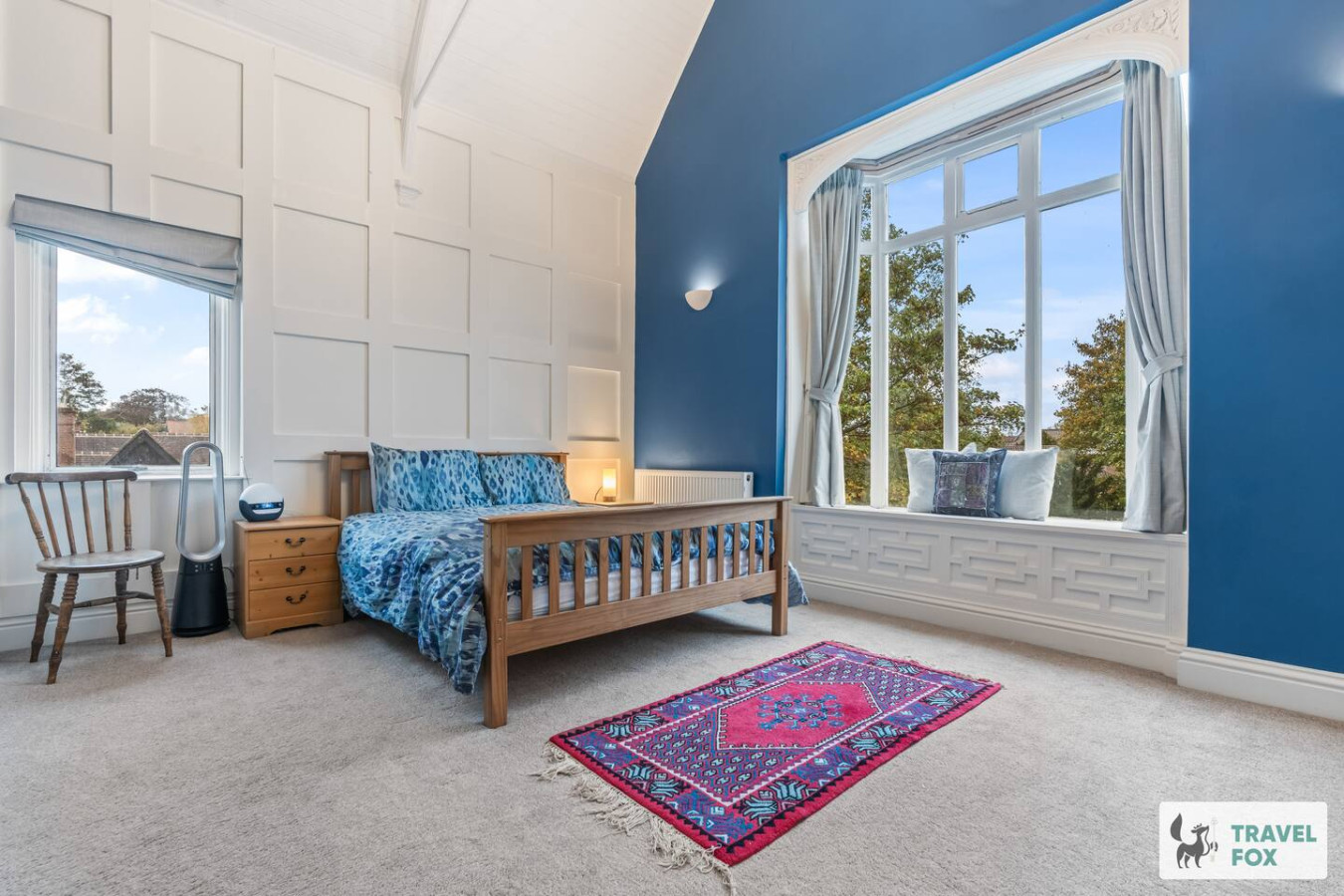
Leicester
Rachel's House with Parking!
- Sleeps 12
- 4 bedrooms
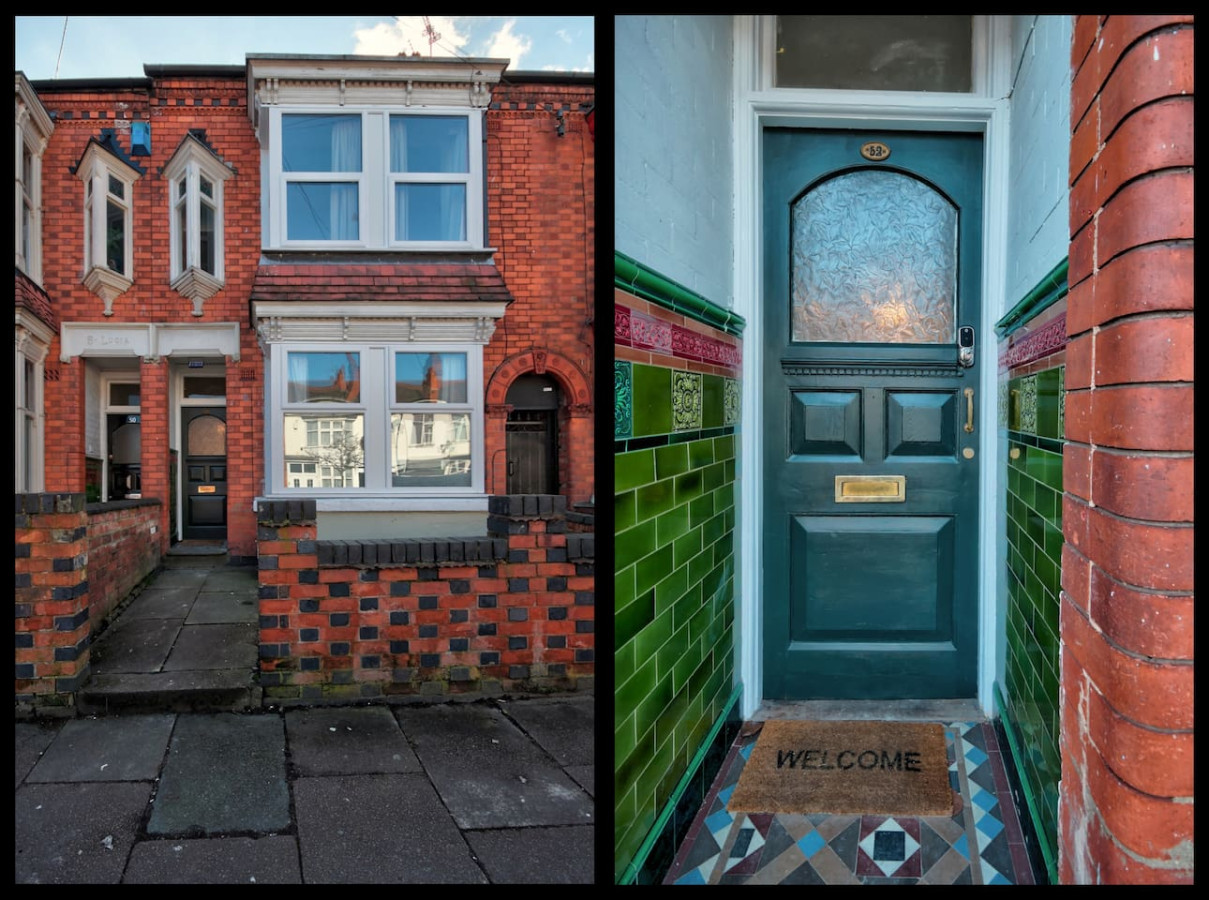
Leicester
Upperton House - Central 5 Bedroom
- Sleeps 9
- 5 bedrooms
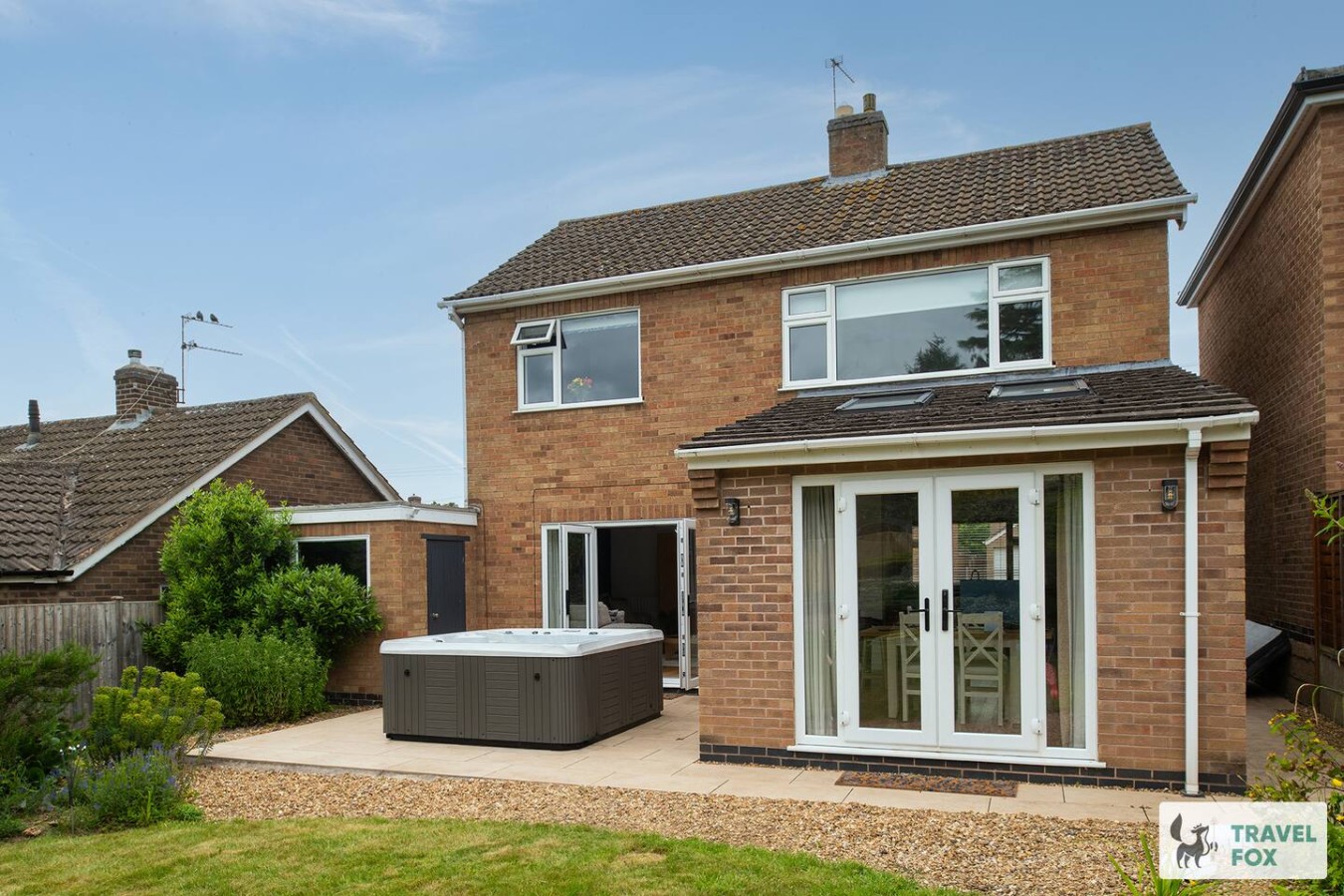
Rearsby
Vanessa's Haven - with hot tub and free parking for 3 cars!!
- Sleeps 5
- 3 bedrooms

Charnwood
UnPoplar House - Free in House Chris
- Sleeps 6
- 3 bedrooms
For homeowners
Own a holiday home near Melton Mowbray?
We manage holiday lets across the UK from 12% commission, charged after cleaning costs, with no lock-in. A co-founder visits before you decide.
How our holiday let management works →
A guide with a point of view
Written from research. Edited for real journeys.
Use the Official site links for live practical details, then use this guide for context, ideas and room to explore.
Sources
Every place on this page is checked against a published source. Each entry links the record we used and names who publishes it.
- Ye Olde Pork Pie Shoppe — porkpie.co.uk operator, sector body or destination organisation
- Parish Church of St Mary — meltonteamparish.org.uk operator, sector body or destination organisation
- Melton Carnegie Museum — meltonmuseum.org operator, sector body or destination organisation
- The Anne of Cleves — historicengland.org.uk statutory register or public authority record not machine-readable; publisher restricts automated access
- The Melton Cheeseboard — meltoncheeseboard.co.uk operator, sector body or destination organisation
- Melton Country Park — melton.gov.uk statutory register or public authority
- Burrough Hill Iron Age Hillfort — historicengland.org.uk statutory register or public authority record not machine-readable; publisher restricts automated access
- Melton Mowbray Livestock Market — meltonmowbraymarket.co.uk operator, sector body or destination organisation