
Independent Norfolk
Burnham Market
A broad Georgian green, specialist food shops and centuries of history, with the north Norfolk coast close by.
- Best for
- Independent food shops and historic character
- Give it
- A village day with a coastal detour
- Don't miss
- The Hoste's history and St Mary's flint tower
The Fox verdict
Come for the independents; stay for the older stories
Burnham Market pairs a Georgian green and specialist food shops with churches, inns and easy links to the north Norfolk coast.
The strongest visit combines the village's butcher, fishmonger and delicatessen with St Mary's and The Hoste Arms, then uses the village as a base for the Norfolk Coast Path, Brancaster Beach or Holkham Hall.
Where to go
Places in Burnham Market
Every place below is checked against a published source, listed with what it is and how long to give it.
Local signatures
3 placesSt Mary's Church, Burnham Westgate
A Grade I-listed church of Norman origin, largely 14th century, with flint walls, stone dressings, a west tower and 17th-century bells.
- Visit length
- Editorial estimate: around 45 minutes
- Locality
- Burnham Westgate
Gurneys Fish Shop
A fishmonger selling fresh fish and shellfish.
- Visit length
- Editorial estimate: around 25 minutes
- Locality
- 28 Market Place
Humble Pie Delicatessen
A delicatessen for artisan products and picnic essentials, with what is reportedly one of Norfolk's largest cheese selections.
- Visit length
- Editorial estimate: around 35 minutes
- Locality
- set above Gurneys Fish Shop, 28 Market Place
Food & drink
2 placesThe Hoste Arms
A historic former coaching inn with an original one-room bar, restaurant, brasserie, rooms, beer garden, terrace and a twenty-seat cinema on the lower ground floor.
- Visit length
- Editorial estimate: around 75 minutes
- Locality
- overlooking the village green
Arthur Howell
A long-established traditional butcher specialising in local meat.
- Visit length
- Editorial estimate: around 25 minutes
- Locality
- 3 The Market Place
Walks & outdoors
2 placesNorfolk Coast Path
An 84-mile National Trail passing close to Burnham Market along the coast at Burnham Overy Staithe.
- Visit length
- Editorial estimate: around 90 minutes for a local section
- Locality
- along the coast at Burnham Overy Staithe
Brancaster Beach
A National Trust coastal stop with sweeping sand, dunes and salt marsh.
- Visit length
- Editorial estimate: around 90 minutes
- Locality
- Brancaster
History & heritage
1 placeHolkham Hall & Estate
An 18th-century Palladian house with a deer park, lake and walled garden.
- Visit length
- Editorial estimate: around 120 minutes
- Locality
- Holkham
No places match this filter. Choose All places to reset the list.
Three ways to explore Burnham Market
Signature outings
The Hoste Arms
Pause at the former coaching inn for its original bar, locally sourced seasonal food and stories connecting the Pitt family, Captain Sir William Hoste and Nelson.
St Mary's Church
Look over the Norman-origin church's flint walls, west tower and later exterior detail at Burnham Westgate.
Brancaster Beach
Make the short trip from Burnham Market to the National Trust sands, dunes and salt marsh at Brancaster.
The village story
Burnham Market Village Guide
Independent shops, ambitious food, layered history and the north Norfolk coast within easy reach.
The independent green
The green at Burnham Market is broad and Georgian, edged with period houses and flint cottages, and the shops around it are almost all ones you won't recognise. There is a post office, a butcher, a baker and a fishmonger, which is the sort of line-up most villages gave up decades ago. Around thirty independent shops fill in the rest: delis, galleries, a wine merchant, a hat shop, a bookshop, jewellers. A local writer at essentially-england.com put it plainly: "Burnham comes close to my idea of what an English village might have looked like before chain stores and franchises made one High Street look like any other."
Start with the food, because a lot of people come here for it. Arthur Howell is the butcher at 3 The Market Place, long-established and still going. A few doors along at number 28 is Gurneys Fish Shop, selling fresh fish and shellfish, and set above it is Humble Pie Delicatessen, which stocks picnic essentials, artisan bits, and what is reportedly one of the largest cheese selections in Norfolk. That is a lot of cheese for one village. No. Thirty3 The Bakery is at 29 The Green for the bread, and the Tuscan Farm Shop at Bank House handles the Italian end of things. Satchells, on North Street, is the wine merchant, well stocked and independent.
You could assemble a very good lunch without visiting the same shop twice, which is roughly the point.
If you would rather someone else did the cooking, the eating is serious here too. Socius, on the edge of Foundry Place, does British-inspired small plates from seasonal, locally sourced ingredients, cooked in an open kitchen so you can watch. It is in the Michelin Guide and holds two AA rosettes, which is more than most villages this size manage. No Twenty9, at 29 Market Place, is a restaurant, bar and deli that runs all day on the green.
Food, inns and The Hoste story
The Nelson sits in the heart of the village, a refurbished country pub with rooms, an outdoor terrace and free parking, which matters more than it should in a place this popular. The menu runs to pub classics and grazers, vegetarian and vegan dishes, and what the pub calls its ever-popular Sunday roasts. Full prices only turn up in the downloadable menus, so you phone ahead on 01328 641504. It is named, as a great many things around here are, after Admiral Lord Nelson, who was born a short walk away at Burnham Thorpe.
The Hoste Arms is the one people have heard of. It overlooks the green, a 17th-century former coaching inn that is now a luxury hotel-pub, with an original one-room bar, a restaurant, a brasserie and rooms, plus a beer garden and terrace that have won several design awards. There is a twenty-seat cinema tucked into the lower ground floor. The food is locally sourced and seasonal; opinion since a run of ownership changes is mixed, and one recent TripAdvisor review is titled, without much ambiguity, "Lost its charm — sadly." It welcomes dogs.
The Hoste's history is worth the detour. It was built around 1550 and was known as the Pitt Arms around 1700, after the Pitt family, relatives of the political dynasty. In 1811 it was renamed after Captain Sir William Hoste, one of Nelson's captains. Nelson himself is said to have collected his dispatches here every Saturday between 1788 and 1793, and Room 5 is reputed to be where he slept. Parson James Woodforde recorded staying here on 12 September 1787.
Then it fell quiet for about 130 years. In 1989 a hotelier named Paul Whittome bought the decayed inn and turned it into a celebrity destination, winning Pub and Bar Operator of the Year in 1999 and later adding the Vine House hotel, the Railway Inn and Railway Cottages. He died of cancer in July 2013, aged 55. Around 1,200 people came to his memorial, among them Amanda Holden, Anneka Rice, Stephen Fry and Les Dennis. The Hoste was sold to the City Pub Group in 2019.
Three Burnhams in one
That celebrity streak is why the village picked up its other name, "Chelsea-on-Sea", a nod to the London weekenders and the boutiques and the general sense that the High Street here has been quietly colonised by people with second homes. The census bears it out: the population was 877 in 2011 and had fallen to 724 by 2021, a decline linked directly to the number of houses that stand empty most of the week. In 2020 Condé Nast Traveller named Burnham Market among the twenty most beautiful villages in the UK and Ireland, which does not tend to slow that sort of thing down.
For all the polish, the church end of the village is older and plainer. St Mary's, at Burnham Westgate, is Grade I listed, Norman in origin but largely 14th century, with a heavy restoration in 1872 that accounts for most of what you see outside. It is flint with stone dressings, a west tower, four-bay aisles and a three-bay chancel, and its bells are 17th century. All Saints', at Burnham Ulph, is another Norman church remodelled in the 14th century. There is also St Henry Walpole, a Catholic church built in 1959 and dedicated to an Elizabethan martyr, with Mass on Fridays and Sundays.
Burnham Market is really three villages that grew into one — Burnham Sutton, Burnham Ulph and Burnham Westgate, merged over time. It is not, confusingly, one of the original Seven Burnhams of the old rhyme, "London York and Coventry and the Seven Burnhams by the sea," which once described seven Burnham villages sitting within a two-mile radius. Most of those survive now only as names. Because the modern village is a merger, it isn't listed separately in the Domesday Book of 1086; the whole Burnham cluster appears together in the Brothercross hundred, recorded with 69 households between them.
Rails lost, paths retained
The grandest house belongs to the Westgate side. Burnham Westgate Hall was built in the 1780s by Sir John Soane for Thomas Pitt, 1st Baron Camelford. It passed to the Royal British Legion in 1933, spent time as an old people's home after the war, and has been the private residence of Baroness Rawlings since 1990.
The village lost its railway a while ago. The West Norfolk Junction Railway opened a line to Burnham Market station in August 1866, linking it to Wells-next-the-Sea and King's Lynn. Passenger services stopped in June 1952 and the line closed for good in 1964. The old station building still stands on the road to North Creake, and the Whittome-era Railway Inn and Railway Cottages took their names from a line that no longer runs. There is no station now; the nearest mainline is at King's Lynn, about 19 miles south-west, and the Lynx CoastLiner 36 bus makes the trip in roughly an hour. The village sits on the B1155, with the A149 coast road close by. If you would rather cycle, there is bike hire at Burnham Cycles and at nearby Deepdale Farm.
The walking is why a lot of people keep the car parked all week. Footpaths follow the River Burn and link all the Burnham villages on foot, so you can walk half a mile inland to Nelson's birthplace at Burnham Thorpe — the house itself was demolished after his father died, and a roadside plaque marks the spot — or head the other way down the river to Burnham Overy Staithe, where, as one description has it, boats bump softly against the quay. The Burnham Market Circular Walk runs from the green up country lanes to Burnham Overy Town and on to the Staithe, then joins the Peddars Way and Norfolk Coast Path east through Holkham Nature Reserve. The Norfolk Coast Path itself, an 84-mile National Trail, passes close along the shore.
Coast, countryside and quiet residents
There is no beach in the village. There doesn't need to be. Brancaster is about two miles off, under fifteen minutes, with sweeping sand, dunes and salt marsh looked after by the National Trust. Holkham beach and Wells-next-the-Sea are only a little further, and Holkham Hall, the 18th-century Palladian pile with its deer park and lake, is within about a quarter of an hour. Wells has its harbour, its rows of beach huts and the Wells and Walsingham Light Railway, and Holkham Park has cycling and walking trails through a working deer park. The big open green in the middle of the village does duty for picnics and for children who have had enough of the coast for one day.
The village has kept its share of quiet residents over the years. The novelist Anne Elliot lived in Burnham Sutton until her death in 1941; Lady Margaret Douglas-Home, a musician and writer, was here into the 1990s; and Major David Jamieson, who won the Victoria Cross, lived locally until 2001. None of them left much of a mark on the street, which is rather the character of the place — people come here to be left alone with a good cheese counter and a view of the green.
It is the kind of place where the fishmonger, the butcher and the baker are all still within sight of each other, and where the loudest thing on a weekday morning is a bell from a Norman tower and a queue forming outside the bakery.
Stay around Norfolk
Make a longer stay of it
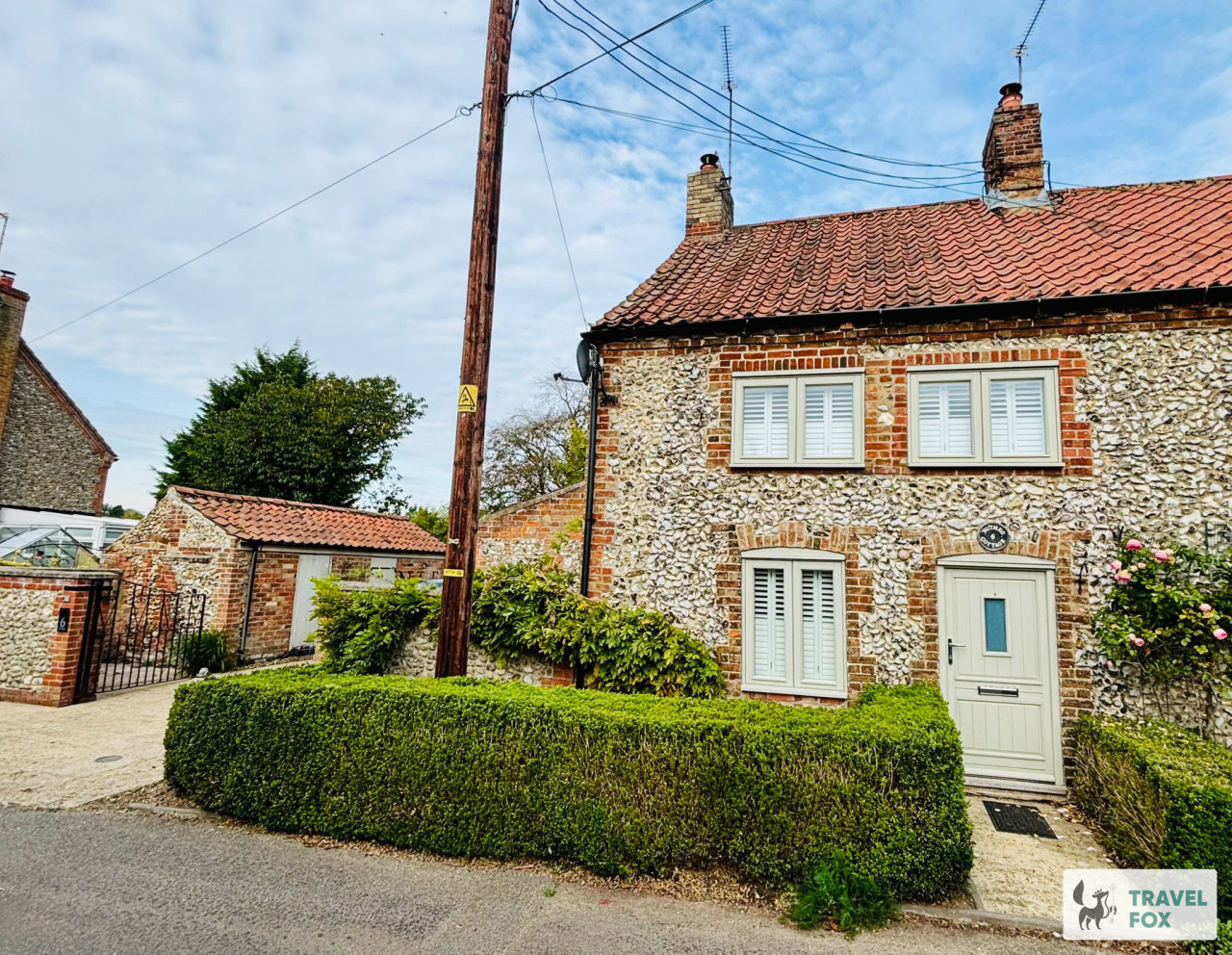
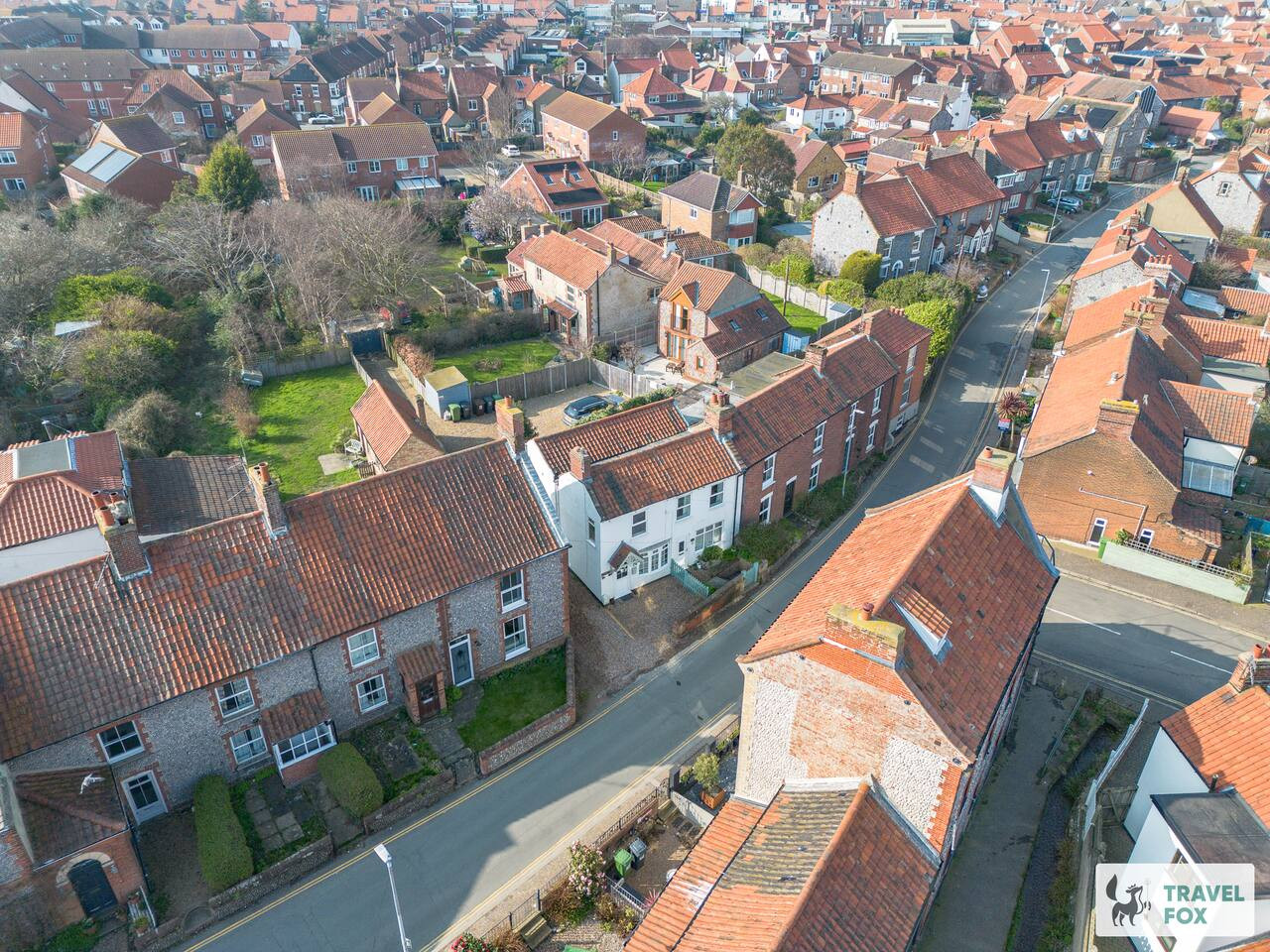
Travel Fox holiday homes around Norfolk, linked directly to their property pages.
A guide with a point of view
Written from research. Edited for real journeys.
Use the Official site links for live practical details, then use this guide for context, ideas and room to explore.
Sources
Every place on this page is checked against a published source. Each entry links the record we used and names who publishes it.
- The Hoste Arms — thehostearms.com operator, sector body or destination organisation
- St Mary's Church, Burnham Westgate — historicengland.org.uk statutory register or public authority record not machine-readable; publisher restricts automated access
- Arthur Howell — arthurhowell.online operator, sector body or destination organisation
- Gurneys Fish Shop — gurneysfishshop.co.uk operator, sector body or destination organisation
- Humble Pie Delicatessen — ratings.food.gov.uk statutory register or public authority
- Norfolk Coast Path — nationaltrail.co.uk other published source
- Brancaster Beach — nationaltrust.org.uk national body or asset manager
- Holkham Hall & Estate — holkham.co.uk operator, sector body or destination organisation