
Norfolk coast village guide
Burnham Overy Staithe
A tide-led harbour village where creeks, salt marsh and coastal paths meet distinctive local history.
- Beach walk
- 1½ miles from the Staithe
- Coast path
- Burnham Deepdale to Wells links
- Bus stop
- The Hero
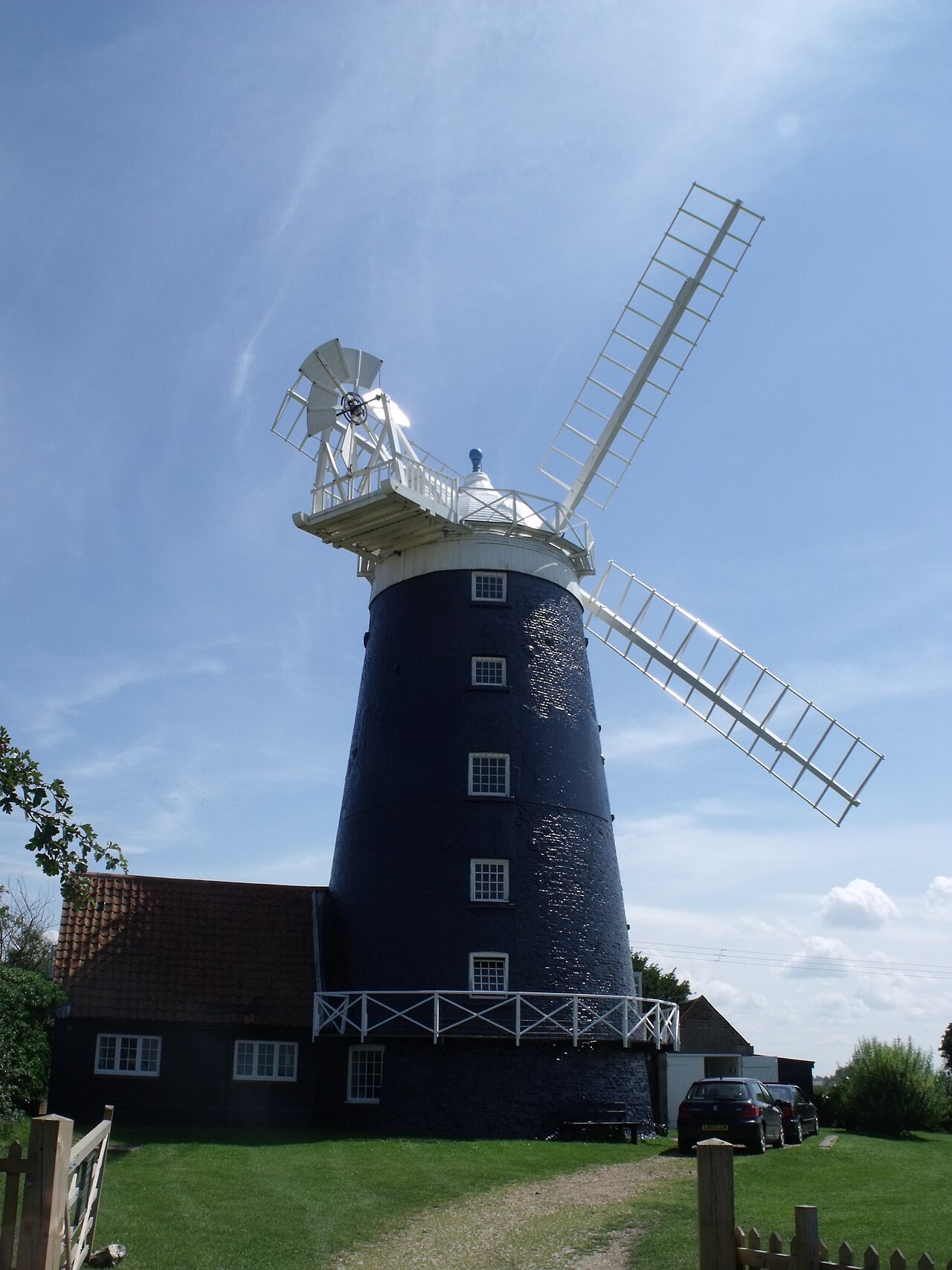
Photo: Elliott Brown · CC BY 2.0 · cropped
The Fox verdict
Best for a harbour-and-marsh day shaped by the tide
Come for the working Staithe, the sea-wall walk to Holkham beach and an unusual thread of church, windmill and maritime history.
Burnham Overy Staithe combines sailors, kayakers and crabbing at the Quay with a 1½-mile route across reclaimed marsh to dunes and beach. Inland, St Clement's central tower and the 1816 Tower Windmill give the village a strong historic counterpoint.
Where to go
Places in Burnham Overy Staithe
Every place below is checked against a published source, listed with what it is and how long to give it.
Local signatures
3 placesThe Hero
A coastal gastro-pub with rooms serving a seasonal menu based on locally sourced produce.
- Visit length
- Editorial estimate: Suggested 75 minutes
- Locality
- Wells Road
- Access
- Dogs are welcome throughout; bookings are taken in the restaurant only.
Holkham National Nature Reserve
The Staithe footpath crosses freshwater meadows in Holkham National Nature Reserve before reaching Gun Hill and the beach.
- Visit length
- Editorial estimate: Suggested 90 minutes
- Locality
- Holkham beach, beyond Gun Hill
- Access
- The footpath follows a raised embankment across reclaimed salt marsh and through dunes to Gun Hill and the beach.
Norfolk Coast Path
The long-distance coast path passes through Burnham Overy Staithe and continues along the north Norfolk coast in both directions.
- Visit length
- Editorial estimate: Suggested 90 minutes
- Locality
- Passes through Burnham Overy Staithe
- Access
- The path links Burnham Deepdale to the west with Holkham and Wells-next-the-Sea to the east.
Walks & outdoors
1 placeScolt Head Island National Nature Reserve
An offshore National Nature Reserve with birdlife, dunes and remote beach, reached from the Staithe by seasonal ferry.
- Visit length
- Editorial estimate: Suggested 120 minutes
- Locality
- Offshore from the Staithe
- Access
- Seasonal ferries run May–September and are tide-led, around two hours either side of high tide.
History & heritage
2 placesSt Clement's Church
A Grade I-listed church with a Saxo-Norman core and one of only about fourteen medieval central towers in Norfolk.
- Visit length
- Editorial estimate: Suggested 45 minutes
- Locality
- Burnham Overy Town, about half a mile inland
- Access
- The National Trust circular walk passes St Clement's Church.
Tower Windmill
A Grade II*-listed six-storey brick tower mill built in 1816 and given to the National Trust in 1958.
- Visit length
- Editorial estimate: Suggested 30 minutes
- Locality
- Burnham Overy
- Access
- The National Trust circular walk passes the Tower Windmill.
Things to do
1 placeThe Quay and Staithe
The village's waterside hub for sailors, kayakers and paddleboarders, with crabbing and wading at the Quay.
- Visit length
- Editorial estimate: Suggested 30 minutes
- Locality
- The Quay/Staithe
- Access
- Crabbing and wading take place at The Quay; sailing, kayaking and paddleboarding also centre on the Staithe.
No places match this filter. Choose All places to reset the list.
Three ways to explore Burnham Overy Staithe
Signature outings
The working Staithe
Tidal creeks, open salt marsh, boats and crabbing make the Quay the village's working heart.
St Clement's central tower
The church's lowered central tower and narrow passage between nave and chancel preserve the result of changes made around 1200.
The six-storey Tower Windmill
The 1816 windmill is one of the Burnham Overy locations linked to Joan G. Robinson's When Marnie Was There.
The village story
Creeks, coast and lives shaped by the water
The locked article moves from the working Quay and village pub to the coast path, church, windmill and Burnham Overy's maritime lives.
At the working Quay
At the Quay, a coffee stand called the Norfolk Coffee Pedler sells coffee and homemade cake to people in various states of dampness — sailors, kayakers, paddleboarders, and in summer, children who have just spent an hour crabbing over the edge with a bucket. In the warmer months a traditional Norfolk ice cream van parks up at the Staithe. This is the working heart of the village: the River Burn fans out into tidal creeks through open salt marsh, and everything here happens at the water's pace and the tide's.
The Hero, on Wells Road, is the pub. It's named after Nelson, who was born a mile south at Burnham Thorpe, and it has quietly become first and foremost a restaurant these days — bookings taken in the restaurant only. The menu is seasonal and locally sourced; reviewers keep coming back to the burgers, the fish and chips, and the steaks. One called it "inventive, varied and easily as good as many of the London restaurants," which is a lot to ask of a village pub. Woodforde's Wherry and Norfolk Topper are the regular ales, with Norfolk gin behind the bar and a wood burner going inside. Dogs are welcome throughout, and get a towel, and biscuits after long beach walks. There are three rooms upstairs if you want to stay.
Village provisions and coast walks
For a proper food shop you go 1.5 miles south to Burnham Market, which the second-home crowd have nicknamed Chelsea-on-Sea, and which has Gurney's Fish Shop and a run of delis.
The walk everyone does starts at the Staithe and runs a mile and a half along the crest of a raised sea wall, out across reclaimed marsh that is now freshwater meadow, through the dunes to Gun Hill and the long, empty sweep of Holkham beach. The Norfolk Coast Path passes through, linking Burnham Deepdale to the west and Wells to the east. A National Trust circular loops inland past St Clement's church and the Tower Windmill.
The windmill and When Marnie Was There
The windmill is worth knowing about. Built in 1816, six brick storeys with an ogee cap, it was a holiday let sleeping up to twenty until 2018. Joan G. Robinson set her 1967 novel When Marnie Was There here, basing "Little Overton" on the staithe and the windmill; Studio Ghibli turned it into a film in 2014, and Robinson herself is buried in the churchyard.
St Clement's central tower
St Clement's church, half a mile inland at Burnham Overy Town, is one of only about fourteen medieval Norfolk churches built with a central tower. Around 1200 the tower was starting to collapse, so they demolished the transepts and lowered it, which left the odd narrow corridor between nave and chancel that's still there.
Lives shaped by the creeks
Nelson learned to row and sail a dinghy in these creeks at the age of ten, two years before he joined the Navy. Later, Richard Woodget — the master who ran the Cutty Sark on her record wool runs to Australia — retired to a farm here and lived out his days by the same water. From the Boathouse Quay, Peter Bickle has been running the Island Ferry across to Scolt Head for over twenty years.
Stay around Norfolk
Make a longer stay of it
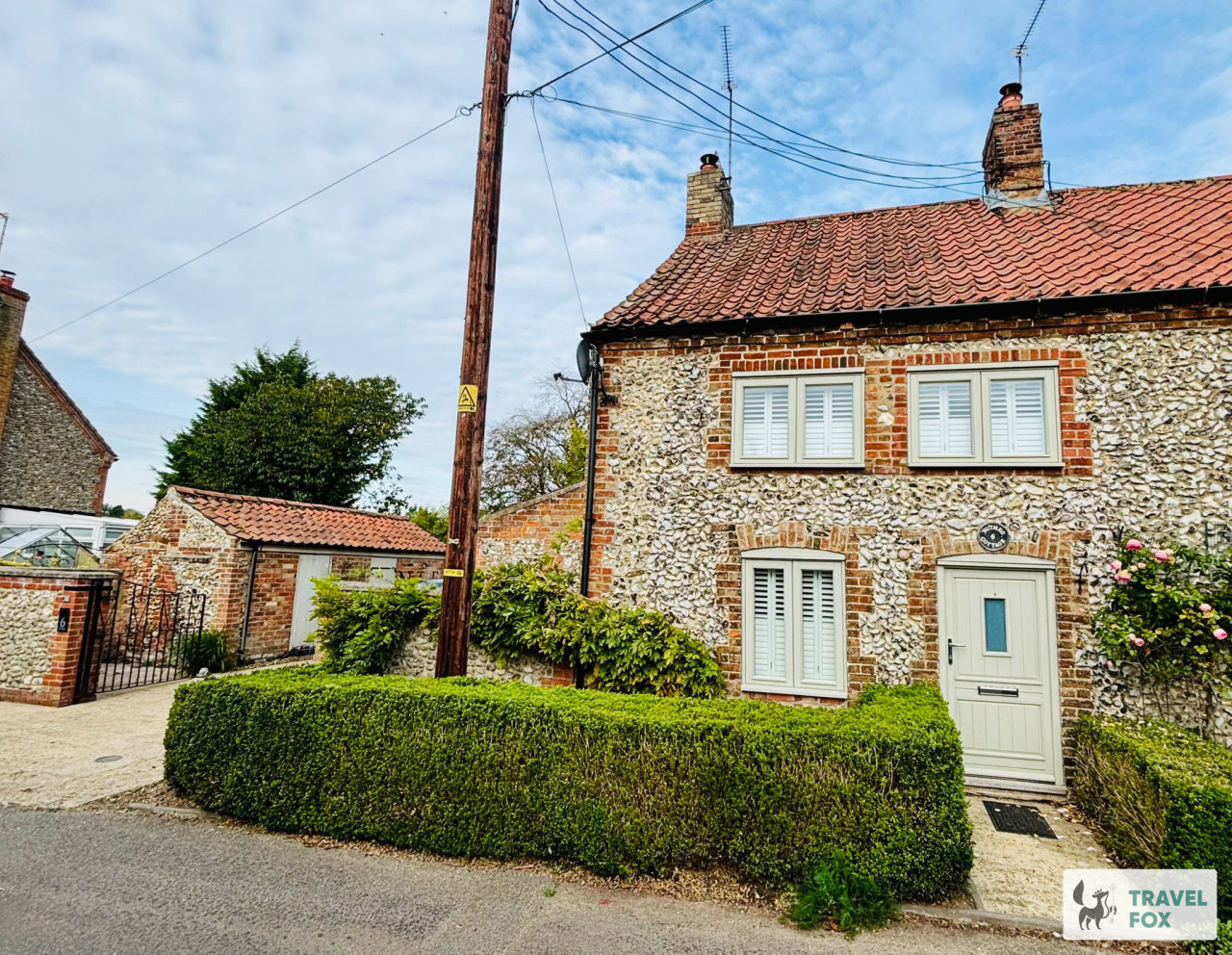
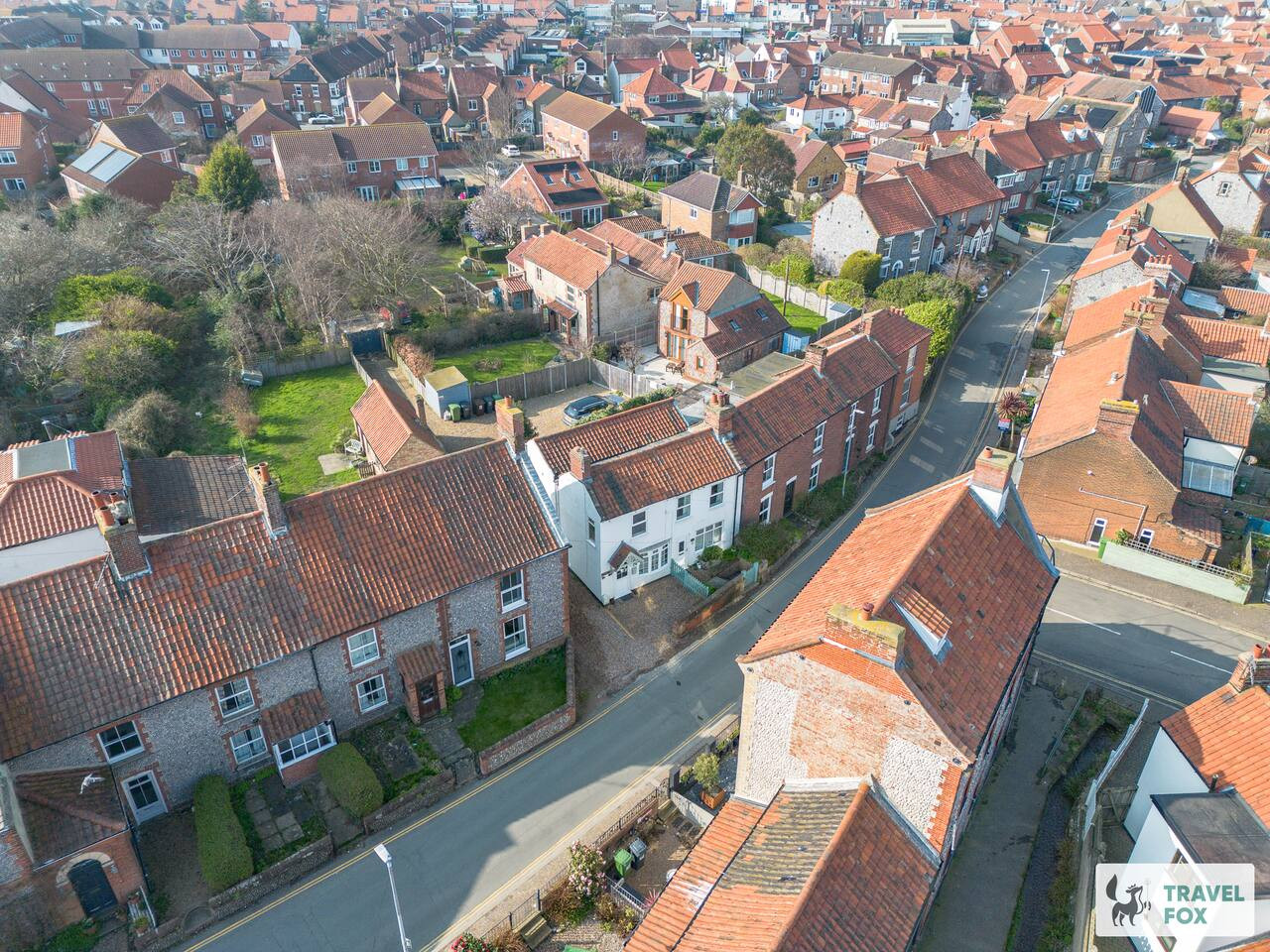
Travel Fox holiday homes around Norfolk, linked directly to their property pages.

A guide with a point of view
Written from research. Edited for real journeys.
Use the Official site links for live practical details, then use this guide for context, ideas and room to explore.
Photography credits & licences
Third-party photographs are credited to their named creators and reused under the linked Creative Commons licence or public-domain dedication. Travel Fox stores an optimised local copy; the file-specific changes and any browser-applied display crop are disclosed below. Reused photographs link both to the Wikimedia Commons source record and to the declared source image; Travel Fox's own photographs carry no such record and are marked as ours. These image licences do not cover Travel Fox text, branding or page design.
- File:Tower Windmill - Burnham Overy Staithe.jpg — photograph by Elliott Brown; Flickr : Tower Windmill - Burnham Overy Staithe. Source record on Wikimedia Commons. Declared source image. Licence: CC BY 2.0. File changes: Downloaded from Wikimedia Commons, resized to a maximum 1920px edge and encoded as an optimised JPEG. Display changes: Displayed with responsive CSS cropping.
Sources
Every place on this page is checked against a published source. Each entry links the record we used and names who publishes it.
- The Quay and Staithe — visitnorthnorfolk.com operator, sector body or destination organisation
- The Hero — theheroburnhamovery.co.uk operator, sector body or destination organisation
- St Clement's Church — historicengland.org.uk statutory register or public authority record not machine-readable; publisher restricts automated access
- Tower Windmill — nationaltrust.org.uk national body or asset manager
- Holkham National Nature Reserve — gov.uk statutory register or public authority
- Norfolk Coast Path — gov.uk statutory register or public authority
- Scolt Head Island National Nature Reserve — gov.uk statutory register or public authority