
Oilfield paths and old stories
Eakring
A Nottinghamshire village where a long-distance path, a medieval church and nature reserves reveal stories of plague, wartime oil and children's television.
- Best for
- Walking, wildlife and wartime oil history
- Give it
- A half day
- Don't miss
- The restored pump jacks in Dukes Wood
The Fox verdict
Small village, unusually deep stories
Come for paths and wildlife, then follow Eakring's links to Eyam, a secret wartime oilfield and Lizzie Dripping.
The Robin Hood Way runs through Eakring, St Andrew's preserves the story of William Mompesson, and Dukes Wood turns the former oilfield into a nature trail past restored pump jacks. Eakring Meadows adds one of the county's best surviving neutral grasslands.
Where to go
Places in Eakring
Every place below is checked against a published source, listed with what it is and how long to give it.
Local signatures
3 placesSt Andrew's Church
A Grade II* church with a 13th-century core, a three-stage tower and a font dated 1674, restored by William Mompesson after he became rector in 1670.
- Visit length
- Editorial estimate: Allow around 30 minutes
- Locality
- Eakring
Robin Hood Way
A 104-mile long-distance footpath whose route passes directly through Eakring and climbs through woods into the village.
- Visit length
- Editorial estimate: Allow around 90 minutes for a local section
- Locality
- Passing directly through Eakring
Eakring Meadows
A Nottinghamshire Wildlife Trust reserve rated among the county's best surviving neutral grasslands, with breeding birds including snipe and lapwing.
- Visit length
- Editorial estimate: Allow around 60 minutes
- Locality
- Between Eakring and Maplebeck
- Access
- Access is by permit only; contact Nottinghamshire Wildlife Trust before visiting.
Walks & outdoors
1 placeDukes Wood Nature Reserve
A walking trail through the former oilfield, passing restored nodding-donkey pump jacks in a Site of Special Scientific Interest.
- Visit length
- Editorial estimate: Allow around 90 minutes
- Locality
- Dukes Wood, south of Eakring
- Access
- The route follows a woodland nature trail across the former oilfield site.
History & heritage
1 placeRufford Abbey Country Park
A country park with the ruins of a 12th-century Cistercian abbey, lakeside walks and formal gardens.
- Visit length
- Editorial estimate: Allow around 90 minutes
- Locality
- Rufford
No places match this filter. Choose All places to reset the list.
Three ways to explore Eakring
Signature outings
Mompesson at St Andrew's
See the church William Mompesson restored after arriving from plague-stricken Eyam, including its 13th-century tower base and 1674 font.
Pump jacks in the woods
Follow the former oilfield trail past restored pump jacks where wartime drilling once lifted output beyond 3,000 barrels a day.
Rufford's abbey ruins
Explore the 12th-century abbey ruins, lakeside walks and formal gardens at Rufford Abbey Country Park.
The village story
Eakring Village Guide
Footpaths and a parish church lead into stories of plague, secret oil and a children's television witch.
The village pub
On Bilsthorpe Road, the Savile Arms' untouched interior — tap room, snug-lobby, red-tiled pool room — earns the 400-year-old pub a place on CAMRA's National Inventory of Historic Pub Interiors. It closed before mid-2023, when a visitor found weeds round the door and a notice asking for new management, and by December was recorded as "closed, future uncertain." Eakring has no open pub.
From oak-circle name to walking country
The village name comes from Old Norse, eik-hringr, "the circle of oak trees." Eakring sits between the A617 and A616, about 12 miles from Newark. Fiskerton, on the Nottingham–Lincoln line, is the nearest station; Nottsbus On Demand offers a bookable door-to-door service.
What the village does have is walking. The Robin Hood Way, a 104-mile path, runs straight through, climbing past the old windmill — five storeys of brick, sail-less since 1912, now a house. South of the village, the Dukes Wood Nature Trail crosses the old oilfield past restored pump jacks. Eakring Flash draws birdwatchers, and Eakring Meadows is among the county's best surviving neutral grasslands.
Mompesson and the Pulpit Ash
St Andrew's Church has a 13th-century tower base and a font dated 1674. By the 1670s the church was dangerously dilapidated; the new rector, William Mompesson, restored it. Mompesson had been rector of Eyam, Derbyshire, through the Great Plague of 1665–66 — his own wife died in the outbreak he helped contain by sealing the village off — and stayed at Eakring 39 years, from 1670. Tradition says wary villagers wouldn't let him preach inside the church, so he preached instead under an ash tree at the village edge, afterwards the Pulpit Ash, marked since 1893 by a stone cross: "Near this spot stood Pulpit Ash where Mompesson preached on coming to Eakring as Rector in 1670 AD after leaving Eyam in Derbys which had been decimated by the plague."
The secret oilfield
Eakring's other secret took longer to get out. In the late 1930s, geologists found oil beneath the village using old colliery borehole records. By 1943, 42 American drilling roughnecks, most from Oklahoma, sailed on the converted liner Queen Elizabeth and were billeted at Kelham Hall, a Gothic Revival theological college nearby — locals reportedly assumed the unexplained American presence meant a Western was being filmed. Over the following year they drilled 106 wells, pushing output from around 300 barrels a day to over 3,000. It stayed classified for decades, revealed only in Guy and Grace Steele Woodward's 1973 book The Secret of Sherwood Forest. The former oilfield site is now a nature reserve, open at all times.
Lizzie Dripping's village
The children's author Helen Cresswell lived at Old Church Farm and based her BBC series Lizzie Dripping on the village, insisting filming happen there rather than on a set. The character came from something she overheard her neighbour, Mary Stokes, say to her daughter: "You're a right Lizzie Dripping, you are." The story's witch, who knits on a flat gravestone, was based on one that's still there, in the churchyard next to the house where Cresswell lived, and died.
Stay around Nottinghamshire
Make a longer stay of it
Travel Fox holiday homes around Nottinghamshire, linked directly to their property pages.
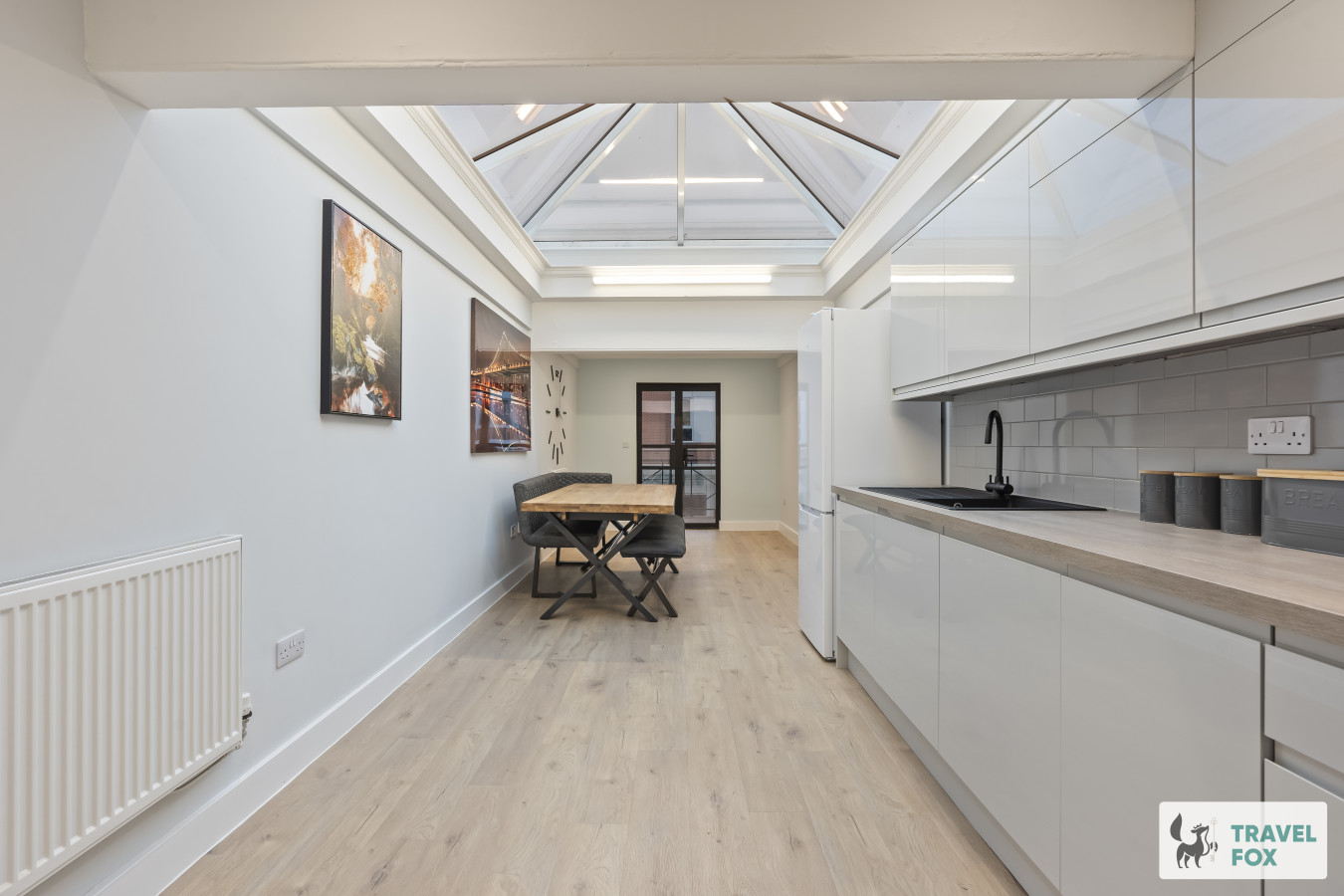
Nottingham
Camila's Penthouse Central Stay with Balcony
- Sleeps 16
- 5 bedrooms

Nottingham
Blair's Central Stay
- Sleeps 16
- 5 bedrooms

Nottingham
Anna's Central Stay
- Sleeps 16
- 5 bedrooms

Nottingham
Melissa's Central Stay
- Sleeps 13
- 5 bedrooms
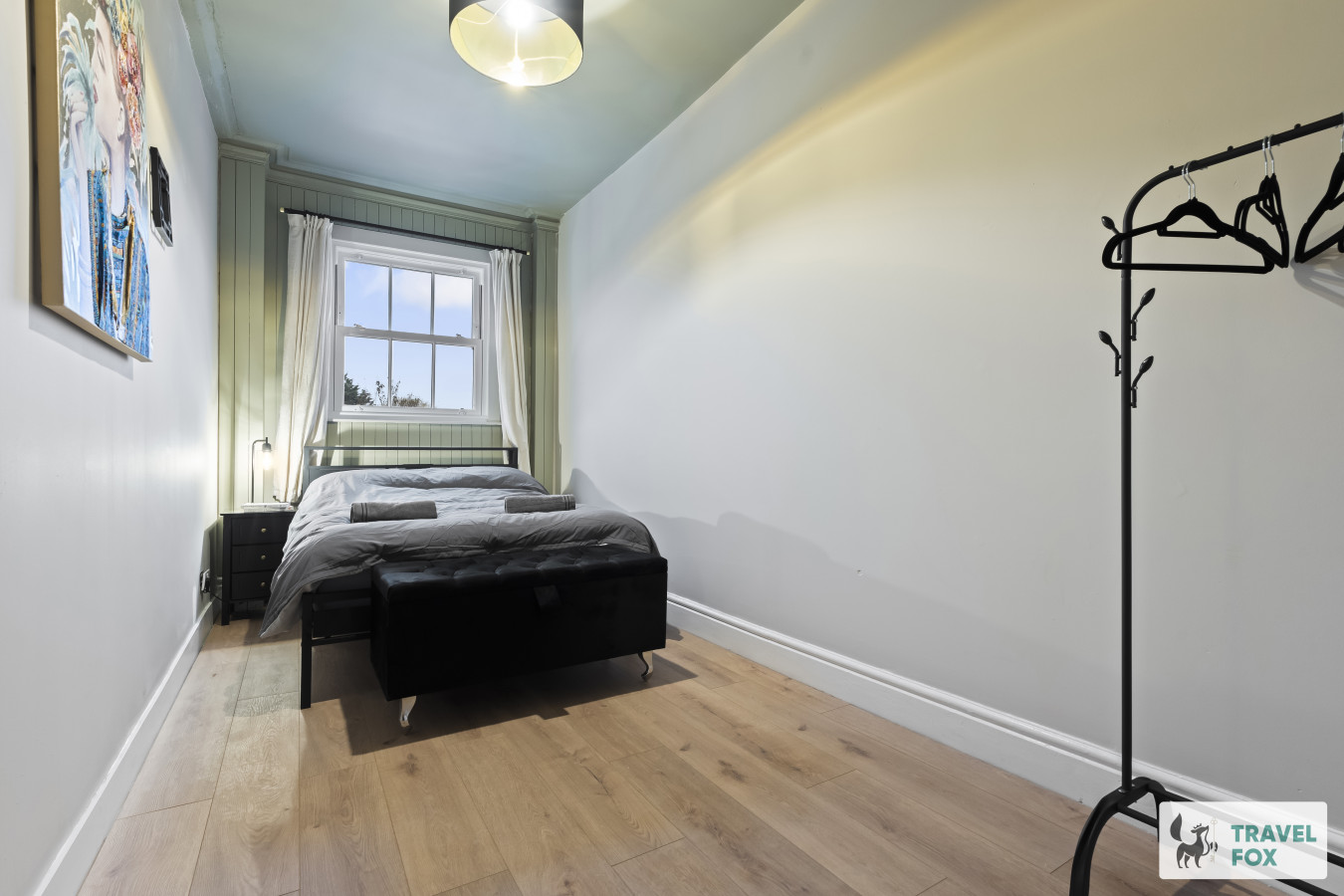
Nottingham
Callie's Central Stay
- Sleeps 9
- 3 bedrooms
For homeowners
Own a holiday home near Eakring?
We manage holiday lets across the UK from 12% commission, charged after cleaning costs, with no lock-in. A co-founder visits before you decide.
How our holiday let management works →
A guide with a point of view
Written from research. Edited for real journeys.
Use the Official site links for live practical details, then use this guide for context, ideas and room to explore.
Sources
Every place on this page is checked against a published source. Each entry links the record we used and names who publishes it.
- St Andrew's Church — historicengland.org.uk statutory register or public authority record not machine-readable; publisher restricts automated access
- Robin Hood Way — visit-nottinghamshire.co.uk operator, sector body or destination organisation
- Dukes Wood Nature Reserve — nottinghamshirewildlife.org other published source
- Eakring Meadows — designatedsites.naturalengland.org.uk statutory register or public authority
- Rufford Abbey Country Park — nottinghamshire.gov.uk statutory register or public authority