
Norman towers, Bramley roots
Southwell
A town shaped by Minster stone, Bramley history, a former railway and a landmark workhouse.
- Best for
- Medieval architecture, local history and traffic-free walking
- Give it
- A full day for the Minster, Workhouse and town
- Don't miss
- The Leaves of Southwell in the octagonal chapter house
The Fox verdict
Norman stone with an unusually deep local story
Southwell brings together the Minster's medieval carving, the workhouse that influenced national policy, and a former railway reborn as a trail.
The twin Norman towers set the tone, but the detail rewards a longer look: naturalistic leaves and Green Men in the chapter house, Charles I's last hours of freedom at the Saracen's Head, railway memory at The Final Whistle and the surviving story of the original Bramley apple tree.
Where to go
Places in Southwell
Every place below is checked against a published source, listed with what it is and how long to give it.
Local signatures
3 placesSouthwell Minster
Explore a well-preserved Norman Romanesque nave, an Anglo-Saxon tympanum, the medieval pulpitum and the chapter house's naturalistic stone foliage and Green Men.
- Visit length
- Editorial estimate: Allow around 90 minutes
- Locality
- Southwell
The Workhouse
A National Trust museum in the 1824 workhouse whose design was cited as a model by the Royal Commission and influenced the New Poor Law of 1834.
- Visit length
- Editorial estimate: Allow around 90 minutes
- Locality
- on the edge of town
The Saracen's Head Hotel
A coaching inn built in 1463, where Charles I spent his last hours of freedom, now home to a bistro restaurant in a 17th-century oak-panelled room.
- Visit length
- Editorial estimate: Allow around 90 minutes
- Locality
- on the Market Place next to Southwell Minster
- Access
- Dogs are allowed in certain bedrooms and in the lounge, but not in the restaurant.
Food & drink
3 placesThe Final Whistle
A railway-themed pub filled with memorabilia, with changing real ales and a courtyard garden laid out as a mock railway station.
- Visit length
- Editorial estimate: Allow around 60 minutes
- Locality
- at the end of the Southwell Trail
The Hearty Goodfellow
A pub since 1828, with five hand-pull options, real ciders and a generous beer garden with a children's play area.
- Visit length
- Editorial estimate: Allow around 90 minutes
- Locality
- 81 Church Street
Old Theatre Deli
A deli in a former Georgian theatre, with cured meats, fine cheeses, artisan loaves and pastries among its specialities.
- Visit length
- Editorial estimate: Allow around 60 minutes
- Locality
- in the town centre near the Minster
Walks & outdoors
1 placeSouthwell Trail
A flat, well-defined and traffic-free Local Nature Reserve route for walking, cycling and horse riding along the former railway trackbed.
- Visit length
- Editorial estimate: Allow around 150 minutes
- Locality
- from Southwell through Farnsfield, Kirklington and Maythorne towards Bilsthorpe
No places match this filter. Choose All places to reset the list.
Three ways to explore Southwell
Signature outings
The Leaves of Southwell
Look closely at the chapter house's naturalistic foliage and the Green Men faces worked into the medieval stone.
Follow the Southwell Trail
Walk or cycle the former railway trackbed from Southwell towards Farnsfield, Kirklington, Maythorne and Bilsthorpe.
Real Ale at the Final Whistle
Choose from the changing real ales amid railway memorabilia and a courtyard styled as a mock station.
The village story
Southwell Town Guide
Bramley origins, Norman stone, Civil War drama and a railway line turned trail shape Southwell's long story.
From Bramley Roots to Carved Leaves
At 75 Church Street, behind a wall you could easily miss if you weren't looking for it, stands the tree every Bramley apple in the world is descended from. Mary Ann Brailsford planted the pip sometime between 1809 and 1815, from an apple in her mother's kitchen. She had no idea what she'd started. In 1846 a local butcher named Matthew Bramley bought the cottage and its garden, and when a nurseryman called Henry Merryweather came asking about the seedling's fruit, Bramley agreed he could take cuttings and sell it — under his own name, not the girl who planted it. The tree is over two hundred years old now and carries an untreatable fungal infection, discovered in 2016. Nottingham Trent University bought the cottage to keep it going, and it still fruits every autumn, tended by staff and students who are, in effect, gardening the origin point of the entire Bramley apple supply.
Southwell is a town of around 7,500 people on the River Greet, ten miles west of Newark and seventeen miles north-east of Nottingham, set among gently rolling farmland that gives no warning of what's coming. Then you round a corner and the Minster's twin west towers appear above the rooftops — squat, stone, unmistakably Norman, visible from most approaches before anything else is. Everything else in Southwell keeps a respectful distance from them.
Southwell Minster began as a Saxon minster church around 956, on land given by King Eadwy to Oskytel, Archbishop of York, and was rebuilt by the Normans from 1108 onward. The nave and transepts are among the best-preserved examples of Norman Romanesque architecture in England — short, circular columns with small scalloped capitals, nothing fussy about any of it. An eleventh-century Anglo-Saxon tympanum survives in the north transept, showing St Michael fighting a dragon, one of the only fragments of the earlier Saxon building still standing.
Medieval Stone, Royal Flight and Railway Pubs
The part everyone actually comes for is the octagonal chapter house, built in the 1280s and 90s, and specifically the stone foliage carved around its walls, reckoned the finest naturalistic carving of its century anywhere in Britain, accurate enough that you can tell the angle each leaf grows from its stalk. Nikolaus Pevsner thought enough of the carvings to write an entire book about them, a 1945 King Penguin monograph called The Leaves of Southwell, and the Minster appeared on the cover of his Nottinghamshire volume in the Buildings of England series. Faces peer out from among the leaves here and there, Green Men worked into the same stone. A National Lottery Heritage Fund grant of £2.2 million has gone into conserving them. Research now credits the carving to the same craftsman responsible for the sculpture at Naumburg Cathedral in Germany, which is a long way to have travelled to end up carved into a chapter house in Nottinghamshire.
The choir screen, or pulpitum, was carved between 1320 and 1340 and is usually reckoned one of the finest pieces of English medieval sculpture anywhere. It doesn't get the same billing as the leaves. It probably should.
For somewhere to stay and eat that matches the history, the Saracen's Head on Market Place is the obvious answer — a coaching inn built in 1463 on land given by the Archbishop of York in 1396, standing right next to the Minster. In the seventeenth century it was called the King's Head, and on the morning of 5 May 1646 Charles I arrived here before seven, disguised as a clergyman with his beard shaved off, having ridden through the night from Stamford. He spent what turned out to be his last hours of freedom in the building before being taken to the Archbishop's Palace for talks with the Scottish Commissioners that went nowhere; that afternoon he was walked to nearby Kelham and handed over to the English Parliamentarians in exchange for money the Scots were owed. The inn changed its name during the Commonwealth, when royalist signage wasn't advisable — Saracen's Head is thought to have been a coded nod to the exiled Charles II. These days it's a hotel and bistro, the King Charles Restaurant, in a seventeenth-century oak-panelled room, with food from chef Andy Crouch and a garden used for lunches. Dogs are allowed in some of the bedrooms, at £20 a night, and in the lounge, but not the restaurant.
Pubs, Provisions and the Old Railway
At the other end of town, where the old Mansfield railway line used to run, The Final Whistle has been named CAMRA Nottinghamshire Pub of the Year two years running, in 2025 and 2026, and goes on to represent the county against the rest of the East Midlands. It's owned by Oliver Brown, packed with railway memorabilia, and sits at the end of what's now the Southwell Trail rather than a working station — the line closed in 1959, and the pub's whole theme is a nod to that. Ten regularly changing real ales, six craft beers, six ciders, and a second room called The Locomotion. The courtyard garden is laid out as a mock railway station, in case the point wasn't already made.
The Hearty Goodfellow on Church Street has been a pub since 1828, on a site that was previously a pig farm, and under its current operators, Will and Lisa, backed by Everards of Leicestershire, it now runs a takeaway fish operation out the back called The Hearty Sole — cullen skink, perch fritters, crispy cockles and chilli, king scallops with goats' cheese on bruschetta. The Great Food Club called it the pub with soul, and now sole too. Five hand pulls, real ciders, and a beer garden big enough for a children's play area and a car park.
On the Market Place itself, next to the Minster, the Crown Hotel is a corner pub with a pool room, three real ales and a large outdoor seating area with a covered section for when the weather doesn't cooperate. Landlord James Kemp and manager Hayley Rice ran it for three and a half years from 2021, reviving pub games — pool, darts, long alley skittles — and raising money for Dementia UK, the air ambulance, and a mobility scooter for a man known locally as Ray Smith, before handing over to a new landlady in 2025. The Wheatsheaf on King Street is a seventeenth-century oak-beamed pub with quiz nights on Sundays and Tuesdays and a large garden to the side. The Admiral Rodney, named after the eighteenth-century naval commander, does a salt and pepper chilli chicken with katsu curry sauce that one reviewer called some of the best pub food they'd had in a long time, though another, on a different visit, reported a flat Yorkshire pudding and what they described as bullet peas.
Archbishops, the Workhouse and Byron
Stoppard's traces its own butchery back four generations, to a shop opened in South Normanton in 1870; the current owner still selects the beef himself at Newark Livestock Market. The Old Theatre Deli, housed in a former Georgian theatre near the Minster, sells Hockerton ham and other cured meats alongside bread from Hambleton Bakery and Welbeck Bakehouse.
The Southwell Trail follows the old railway bed for around seven miles out towards Farnsfield, Kirklington and Maythorne, flat and traffic-free, now a Local Nature Reserve with free car parks along the way — the same line The Final Whistle commemorates, from the other end. A path along the River Greet joins it at Maythorne, giving you water on one side and the old trackbed on the other. There's also a signed circular route out through Rolleston, Fiskerton and Morton if you'd rather have farmland than railway.
The Domesday survey of 1086 recorded Southwell — Sudwelle, in the Norman clerks' spelling — as a substantial place: 137 villagers and 10 freemen, 67.5 plough teams, three mills, and meadow running to 188 acres. It was valued at £40 a year to its lord, the Archbishop of York, which put it comfortably in the largest fifth of Domesday settlements. Southwell has been an archbishop's town for a very long time.
Race Days, Rail Links and Apple Festival
The Workhouse, on the edge of town, is now run by the National Trust and reckoned one of the best-preserved Victorian workhouses in England. It was built in 1824 to a design by local architect William Adams Nicholson, working with the Reverend John T. Becher, who wanted a system harsh enough to be a genuine deterrent — husbands, wives and children were separated into different living quarters, dining halls and exercise yards, with contact between them tightly restricted, and the daily work included stone-breaking and picking apart old rope for oakum. The Royal Commission on the poor law cited it as the model example, and it directly shaped the New Poor Law of 1834 and the workhouses built across the country afterwards. It opened as a museum in 2002.
Lord Byron's mother rented Burgage Manor here from 1803, while Newstead Abbey was let out, and the teenage Byron spent his school and university holidays in the town, forming close friendships with the Pigot and Leacroft families across the green. He was less taken with Southwell itself, complaining in a letter that it was full of "old parsons and old Maids." In the summer of 1806 he and the Leacroft siblings staged amateur theatricals in Burgage House, with Byron and Julia Leacroft playing opposite each other — a production that caused enough of a scandal to help hurry him out of town.
Southwell Racecourse is near Rolleston, about 2.1 miles from Southwell's centre in a straight line, with a longer road journey, and still runs regular flat racing; the golf club next door, an eighteen-hole course founded in 1993, uses part of the same estate for its front nine, with enough water hazards to keep things interesting. Southwell Leisure Centre runs everything from swimming to pickleball.
Southwell lost its own railway station in 1959 — its trackbed is the Trail you walk today — so the nearest working stations are Fiskerton, just over two miles off, and Rolleston, next to the racecourse, both on the Nottingham–Lincoln line with East Midlands Railway services roughly every two hours. The town isn't on a major A-road; Newark is about ten miles away and Nottingham seventeen, roughly half an hour by car either way, and the bus from Newark to the Minster takes about twenty minutes.
Every October, Southwell Minster hosts the Bramley Apple Festival of Food and Drink — the 32nd one ran in 2025 — with stalls, apple printing, a longest-peel competition, and the crowning of a Bramley Apple king, queen, prince and princess, an event its organisers appear to take entirely seriously. Somewhere behind a wall on Church Street, the tree that started all this is still putting out fruit, infection and all, because a handful of university staff decided it was worth the bother.
Stay around Nottinghamshire
Make a longer stay of it
Travel Fox holiday homes around Nottinghamshire, linked directly to their property pages.
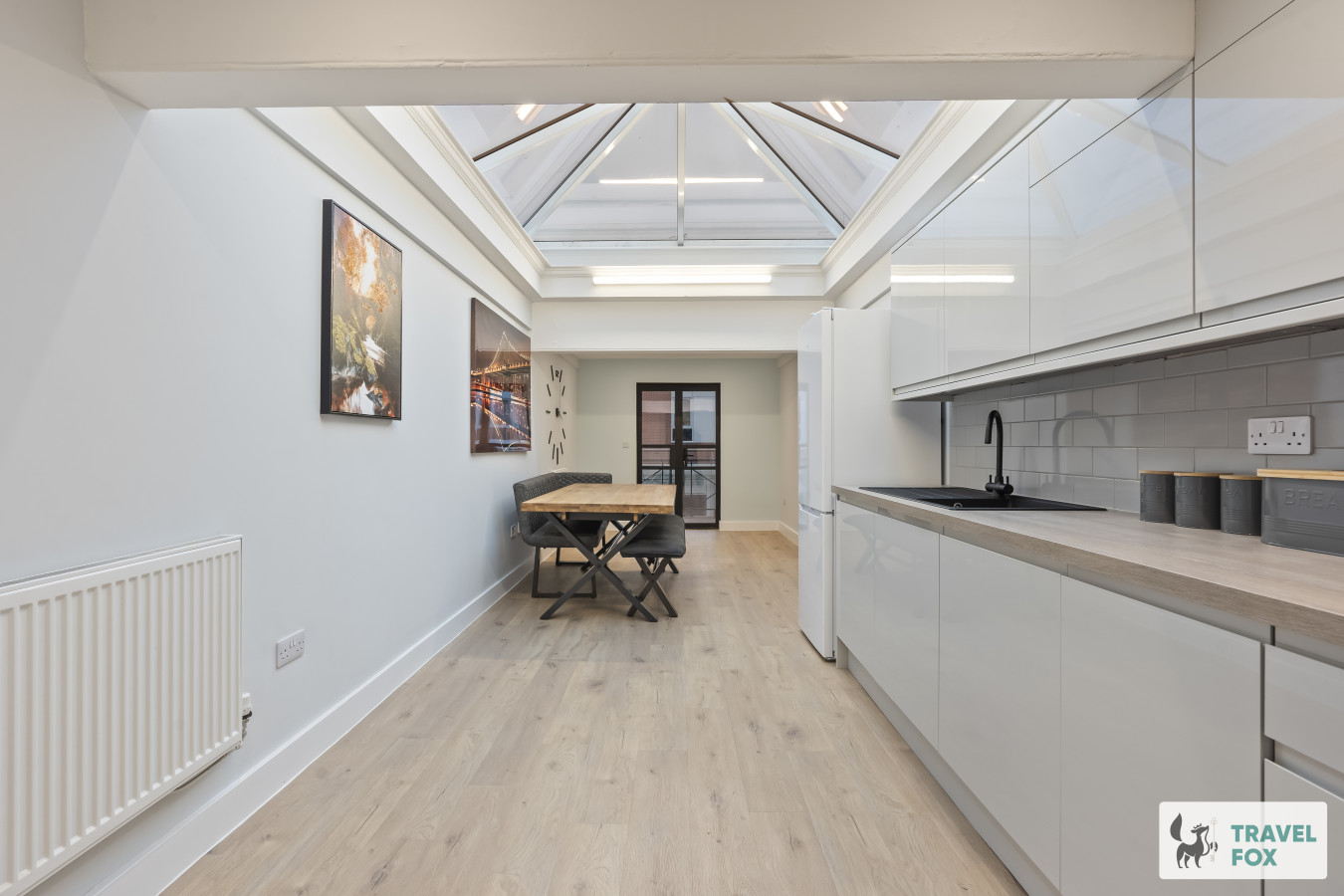
Nottingham
Camila's Penthouse Central Stay with Balcony
- Sleeps 16
- 5 bedrooms
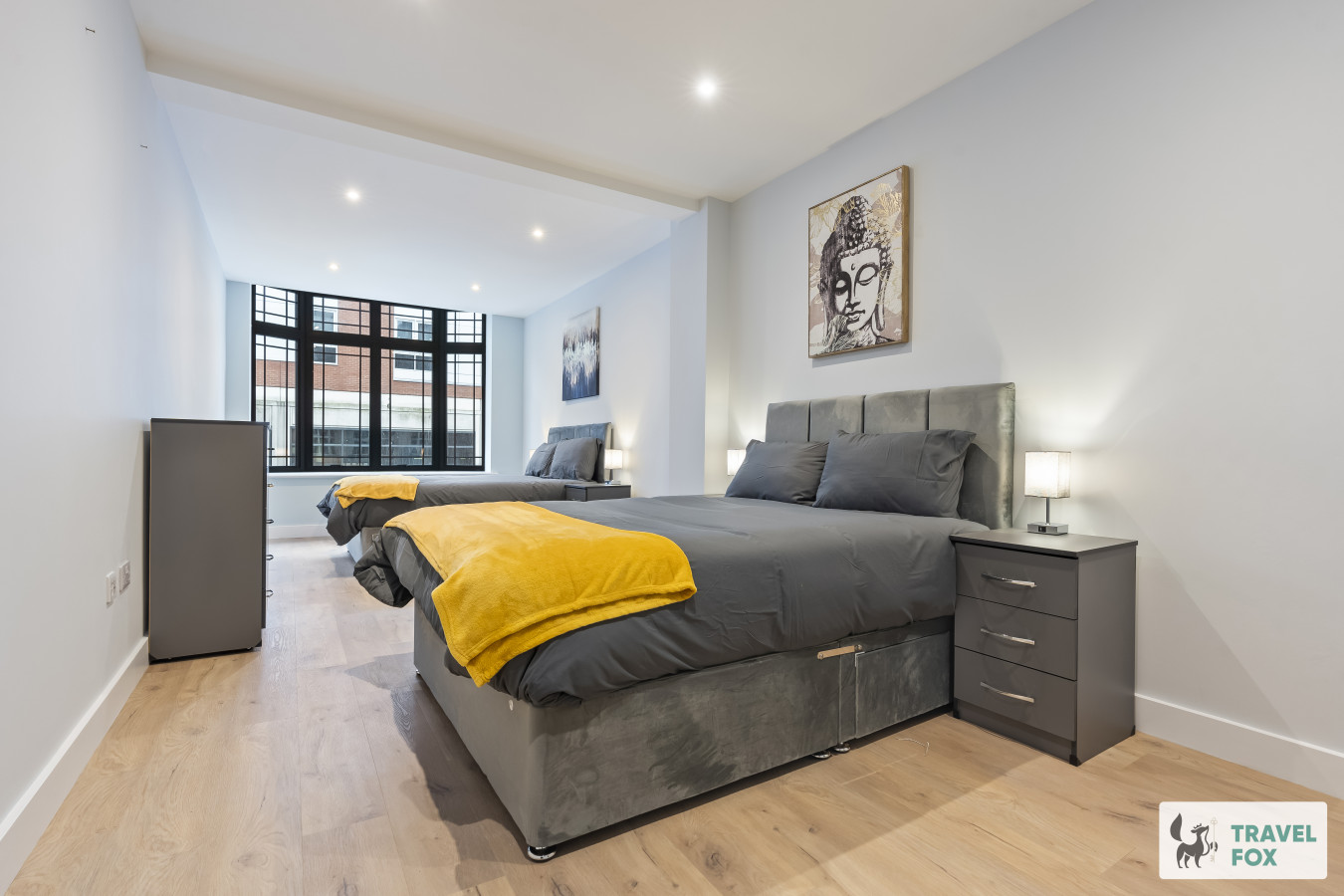
Nottingham
Blair's Central Stay
- Sleeps 16
- 5 bedrooms
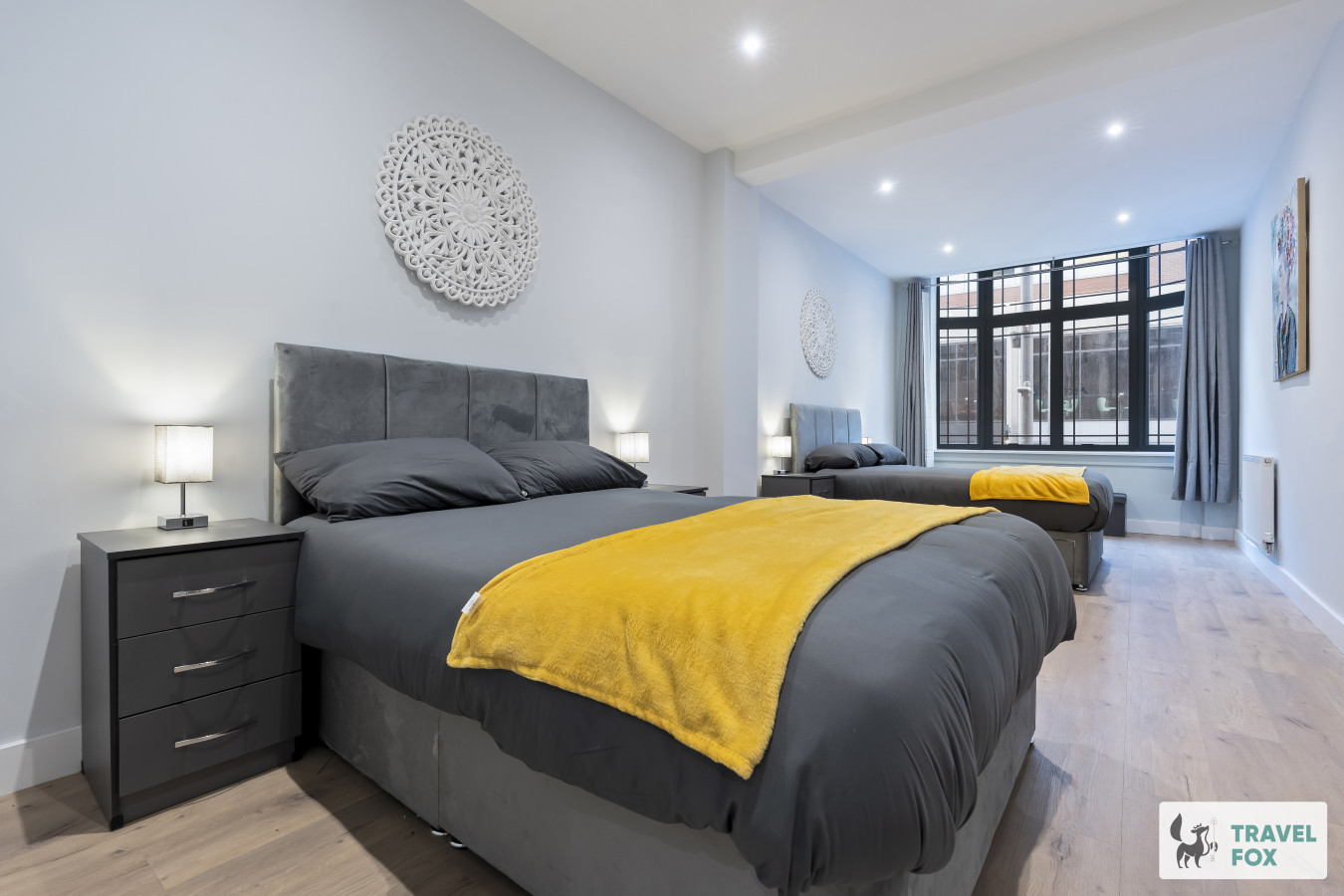
Nottingham
Anna's Central Stay
- Sleeps 16
- 5 bedrooms
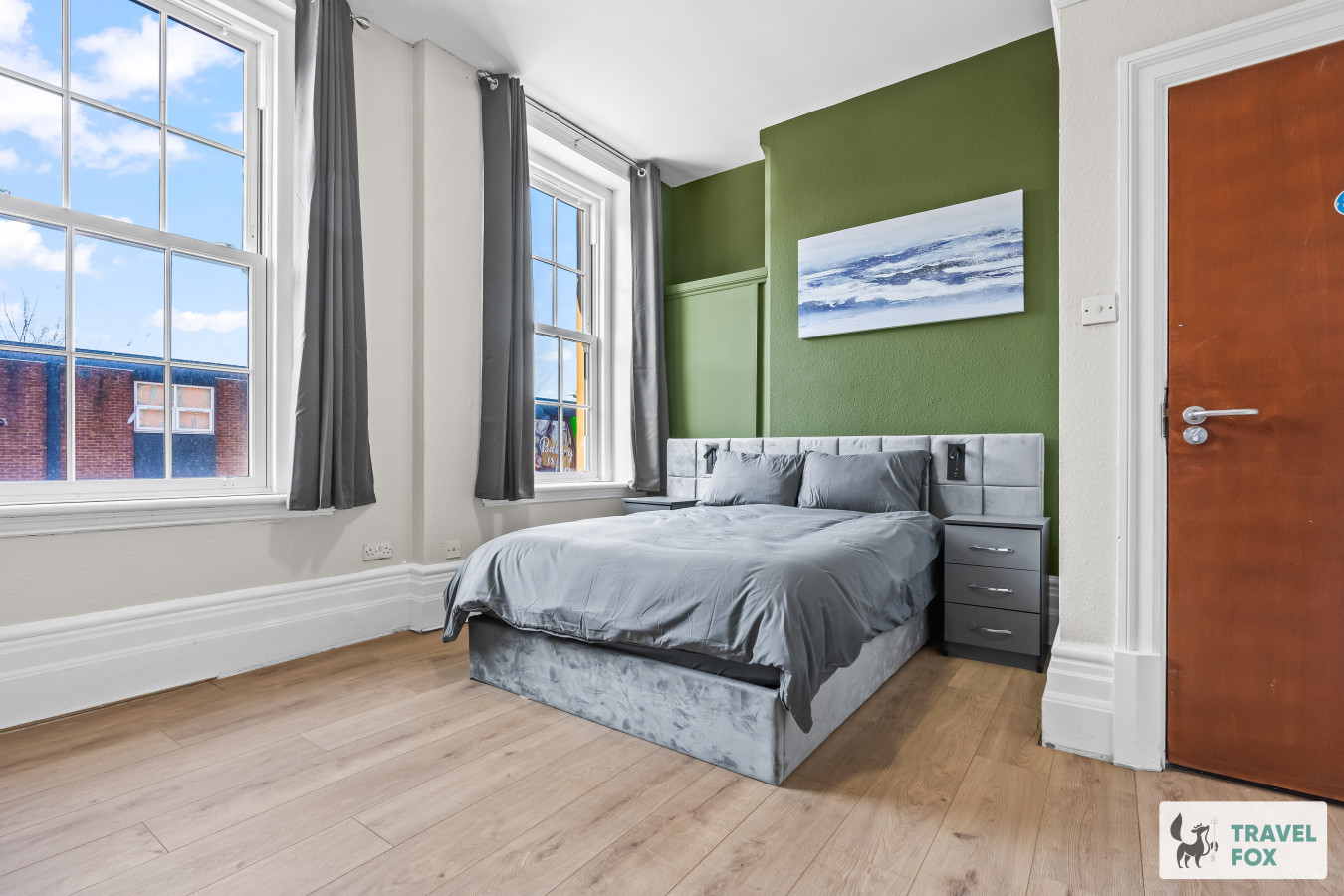
Nottingham
Melissa's Central Stay
- Sleeps 13
- 5 bedrooms
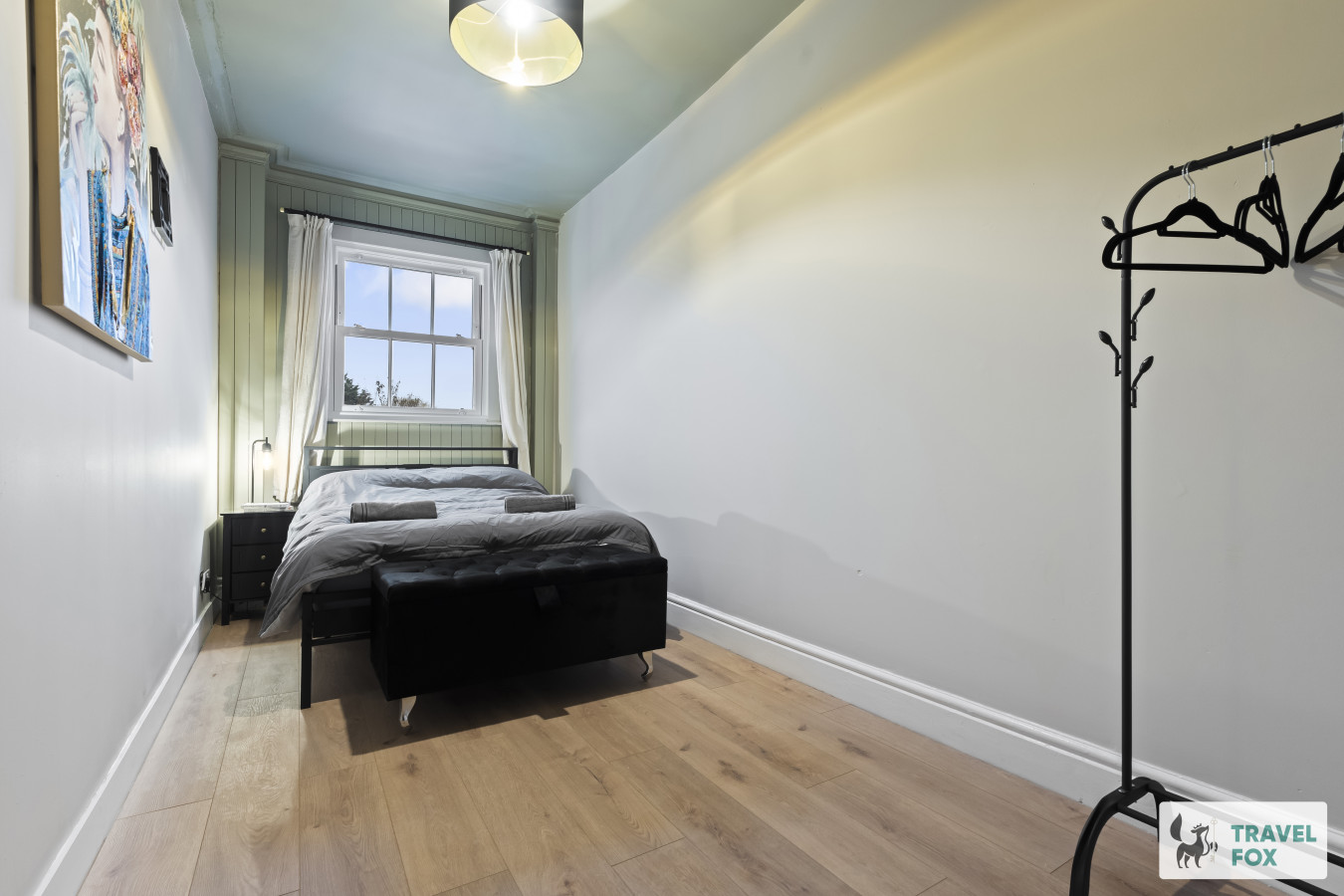
Nottingham
Callie's Central Stay
- Sleeps 9
- 3 bedrooms
For homeowners
Own a holiday home near Southwell?
We manage holiday lets across the UK from 12% commission, charged after cleaning costs, with no lock-in. A co-founder visits before you decide.
How our holiday let management works →
A guide with a point of view
Written from research. Edited for real journeys.
Use the Official site links for live practical details, then use this guide for context, ideas and room to explore.
Sources
Every place on this page is checked against a published source. Each entry links the record we used and names who publishes it.
- Southwell Minster — southwellminster.org operator, sector body or destination organisation
- The Workhouse — nationaltrust.org.uk national body or asset manager
- Southwell Trail — nottinghamshire.gov.uk statutory register or public authority
- The Saracen's Head Hotel — saracensheadhotel.com operator, sector body or destination organisation
- The Final Whistle — southwellcouncil.com other published source
- The Hearty Goodfellow — southwellcouncil.com other published source
- Old Theatre Deli — theoldtheatredeli.co.uk operator, sector body or destination organisation