
Gritstone, design and village stories
Hathersage
A Hope Valley base beneath Stanage Edge, where climbing country meets Brontë connections, a landmark cutlery factory and a surviving open-air lido.
- Best for
- Walking, climbing and design history
- Give it
- A full day for an edge walk and village stops
- Don't miss
- Stanage Edge and St Michael's Eyre memorials
The Fox verdict
A village with the crags at its shoulder
Hathersage combines direct access to Stanage Edge with industrial design, a historic church and a heated outdoor pool.
The village is a major base for walkers and climbers, but its appeal is broader: David Mellor's Round Building brings cutlery, crafts and design history together, while St Michael's connects the Eyre family, Charlotte Brontë and the traditional grave of Little John. Country inns add packhorse, coaching and riverside stories of their own.
Where to go
Places in Hathersage
Every place below is checked against a published source, listed with what it is and how long to give it.
Local signatures
3 placesSt Michael and All Angels' Church
A Grade I church with a 14th-century core, Eyre family brasses and the traditional grave of Little John in its churchyard.
- Visit length
- Editorial estimate: allow around 45 minutes
- Locality
- Church Bank above the village
The Scotsman's Pack Country Inn
A country inn popular with walkers and climbers, named after Scottish packmen and home to what it calls Little John's chair.
- Visit length
- Editorial estimate: allow around 1 hour
- Locality
- School Lane close to the church
The George at Hathersage
A historic coaching inn with modern British dining and a long connection to Hathersage's packhorse trade.
- Visit length
- Editorial estimate: allow around 1 hour
- Locality
- Hathersage
Food & drink
1 placeThe Plough Inn
An original 16th-century inn on the banks of the River Derwent, with a riverside setting and modern pub dishes.
- Visit length
- Editorial estimate: allow around 1 hour 15 minutes
- Locality
- Leadmill on the River Derwent
Walks & outdoors
1 placeStanage Edge
The famous gritstone escarpment above the village is a major climbing crag and a destination for walks into the surrounding moors and tors.
- Visit length
- Editorial estimate: allow around 2 hours 30 minutes
- Locality
- above Hathersage
History & heritage
1 placeDavid Mellor Design
A cutlery factory, country shop, museum and café in the award-winning Round Building designed by Sir Michael Hopkins.
- Visit length
- Editorial estimate: allow around 1 hour
- Locality
- The Round Building
Things to do
1 placeHathersage Swimming Pool
A 30-metre open-air heated pool with 1930s character, including a bandstand, sun-bathing lawns and hot poolside showers.
- Visit length
- Editorial estimate: allow around 1 hour 15 minutes
- Locality
- Hathersage
No places match this filter. Choose All places to reset the list.
Three ways to explore Hathersage
Signature outings
Walk beneath the crags
Reach Stanage Edge directly on foot from Hathersage for gritstone climbing and rambling country above the village.
Dip into a surviving lido
Swim in Hathersage's open-air heated pool, with its bandstand, lawns and enduring 1930s character.
Explore the Round Building
Browse David Mellor cutlery and British crafts alongside the museum, factory and café at The Round Building.
The village story
Hathersage: packhorses, gritstone and design
The locked Travel Fox article moves from village inns to climbing country, Brontë connections and the industries that shaped Hathersage.
Packhorse inns and the Hope Valley
The Scotsman's Pack, on School Lane just below the church, keeps a chair in its dining room that it calls Little John's chair, and visitors are welcome to sit on it. The pub is named for the Scottish packmen who once sold tweeds to local farmers along the old packhorse track to Sheffield, and it still runs to the walker-and-climber trade: five en-suite rooms upstairs, dogs allowed in the bar-side room, and a small patio the pub describes, in its own words, as a sun trap next to a bubbling trout stream. Nick and Jemma Beagrie own it now. A previous landlord, Albert Sunderland, had a daughter, Dorothy, who was born at the inn and later worked behind the bar. It is a short walk from here to Little John's grave, which is the kind of sentence that makes more sense once you have spent a day in Hathersage.
The village sits just north of the River Derwent in the Hope Valley, about ten miles south-west of Sheffield, under the long gritstone escarpment of Stanage Edge. You arrive by dropping into a green bowl of stone cottages, the church standing on its bank above the rooftops and the crags above that. The 2011 census recorded 1,433 people; the parish council reckons closer to two thousand. The railway station is in the village, on the Hope Valley line between Sheffield and Manchester Piccadilly, roughly eighteen minutes from one and fifty-five from the other — though trains run only every couple of hours on weekdays, rising to about hourly on Saturdays, which is worth knowing before you plan a day around them. The A6187 carries the road traffic, and the 271/272 bus links Sheffield through Hathersage and on to Castleton, roughly hourly, every day.
For a village this size the drinking is well covered. The George, on Main Road, began as a fourteenth- or fifteenth-century alehouse serving the packhorse trains that carried stone between the Castleton quarries and Sheffield, and became a proper hotel in 1841. Rob Hattersley of Longbow Venues took it over in 2021 and stripped out the dated décor while keeping the oak beams; the kitchen is run by executive chef Adrian Gagea, who worked under Raymond Blanc, and head chef James Heywood. In October 2023 the building flooded and closed for eight months, reopening the following June. The menu runs to beer-battered cod with triple-cooked chips, Bakewell bangers and mash, rabbit ballotine wrapped in pancetta, and slow-cooked beef shin; afternoon tea starts at £21.95 a head, and well-behaved dogs get water bowls and treats in the bar.
Riverside tables and village cafés
The Plough sits a mile south at Leadmill, a sixteenth-century inn set in nine acres sloping down to the Derwent, family-run for around thirty-five years and holding an AA Rosette for more than twenty. Dogs are allowed in every part of it — all the rooms, the bar, the lot — and the grounds are fenced. The kitchen name-checks its suppliers on the menu: Watson's Farm Shop pork pie, Moonshine beer-battered haddock (the Moonshine being Abbeydale's ale), beef from Taylor's, and Hope Valley ice cream by the scoop. There is a pie of the day, a fish board for two, and sticky toffee pudding.
Above the village on the A6187, the Millstone Country Inn takes its name from the millstones once cut on the surrounding moors and looks out across the Hope Valley from an elevated position. It does full English breakfasts, prawn cocktail, meat and potato pie, fish and chips with mushy peas, locally made sausages and Sunday roasts, with live music on Friday nights. Down by the station, seven minutes' walk away, the Little John Hotel has reinvented itself as a craft beer hotel: three changing cask ales, four ever-changing keg lines served in thirds and halves, a carvery servery and a pool table. And on Main Road, Bank House occupies a former banking hall and turns out something more ambitious — Korean fried chicken and mushroom bao buns alongside Derbyshire lamb cutlets and cod cheeks — under executive head chef Andy Wornes. One reviewer left calling it the best steak they had ever had in their entire life.
The village eats well between meals, too. Coleman's Deli, in the renovated coach house of the old Hathersage Inn, has been going since around 2006 under Jim Mothersele, formerly a senior chef at Chatsworth; the coffee is roasted in Sheffield, the cakes have won awards, and the Derbyshire oatcake comes with ham, eggs and spiced tomatoes. Cintra's Tea Rooms, on Main Road, has been run by an award-winning baker called Gary for over fifty years and does hand-cut sandwiches, scones with cream and jam, and a steak pie people ask for by name. Outside, the outdoor shop founded in 1987 by Dick Turnbull, has a café above it that seats about sixty and has fed climbers, walkers and bikers for nearly thirty years. It is one of three outdoor retailers clustered in the centre — Go Outdoors and Alpkit are the others — because Hathersage is where you kit up before Stanage.
Cutlery, cold water and gritstone
The most unexpected shop in the village is the Round Building on the edge of it, a circular factory built on the foundations of the old gas works and designed by the architect Michael Hopkins. It is the home of David Mellor cutlery. Mellor, born in Sheffield in 1930, moved his production here in 1990 and lived in the village until his death in 2009; besides the cutlery he designed the modern British traffic light and, in 1966, the square pillar box. His wife, the design historian Fiona MacCarthy, lived here too. There is a country shop, a museum and a café, which is a lot of visitor centre for a place best known for making forks.
Then there is the swimming pool. Hathersage has a thirty-metre open-air heated lido on Oddfellows Road, built in 1936 to the designs of Cecil Jones and given to the village by George Lawrence, a razor-blade manufacturer who was killed in the Sheffield Blitz in 1940 while taking refreshments to his workers. It keeps its 1930s character — a bandstand, sun-bathing lawns, poolside showers — and has since added a sauna and a café. The water runs at around twenty-seven degrees through the main season, roughly April to October, with cold-water swimming continuing on Saturdays into the autumn. It is one of a dwindling number of surviving lidos, with a view of Stanage Edge from the lawn.
What people mostly come to Hathersage to do is walk. Stanage Edge runs almost four miles above the village, rising to 458 metres at High Neb, and it is the longest gritstone crag in the region — the catalogues list well over 1,300 climbing routes, and it has been called the nursery of British rock and mountain climbing. You can start a walk from the station car park and get onto it without a car: the classic circular is about 6.6 miles, past Carhead Rocks and Dennis Knoll with the whole Hope Valley opening out beneath you. The full horseshoe is a twelve-mile day taking in Higger Tor at 434 metres, the Iron Age hillfort of Carl Wark, and the wooded Padley Gorge, where Burbage Brook drops through some of the furthest-inland temperate rainforest in the country. Gentler options follow the Derwent south towards Leadmill, or cross it on stepping stones below Offerton on what is thought to be an old coffin route.
Little John and the Eyre memorials
The Robin Hood connection is not incidental. In St Michael's churchyard, on the south side under an old yew, a gravestone marks the traditional burial place of Little John, and the village has claimed him for at least 250 years. When the grave was opened in 1784, a thighbone was reportedly dug up measuring about twenty-nine and a half inches — implying a man some eight feet tall. Captain James Shuttleworth took the bone and hung it by his bed, and after a run of accidents a nurse warned him he would have no luck while he kept dead men's bones from their graves. He ordered it reburied. Instead the sexton put it in his window and charged sixpence a look, until a passing traveller carried it off and buried it under a tree at Cannon Hall. The plot has been looked after by the Ancient Order of Foresters since 1929.
The church itself, St Michael and All Angels, is Grade I listed and stands on its bank above the village with a recessed, crocketed octagonal spire. William Butterfield restored it in 1851–52 for £1,575. Inside are the brasses of the Eyre family, who lived at North Lees Hall just over a mile north, and one of those Eyre memorials carried the name that Charlotte Brontë borrowed for her heroine. Brontë stayed three weeks in Hathersage in 1845 with her friend Ellen Nussey, whose brother was the vicar; she made the village into "Morton" in Jane Eyre, after the George's then landlord of the same name, and turned North Lees Hall into Rochester's Thornfield. As the writers at annebronte.org note, "Thorn is an anagram of North, and a Lee is an open space ie a field. Hence North Lees becomes Thornfield." One window in the church, incidentally, was rescued from Derwent chapel before that village was drowned under Ladybower Reservoir, and reset here in 1948.
Needles, millstones and vanished work
For a long stretch Hathersage was a needle town. A German immigrant, Christopher Schütz, set up a wire-drawing works here under an Elizabethan patent in the 1560s, and by the nineteenth century the village was a national centre of needle, pin and wire-drawing manufacture. Robert Cook brought the needle business up from Studley in 1811, and fifty years on his Barnfield Works employed a hundred people, twenty of them young children. Needles were pointed on rotating gritstone wheels that threw off a fog of steel and stone dust, and the grinders who did the pointing had a life expectancy of about ten years from entering the trade — evidence that helped produce one of the first Factory Acts. The last mill closed in 1902, though Dale Mill, Darvell's mill, and the Atlas and Barnfield works still stand as buildings. When the Domesday commissioners reached Hathersage in 1086 they found eight villagers and two smallholders, and valued the manor at thirty shillings — half what it had been worth twenty years earlier, before the Conquest.
The moors above the village were also quarried for millstones, exported as far as Russia and Scandinavia, and when demand collapsed the finished stones were simply left where they lay near Bolehill Quarry, too heavy to be worth moving. They are still there, stacked on the ground. Down the hill, at Thorpe Farm on Coggers Lane, the Marsden family have milked cows for over three hundred years and now make ice cream from their own herd. Dogs are welcome on leads, there are calves and donkeys for children to see, and a man named Bob does the deliveries.
Stay around Peak District
Make a longer stay of it
Travel Fox holiday homes around Peak District, linked directly to their property pages.
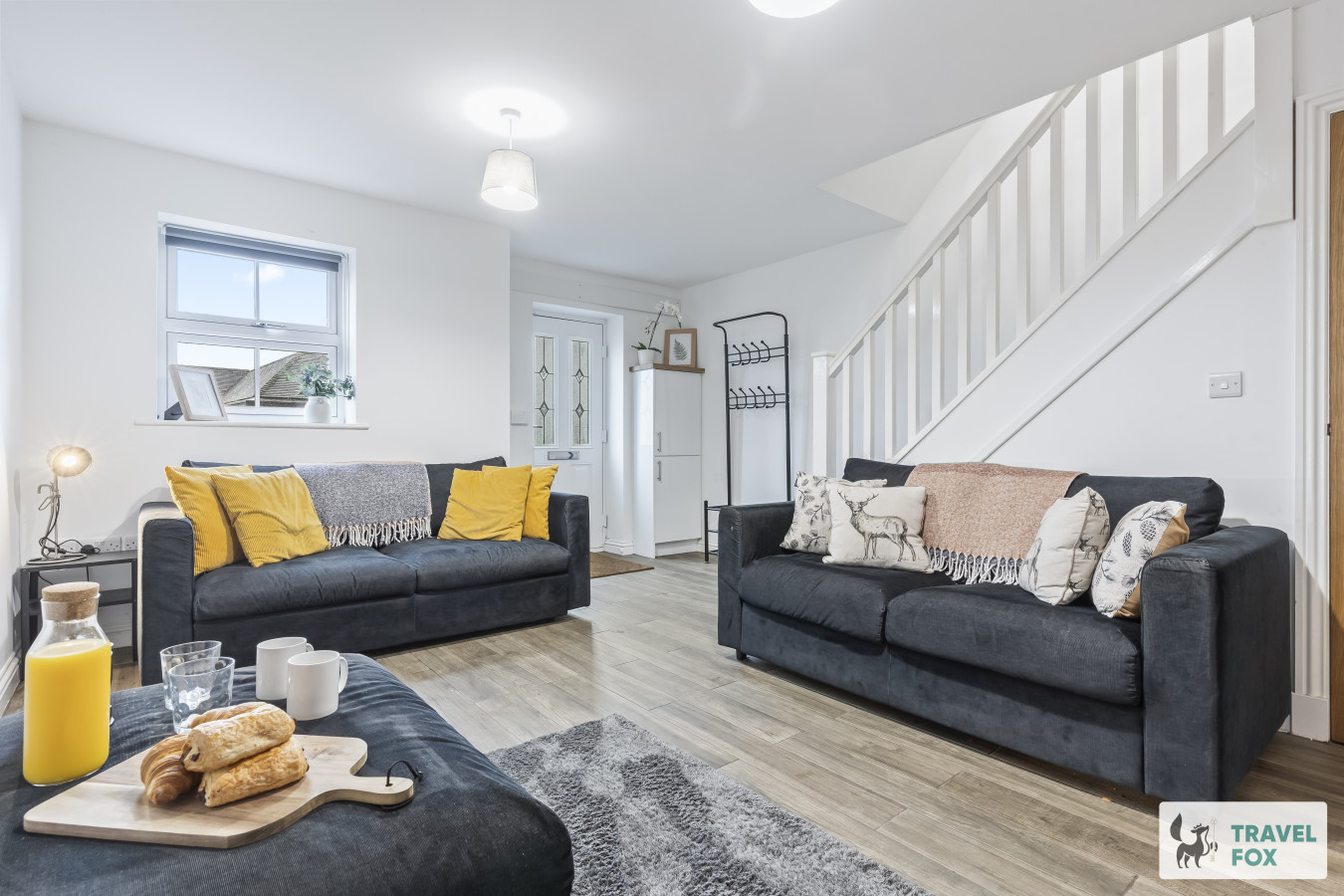
Leek
Lisa's House Leek: 20mins Alton Towers
- Sleeps 6
- 2 bedrooms
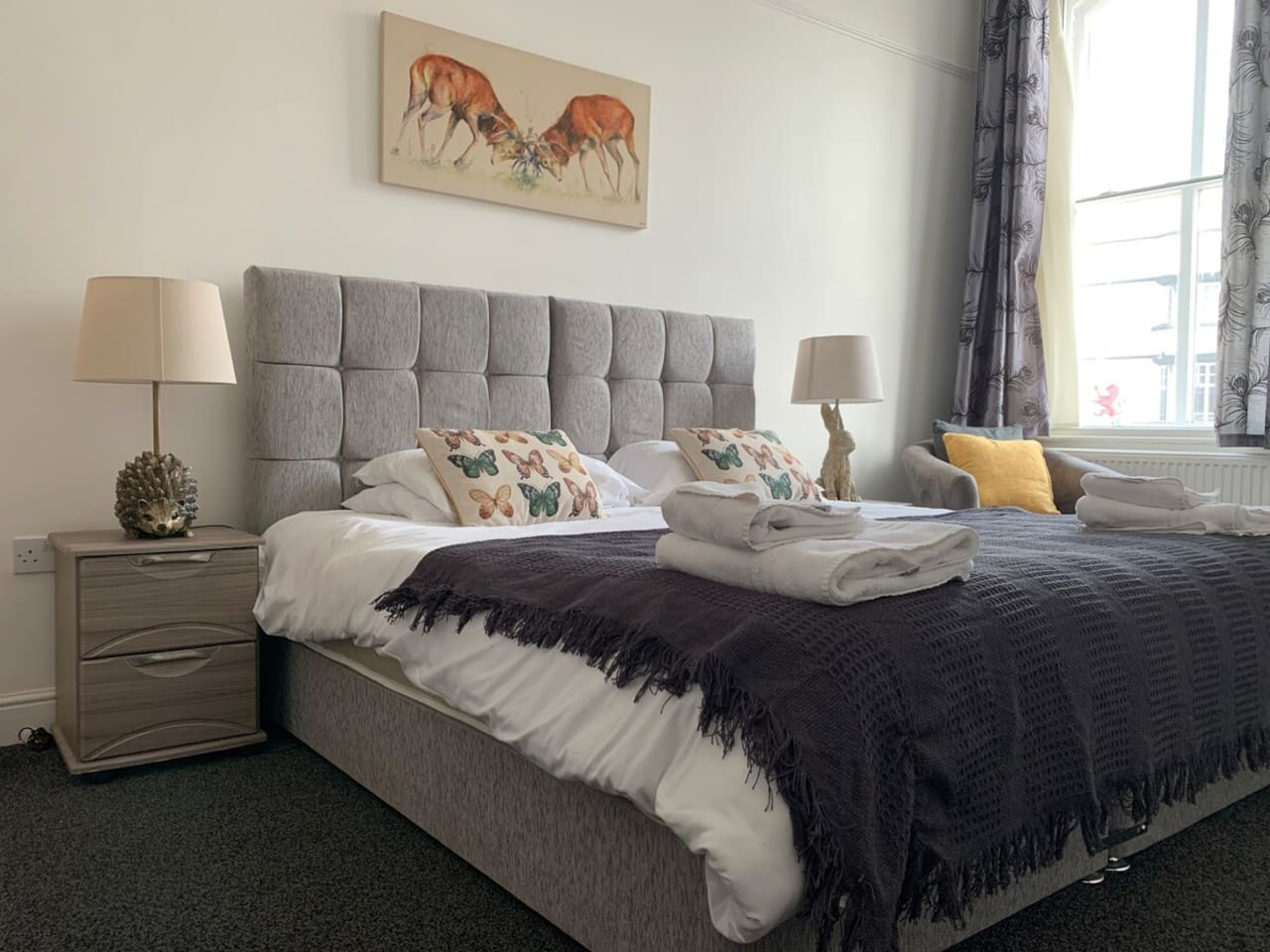
Leek
The Rudyard Suite - Large 1 Bed Apartment
- Sleeps 5
- 1 bedroom
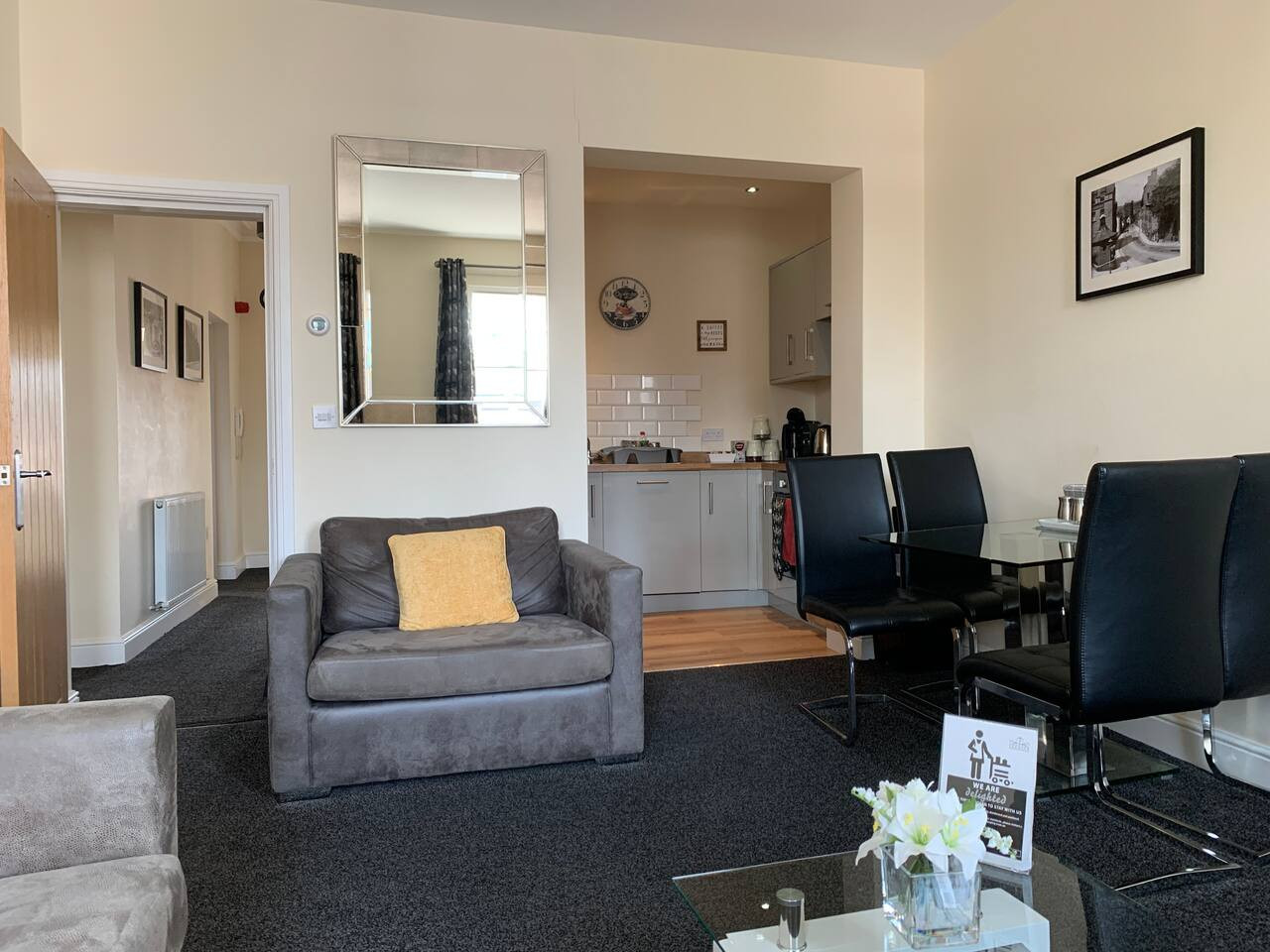
Leek
The Roaches Suite - Large 2 Bedroom Apartment
- Sleeps 7
- 2 bedrooms
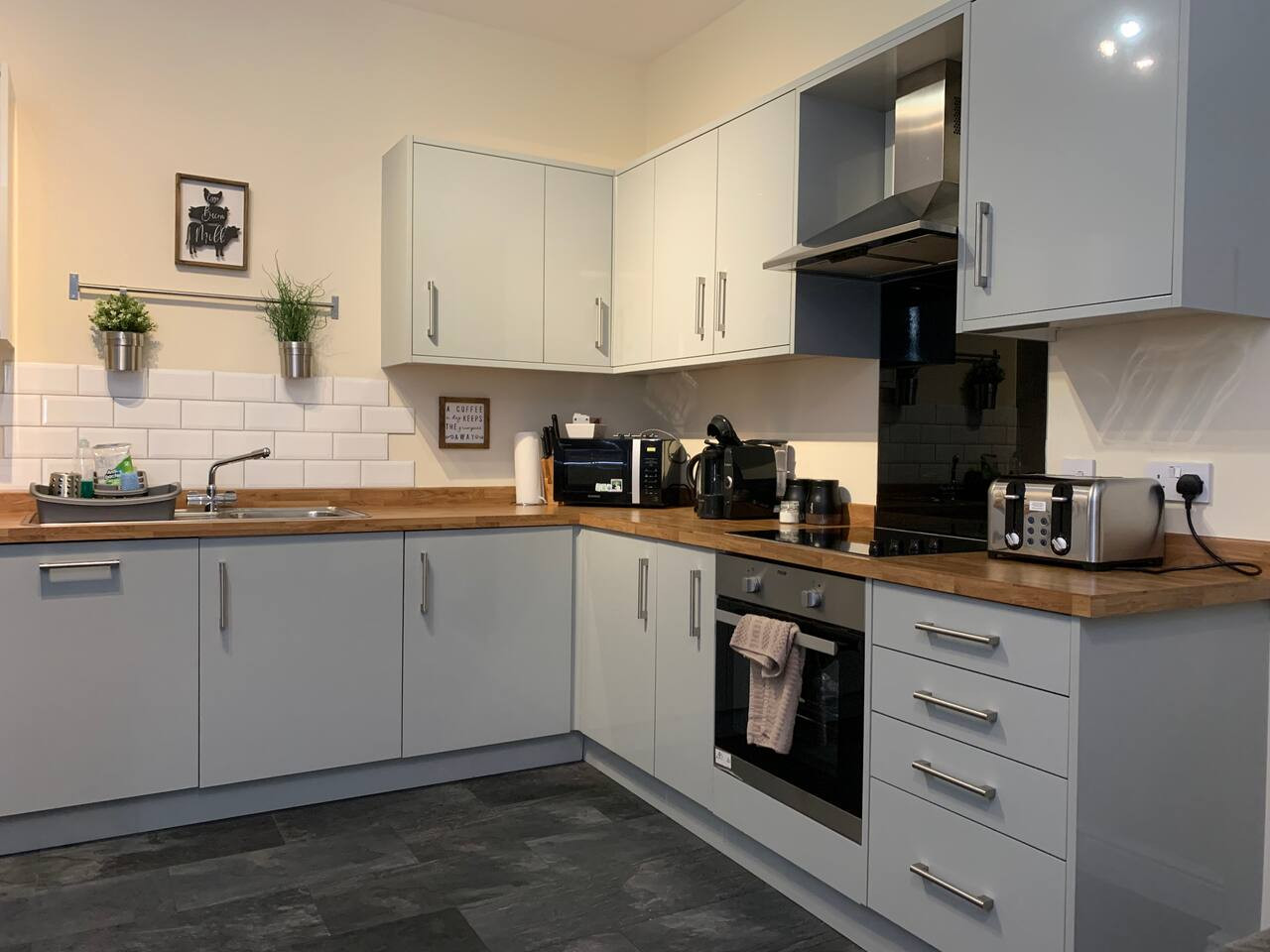
Leek
The Moorlands Suite - 1 Bed Apartment
- Sleeps 4
- 1 bedroom
Leek
Amy's House: 20mins Alton Towers
- Sleeps 6
- 2 bedrooms
For homeowners
Own a holiday home near Hathersage?
We manage holiday lets across the Peak District from 12% commission, charged after cleaning costs, with no lock-in. A co-founder visits before you decide.
Holiday let management in the Peak District →
A guide with a point of view
Written from research. Edited for real journeys.
Use the Official site links for live practical details, then use this guide for context, ideas and room to explore.
Sources
Every place on this page is checked against a published source. Each entry links the record we used and names who publishes it.
- Stanage Edge — peakdistrict.gov.uk statutory register or public authority record not machine-readable; publisher restricts automated access
- Hathersage Swimming Pool — hathersageswimmingpool.co.uk operator, sector body or destination organisation
- David Mellor Design — davidmellordesign.com operator, sector body or destination organisation
- St Michael and All Angels' Church — achurchnearyou.com national body or asset manager
- The Scotsman's Pack Country Inn — scotsmanspackcountryinn.co.uk operator, sector body or destination organisation
- The George at Hathersage — thegeorgehathersage.com operator, sector body or destination organisation
- The Plough Inn — ploughhathersage.com operator, sector body or destination organisation