
Rivers, Romans and diggers
Rocester
Roman earthworks, a medieval cross and modern engineering meet in a compact Staffordshire village between the Churnet and Dove.
- Best for
- Industrial history and gentle walks
- Give it
- Half a day
- Don't miss
- The JCB Lakeside Walk
The Fox verdict
A small village with unusually deep layers
Rocester brings a Roman fort, an Augustinian abbey site and JCB's world headquarters into the same compact visit.
Come for an easy lakeside circuit, the churchyard's medieval cross and the earthworks at Abbey Fields; add the Red Lion or nearby Denstone Hall when it is time to eat.
Where to go
Places in Rocester
Every place below is checked against a published source, listed with what it is and how long to give it.
Local signatures
3 placesJCB Lakeside Walk
A short, flat paved circuit around the ornamental lakes, with waterfowl and other birds on the water.
- Visit length
- Editorial estimate: Allow around 45 minutes
- Locality
- Rocester
Abbey Fields
An open space where earthworks preserve the overlapping stories of Rocester's Roman fort and the later Augustinian abbey.
- Visit length
- Editorial estimate: Allow around 45 minutes
- Locality
- Rocester
JCB Factory Tour
A behind-the-scenes visit combining the JCB assembly line, the company's heritage exhibition, welcome refreshments and a theatre presentation.
- Visit length
- Editorial estimate: Allow around 2½ hours
- Locality
- Rocester
Food & drink
2 placesThe Red Lion
A village pub on Ashbourne Road with a relaxed bar, pool table and beer garden, including a covered area and outdoor TV screens.
- Visit length
- Editorial estimate: Allow around 75 minutes
- Locality
- Rocester
Denstone Hall Farm Shop & Café
A family-run farm shop and café in neighbouring Denstone, selling beef reared on the family's farm.
- Visit length
- Editorial estimate: Allow around 75 minutes
- Locality
- Denstone
History & heritage
1 placeSt Michael's Churchyard Cross
A 13th-century standing cross with a quadrilobe shaft survives in St Michael's churchyard; it is both scheduled and Grade II* listed.
- Visit length
- Editorial estimate: Allow around 35 minutes
- Locality
- Rocester
No places match this filter. Choose All places to reset the list.
Three ways to explore Rocester
Signature outings
Take the easy lakeside loop
Look for Peter Haigue's Bird Group: five bronze birds just above the lake near the factory frontage.
Find the medieval cross
Notice the four circular steps beneath the shaft and the dog-tooth carving on two of its sides.
Make time for the Red Lion
Look for the flagged floor and wooden panelling in the main bar, then take your pick of the pub's three rooms.
The village story
Rocester between rivers and industry
Steel sculpture, medieval stone, long-distance paths and Roman remains meet in Rocester, between the Churnet and the Dove.
Steel Landmark and Village Pub
Walenty Pytel's 1979 steel sculpture beside JCB's Rocester headquarters rises 45 feet and weighs 36 tonnes. Built from JCB components, it is known as Fossor. JCB moved production to Rocester in 1950, and the site remains its world headquarters.
The Red Lion has a traditional three-room interior, with a flagged-floor main bar, wooden panelling and a comfortable snug. Marston's Pedigree and Ringwood Razorback have featured among its regular cask ales. There is also a beer garden and pool table.
Village History and Daily Essentials
The former Queens Arms Hotel stands on Ashbourne Road as a Grade II-listed late-18th-century red-brick building. A moulded inn-sign surround sits above the central doorway, with a separate blocked opening in the west gable.
For groceries, Rocester Village Stores is on Ashbourne Road. Rocester Post Office is a separate branch at 60 High Street.
Old Stone and Walking Lines
St Michael's Church retains its 13th-century west tower, while most of the building was rebuilt in 1870–72. In its churchyard, a 13th-century sandstone cross rises from circular steps; its quadrilobe shaft has dog-tooth ornament, and it is Grade II* listed.
The Staffordshire Way follows the Dove Valley from Rocester to Uttoxeter. Rocester is also the southern end of the 46-mile Limestone Way to Castleton. For a longer local outing, the 8.8-mile Denstone, Wootton Grange and Ellastone loop is rated moderate and calls for good fitness. The JCB Lakeside Walk offers a shorter, flat paved circuit around the lakes, with waterfowl and other birds.
From Fort and Abbey to the Romans
Rocester lies between the Churnet and the Dove. Remains of a Roman fort and later settlement survive here, and an Augustinian abbey was founded in the village in the 1140s before its surrender to the Crown in 1538. In the early 1780s, Richard Arkwright acquired existing mills beside the Dove and developed a cotton-spinning complex, including a new range beside the older corn mill. Tutbury Mill later became part of The JCB Academy. Domesday records Rocester under both King William and Henry of Ferrers.
Graeme Edge, drummer and songwriter with the Moody Blues, was born here, as was footballer Ryan Boot. Rocester F.C., known as the Romans, play at the Hillsfield ground on Mill Street — built on part of the old fort, next to Arkwright's mill.
Arriving and Looking Outward
The village's own railway station shut in 1965; the nearest working one is Uttoxeter, about four miles to the south. Alton Towers is about five miles the other way.
Stay around Alton Towers
Make a longer stay of it
Travel Fox holiday homes around Alton Towers, linked directly to their property pages.
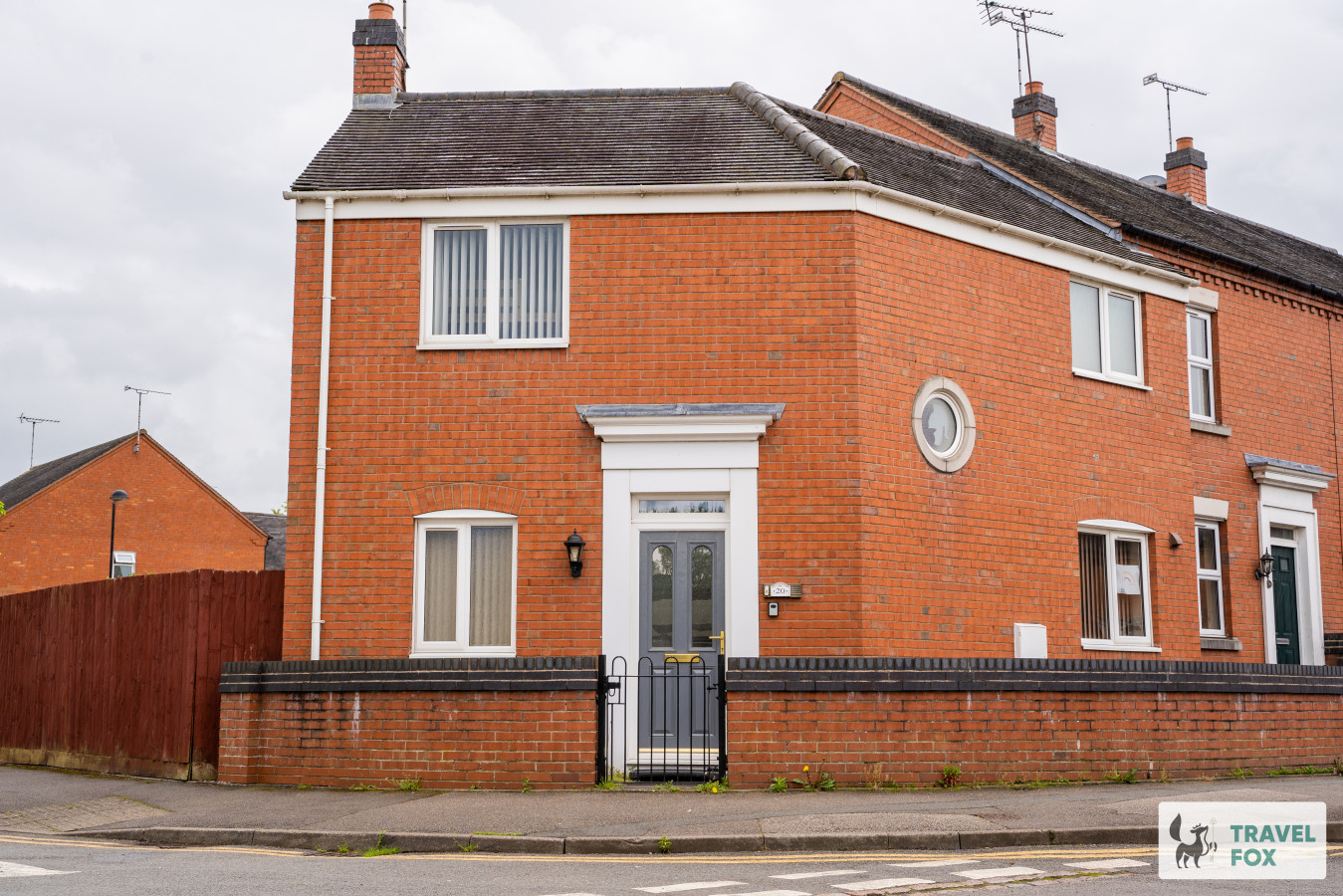
Rocester
Ann's Home Near Alton Towers With off Street Parking!
- Sleeps 8
- 3 bedrooms
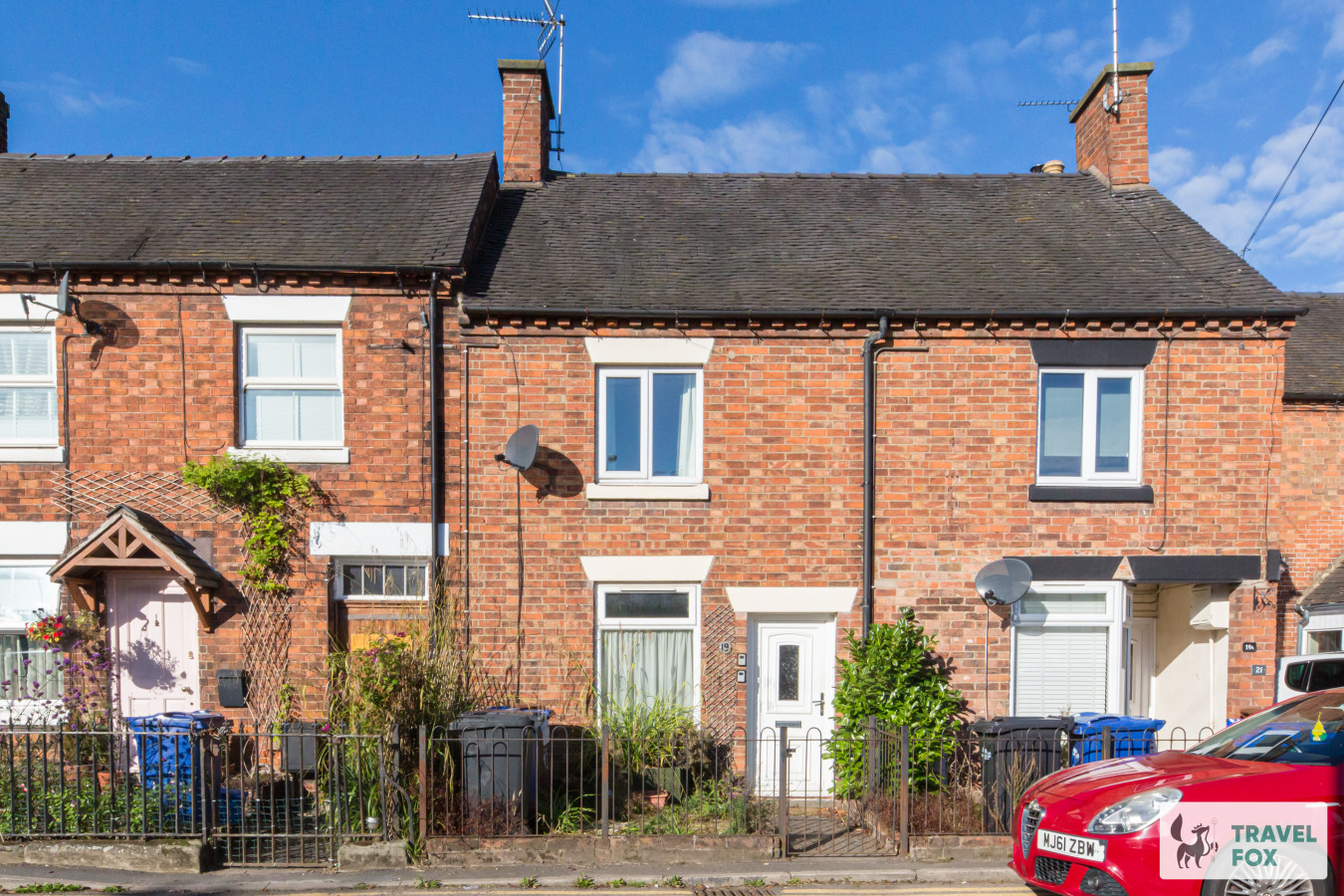
Rocester
Rocester Rest - Near to JCB+Alton Towers, Netflix
- Sleeps 4
- 1 bedroom
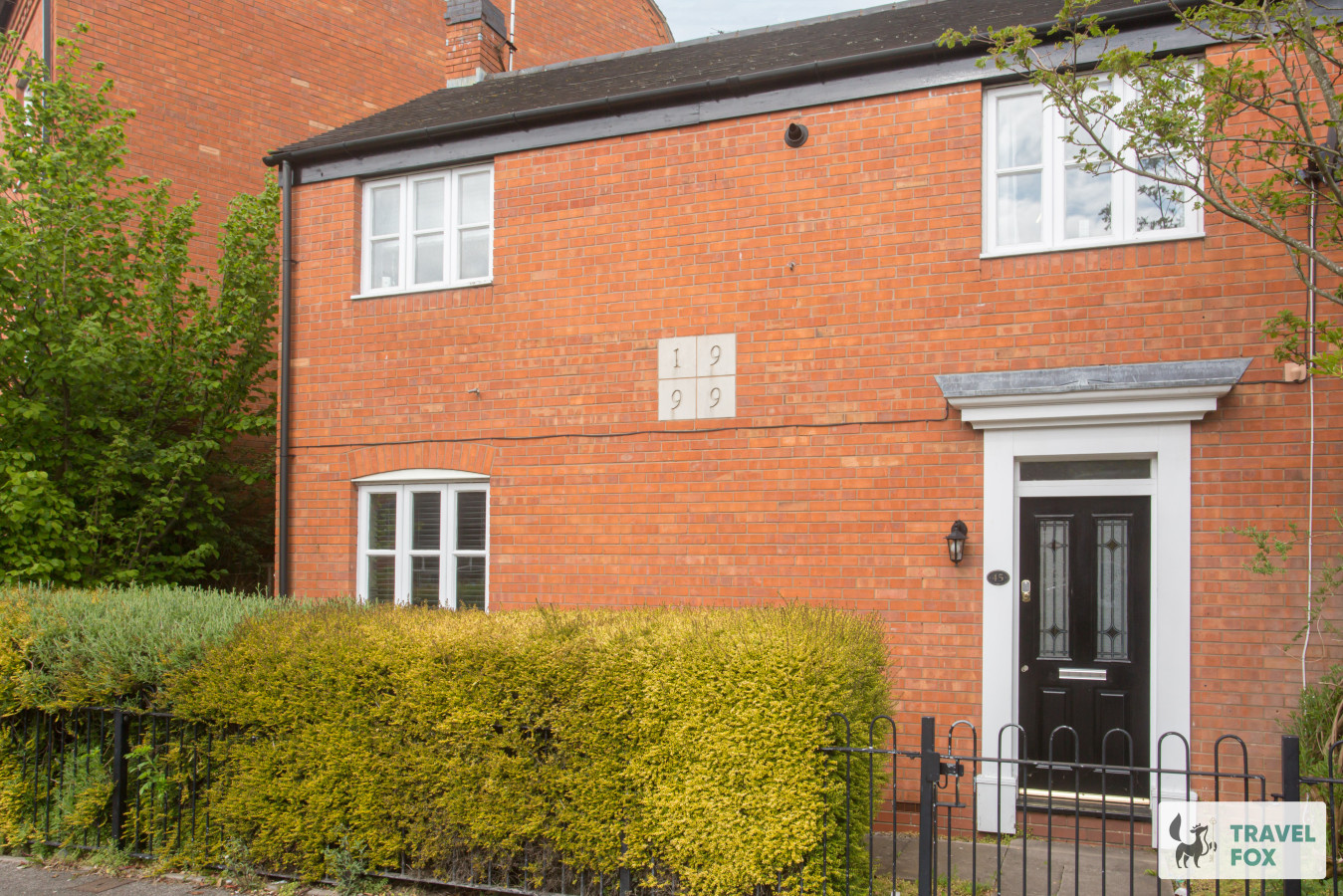
Rocester
Sarah's House: BBQ Parking 10mins To Alton Towers
- Sleeps 8
- 3 bedrooms
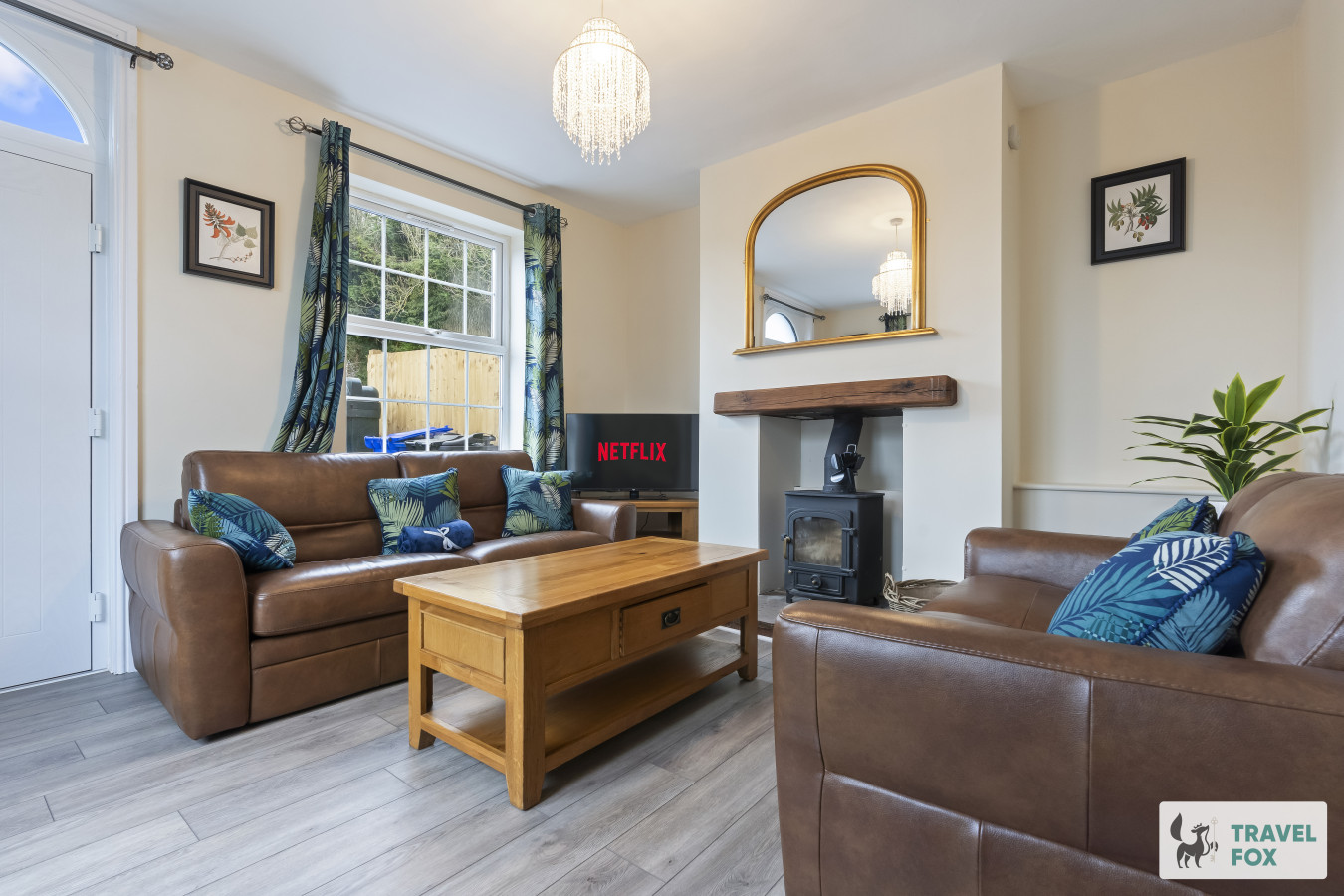
Denstone
Lisa's Cottage: Pool Table
- Sleeps 8
- 2 bedrooms
Croxden
Charlie's Cottage - 7mins to Alton Towers + Alpacas!
- Sleeps 5
- 1 bedroom
For homeowners
Own a holiday home near Rocester?
We manage holiday lets across Staffordshire from 12% commission, charged after cleaning costs, with no lock-in. A co-founder visits before you decide.
Holiday let management in Staffordshire →
A guide with a point of view
Written from research. Edited for real journeys.
Use the Official site links for live practical details, then use this guide for context, ideas and room to explore.
Sources
Every place on this page is checked against a published source. Each entry links the record we used and names who publishes it.
- JCB Lakeside Walk — discovereaststaffordshire.com operator, sector body or destination organisation
- St Michael's Churchyard Cross — historicengland.org.uk statutory register or public authority record not machine-readable; publisher restricts automated access
- Abbey Fields — historicengland.org.uk statutory register or public authority record not machine-readable; publisher restricts automated access
- The Red Lion — redlionrocester.co.uk operator, sector body or destination organisation
- JCB Factory Tour — discovereaststaffordshire.com operator, sector body or destination organisation
- Denstone Hall Farm Shop & Café — denstonehall.co.uk operator, sector body or destination organisation