
Dove Valley · Staffordshire
Uttoxeter
A Staffordshire market town where medieval church fabric, a celebrated act of penance, independent brewing and River Dove walks sit close together.
- Best for
- Local history and waymarked walks
- Give it
- One full day
- Don't miss
- Redfern's Cottage
The Fox verdict
A market town that rewards curiosity
Uttoxeter layers market history, two contrasting churches and a strong local museum beside routes into the Dove Valley.
Come for the town's accumulated stories rather than a single headline sight: visit the museum and churches, then choose a council walk or make a short drive to Croxden and Denstone.
Where to go
Places in Uttoxeter
Every place below is checked against a published source, listed with what it is and how long to give it.
Local signatures
3 placesRedfern's Cottage — A Museum of Uttoxeter Life
A volunteer-kept museum in a 17th-century timber-framed cottage, with exhibits on Uttoxeter's brewing, agricultural and industrial heritage.
- Visit length
- Editorial estimate: around 60 minutes
- Locality
- Uttoxeter
- Access
- Visitor access may vary; check the Official site before travel.
Dove Valley Walk
One of the town council's U-Walks, following the River Dove valley from Uttoxeter into the surrounding landscape.
- Visit length
- Editorial estimate: around 2 hours
- Locality
- Dove Valley from Uttoxeter
- Access
- Outdoor route conditions can vary; use the Official route information before setting out.
Uttoxeter Racecourse
The home of the Midlands Grand National, first run in 1969, with selected family days that add children's entertainment to the racing.
- Visit length
- Editorial estimate: around 2 hours 30 minutes
- Locality
- Uttoxeter
- Access
- Fixture-led access—check the Official site before travel.
Food & drink
1 placeDenstone Hall Farm Shop & Café
A farm shop, deli, butchery and café centred on local produce.
- Visit length
- Editorial estimate: around 1 hour 15 minutes
- Locality
- Denstone, near Stubwood
History & heritage
4 placesSt Mary the Virgin Church
The parish church sets surviving 14th-century tower and spire fabric against an 1828 nave and a later chancel.
- Visit length
- Editorial estimate: around 40 minutes
- Locality
- Uttoxeter
- Access
- Church access may vary; check before travel.
St Mary's Catholic Church
Augustus Pugin's first church commission, built in 1838–39 and later extended by Peter Paul Pugin.
- Visit length
- Editorial estimate: around 40 minutes
- Locality
- Uttoxeter
- Access
- Church access may vary; check before travel.
Exploring Uttoxeter Walk
A town-council heritage loop through Uttoxeter's historic streets and Market Place.
- Visit length
- Editorial estimate: around 1 hour 40 minutes
- Locality
- Uttoxeter
- Access
- Outdoor route conditions can vary; use the Official route information before setting out.
Croxden Abbey
The ruins of a 12th-century Cistercian abbey that housed 70 monks at its peak before its suppression in 1538.
- Visit length
- Editorial estimate: around 60 minutes
- Locality
- Croxden
- Access
- Outdoor ruin access may vary; check the Official site before travel.
Things to do
1 placeUttoxeter Leisure Centre
A family recreation option with a main pool, teaching pool, sports hall, gym and café.
- Visit length
- Editorial estimate: around 1 hour 30 minutes
- Locality
- Oldfields Road, Uttoxeter
- Access
- Choose and confirm a suitable session on the Official site before travel.
No places match this filter. Choose All places to reset the list.
Three ways to explore Uttoxeter
Signature outings
Browse Redfern's Cottage
Move through a timber-framed museum devoted to Uttoxeter's brewing, agricultural and industrial life.
Read a Gothic beginning
See the church that gave Augustus Pugin his first commission and was later extended by Peter Paul Pugin.
Trace a Cistercian abbey
Walk among the remains of a 12th-century house that once supported 70 monks.
The town story
Uttoxeter: Markets, Memory and the Dove Valley
The original article moves from old inns and market history through food, faith and famous episodes to racing, walks and the town museum.
Market Place, Rivers and Old Inns
The sign outside the Old Talbot Inn shows a hound, a talbot, the crest of the Talbots, Earls of Shrewsbury. The building underneath it went up in 1527 and is reckoned to be the oldest in Uttoxeter, which is a claim that carries some weight given it survived two fires that badly damaged the town, in 1596 and in 1672. It stands in the Market Place, Grade II listed, and recent renovation work has been peeling back plasterboard to reveal more of the original timber frame underneath. You can stand at the bar and be fairly confident you are drinking in the same room, give or take some ceiling repairs, that has been serving drinkers for very nearly five hundred years.
Uttoxeter sits in the Dove Valley in Staffordshire, at the point where the River Tean joins the River Dove near Dove Bridge, the combined river then wandering east through broadleaf woodland and flower-rich grassland between Doveridge and the town. It's the only town of any real size along that stretch of river. The streets still converge on the Market Place in more or less the pattern shown on Peter Lightfoot's map of 1658, which means the walk from the station into the centre is, structurally speaking, the same walk people were doing 350 years ago, just with fewer horses and better pavements.
The market itself is older still. Henry III granted the charter in 1251, and William, 7th Earl of Derby, signed the town's own charter the following August, setting up a weekly Wednesday market and an annual three-day fair. A further charter followed in 1308, and its 700th anniversary was marked in the town in 2008. The market made Uttoxeter rich enough that by the seventeenth century it ranked among the three largest towns in Staffordshire, built on cheese as much as anything — by the 1690s there were weekly cheese markets and serious storage capacity, and eighteenth-century agents for London merchants were said to spend upwards of £500 in a single day buying local butter and cheese. The market still runs every Wednesday and Saturday, with a monthly Craft & Produce Market in the Town Hall on top.
Pubs cluster around that same Market Place. The Vaults, at number 13, has a narrow shop-front that gives no hint of what's behind it — CAMRA's Top 100 Pubs blog described it as concealing "a pub of great character running a long way back from the street," three rooms deep with a piano in the bar and a devil-amongst-the-tailors board in the middle room. An old photograph behind the bar shows five Bass pumps from when that was the house beer. One barmaid, on the subject of the regulars, was quoted telling a reviewer: "There's no point in having Challenge 25 in here, you wouldn't even need Challenge 50!" It is a mid-eighteenth-century red brick building with a Victorian pentice-moulded wood front and etched windows, and it has clearly been getting away with looking unremarkable from the street for a very long time.
Pubs, Brewing and Coffee
A short walk out on Cheadle Road is the Three Tuns, which reviewers describe as a proper local with a friendly landlady, a central bar, sports on low volume, a patio, and a beer garden with plenty of seating. Dogs are fussed over and supplied with fresh water and chew sticks. There's parking for twenty cars, pub games including darts and dominoes and crib, and usually two cask ales plus a rotating guest beer. On Stafford Road, the Plough Inn does home-cooked food from locally sourced steaks and meat, a Sunday roast that one reviewer called the best they'd had in a long time, and up to six real ales at a time, drawn from two national breweries and four smaller ones — one of those four is always Uttoxeter Brewing Company.
That brewery is worth a mention on its own. It was founded in 2016 by two members of Uttoxeter CAMRA's sub-branch, and it was the first brewery to operate in the town since Buntings closed in 1929 — Buntings' old site, a large central plot, was eventually demolished in the 1960s to make way for the Maltings shopping precinct. Uttoxeter Brewing Company has been running from purpose-built premises on Carter Street since 2019, open Friday to Sunday, six regular beers on site, tours by request, with a front terrace used whenever the weather allows. A second outlet, the Night Inn, pours their beers alongside guest ales and hosts live music once a month.
If beer isn't the point, BEAR on the High Street does speciality coffee and brunch by day and turns into a cocktail bar by night, with small plates and organic, vegan and vegetarian options. It opened in February 2016 inside a High Street unit that had sat empty for more than five years, founded by Craig and Michael, who grew up together in the town. Dogs get offered water and treats before their owners have even ordered. And the Hart — an eighteenth-century coaching inn that spent decades as the White Hart before reopening under new management in October 2025 with a shorter name — comes with the kind of ghost story every coaching inn seems to accumulate eventually, in this case a lady and child said to wander the building. Not every pub survives: Parks, once billed as the premier restaurant and bar in town, closed in 2021 and was demolished for housing two years later, one of several Uttoxeter pubs that exist now only in conversation.
Food Shops, Churches and Domesday
For food to take home, Edmonston's Family Butchers and Callaghans both have loyal followings — Edmonston's for custom cuts and friendly service, Callaghans, a family-run shop, for its black pudding, sausages and homemade quiches and pies. T.G. Sargeant & Sons run an old-fashioned butcher's with a second branch out at Bramshall, and Roycroft Farm Meats can trace itself back more than 130 years, to a small abattoir that opened in 1894 to supply its own shop. Near Denstone, about 4.7 miles from Uttoxeter in a straight line, Denstone Hall Farm Shop & Café combines a farm shop, deli, butchery and café, and was a finalist in the Farm Shop & Deli Retailer Awards in 2026.
Two churches anchor the town in different ways. St Mary the Virgin, the parish church, has a fourteenth-century west tower and spire attributed to the master mason Henry Yevele, with a nave rebuilt in 1828 by the local architect James Trubshaw and a chancel rebuilt again in 1877. Its listing describes the result as a "juxtaposition of medieval and C19 craftsmanship," which is a polite way of saying the tower has seen off more changes of fashion around it than most buildings manage. St Mary's Catholic Church, a few streets away, is more startling for what it represents than what it looks like: it was Augustus Pugin's first church commission, built in 1838–39 and extended in 1879 by his son Peter Paul Pugin, funded chiefly by John Talbot, 16th Earl of Shrewsbury. Pugin intended it, in his own words, as the first post-Reformation Catholic church in England built "in strict accordance with the rules of ancient ecclesiastical architecture." It was where he first tried to prove a theory in stone.
The Domesday surveyors valued the whole manor at £8 in 1086, up from £7 held by Earl Algar before the Conquest — 24 villagers, 11 smallholders and one slave, 36 households altogether, ten ploughlands, sixteen acres of meadow and woodland measuring two leagues by two. A large settlement by the standards of the survey, in the top fifth of everything recorded, and called Wotocheshede then — possibly Wuttuc's homestead.
Penance, Surrender and the Racecourse
The town's best-known story belongs to Samuel Johnson. As a young man he refused to mind his ailing father's bookstall in the Market Place. Fifty years later, an old man by then, he travelled to Uttoxeter by post-chaise specifically to make amends. In his own account: "I this day went in a post-chaise to Uttoxeter, and going into the market at the time of high business, uncovered my head, and stood with it bare an hour before the stall which my father had formerly used, exposed to the sneers of the standers-by and the inclemency of the weather." That was in 1781. Nathaniel Hawthorne came all the way from America in 1863 just to see the spot. The Johnson Memorial now marks it, a structure substantial enough to have a newspaper kiosk and an ice-cream kiosk built into its base, and the town still marks the anniversary with a ceremony that stops traffic in the Market Place while the town crier reads a poem about it, on almost the exact ground where Johnson stood.
There's an odder footnote from 1648: after the Royalist defeat at Preston, James, Duke of Hamilton, fled here with what was left of his army and was captured by General John Lambert — the last surrender of Royalist troops in the Civil War. Hamilton was beheaded at Westminster the following March. And the town gave the world JCB: the Bamford family had been blacksmiths in the area since the 1820s, and Joseph Cyril Bamford, born in Uttoxeter, built trailers at small scale after the Second World War until the business became the construction-equipment giant now headquartered at nearby Rocester, with a dedicated museum telling the story across fourteen zones.
Uttoxeter Racecourse hosts the Midlands Grand National, first run in 1969 and won that year by Happy Spring, a horse whose main claim to fame is being one of only six ever to beat the great Arkle. The race runs over roughly 4 miles 2 furlongs and 25 fences, though the distance has shifted over the decades. Family Fun Days at the course let under-18s in free, with each paying adult allowed to bring up to three children free too, picnics on the Centre Course, and a funfair in summer. The Leisure Centre on Oldfields Road has a full gym, main and teaching pools, a sports hall covering everything from badminton to netball, and family swim sessions most weeks.
Walks, Connections and Town Memory
Walking routes fan out from town in most directions, mapped by the town council as a numbered series: the Exploring Uttoxeter town walk runs a heritage loop of around three miles through the historic streets and the Market Place, while the Dove Valley walks follow the river out past the edge of town. A longer circular route, using part of a disused railway line and a stretch of the Staffordshire Way, links Uttoxeter to the village of Denstone, home to that farm shop, if you fancy walking towards your lunch.
Trains run from Uttoxeter station on the Crewe–Derby line, and the town sits directly on the A50 between Stoke-on-Trent and Derby, with the X41 bus running out to Alton Towers Resort via Stafford — useful to know, since Uttoxeter station is the nearest railway station to the park, about ten miles and twenty minutes away by road. Ashbourne, gateway to the Peak District, isn't far either, and Sudbury Hall with its Museum of Childhood makes a reasonable wet-weather plan. Nearer still, the ruined Cistercian abbey at Croxden — suppressed 1538, free to visit, open daily — sits about 4.4 miles north-west of Uttoxeter in a straight line, with the road journey longer and fields around it.
Sixty-five buildings in Uttoxeter carry national listed status, most of them timber-framed or built around a timber-framed core, and the town's own museum, Redfern's Cottage, occupies one of them: a seventeenth-century building kept open by volunteers after a threatened closure, its exhibits covering the brewing, farming and industrial trades that built the place. Mary Howitt, the Quaker poet who wrote "The Spider and the Fly," grew up on Balance Street in a house that still stands and still bears her name on the street sign nearby. On a Wednesday morning, with the market up in the square and the Vaults and the Three Tuns not yet busy, it's still recognisably the town Johnson walked back into, bareheaded, to stand in front of a stall that had long since stopped being his father's.
Stay around Alton Towers
Make a longer stay of it
Travel Fox holiday homes around Alton Towers, linked directly to their property pages.
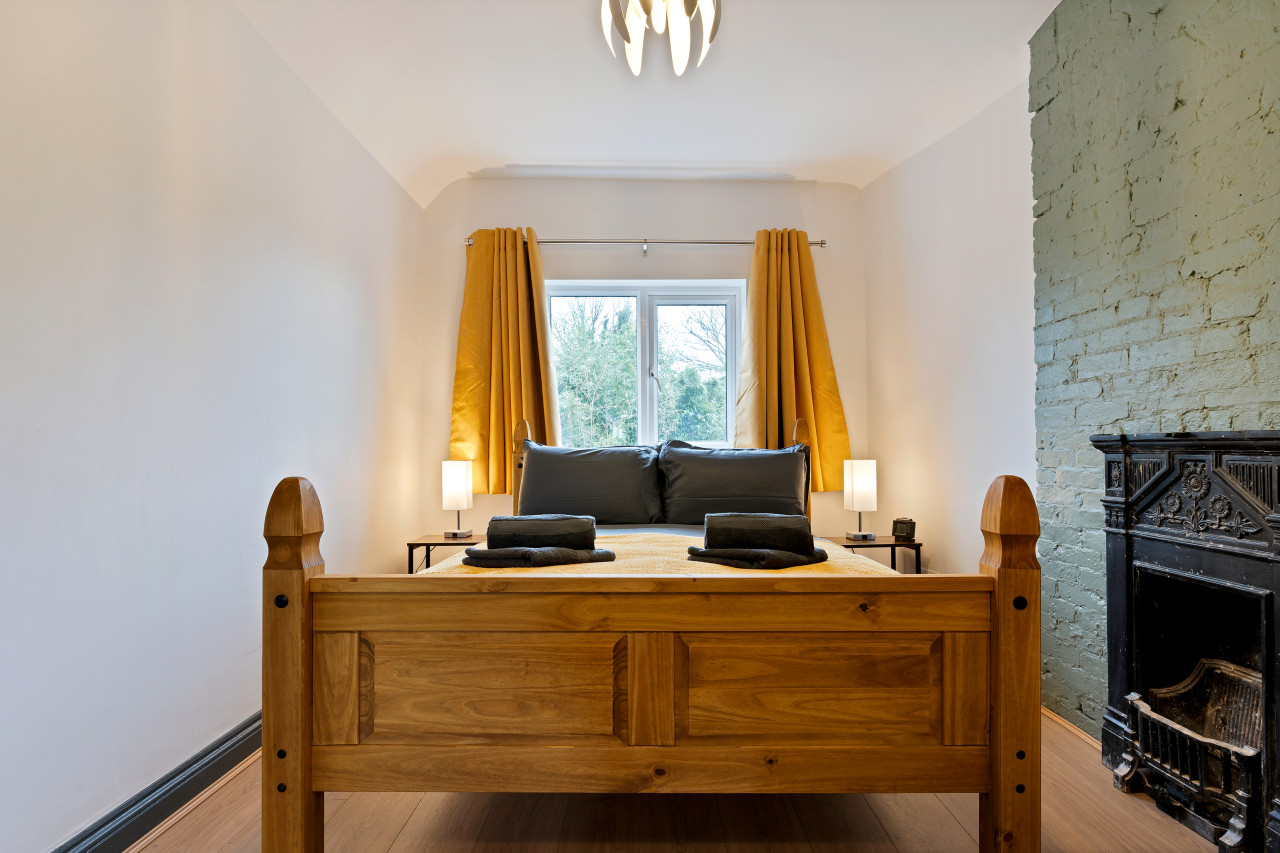
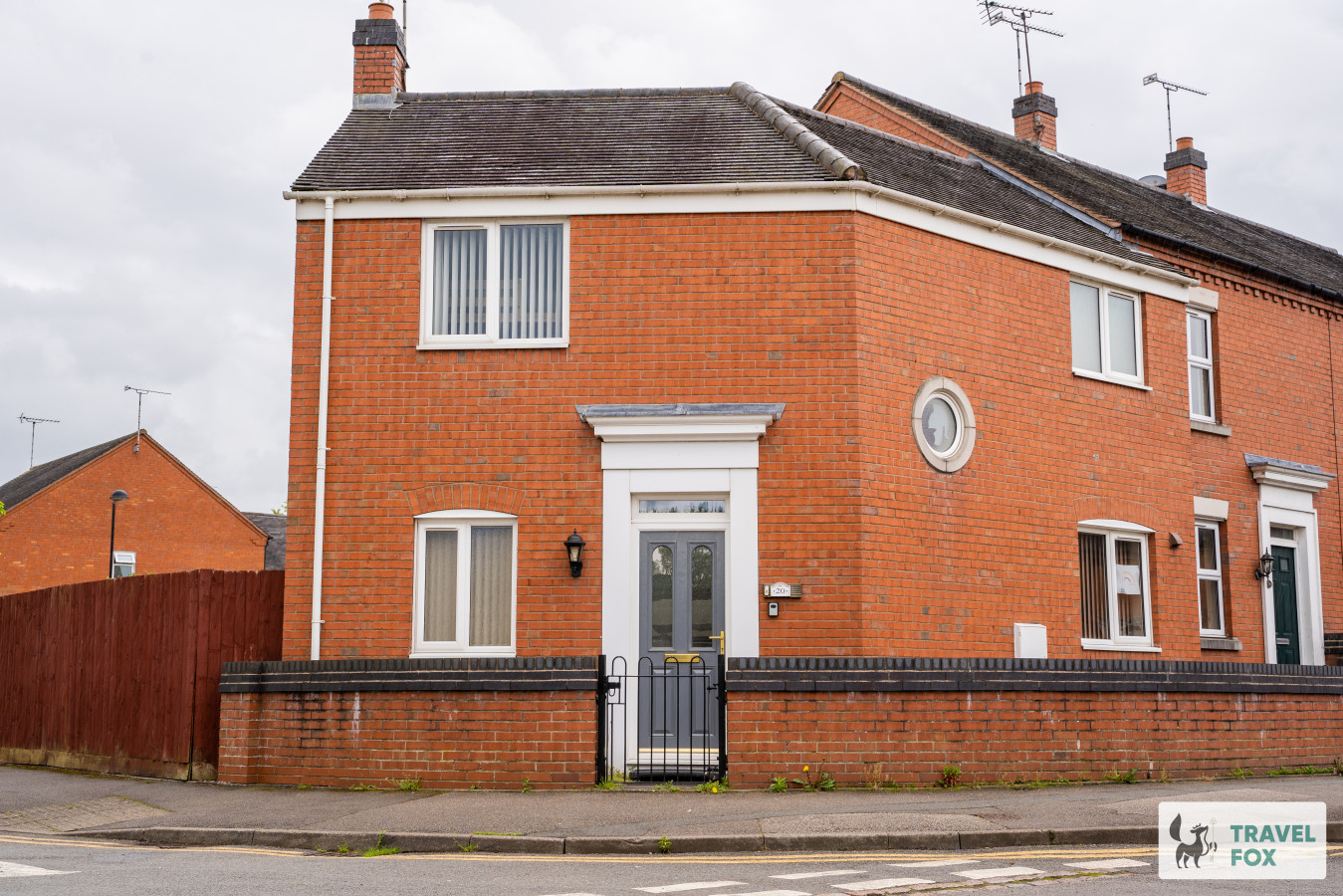
Uttoxeter
Sally's Cottage Uttoxeter - 20mins to Alton Towers
- Sleeps 8
- 3 bedrooms
Denstone
Lisa's Cottage: Pool Table
- Sleeps 8
- 2 bedrooms
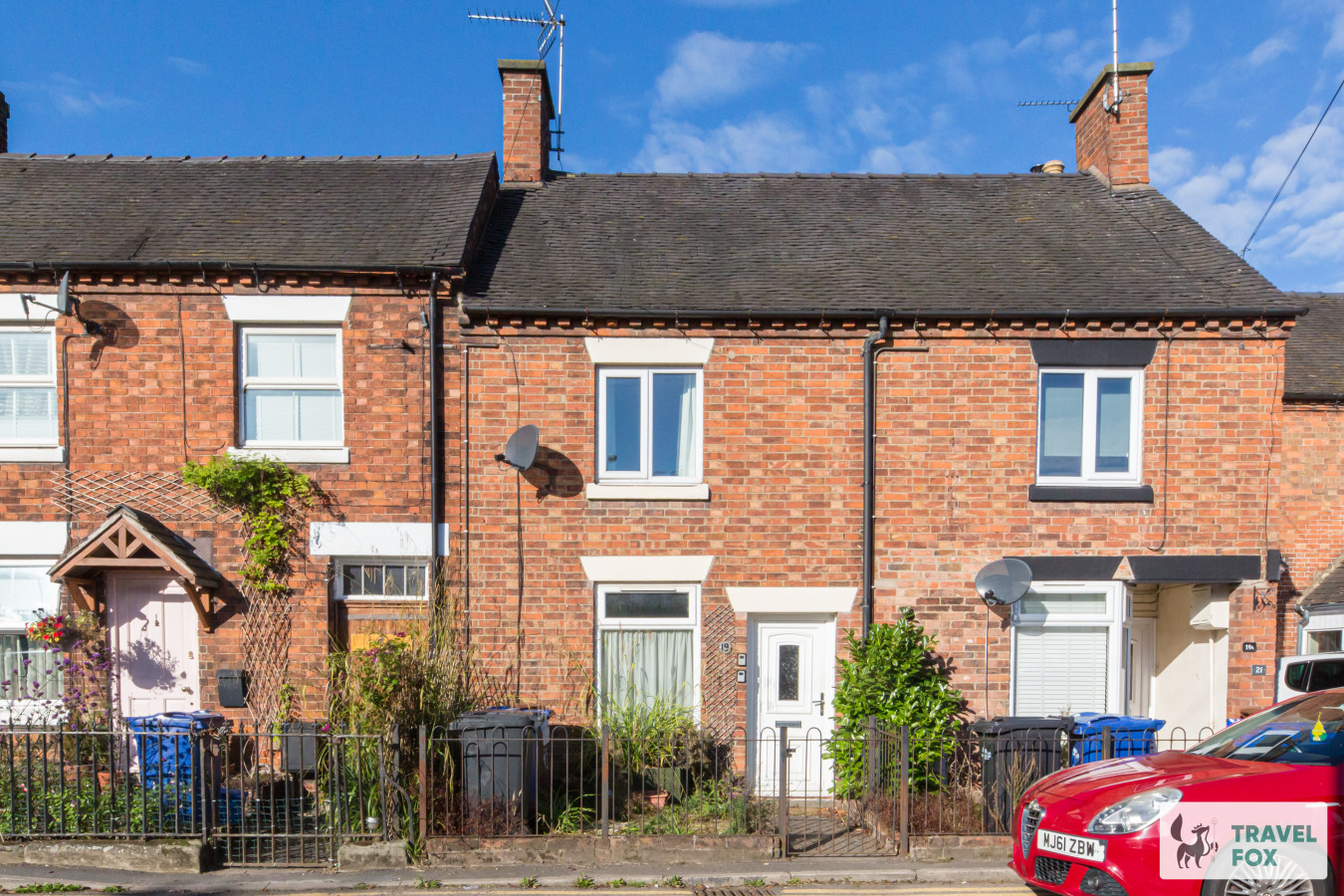
Rocester
Ann's Home Near Alton Towers With off Street Parking!
- Sleeps 8
- 3 bedrooms
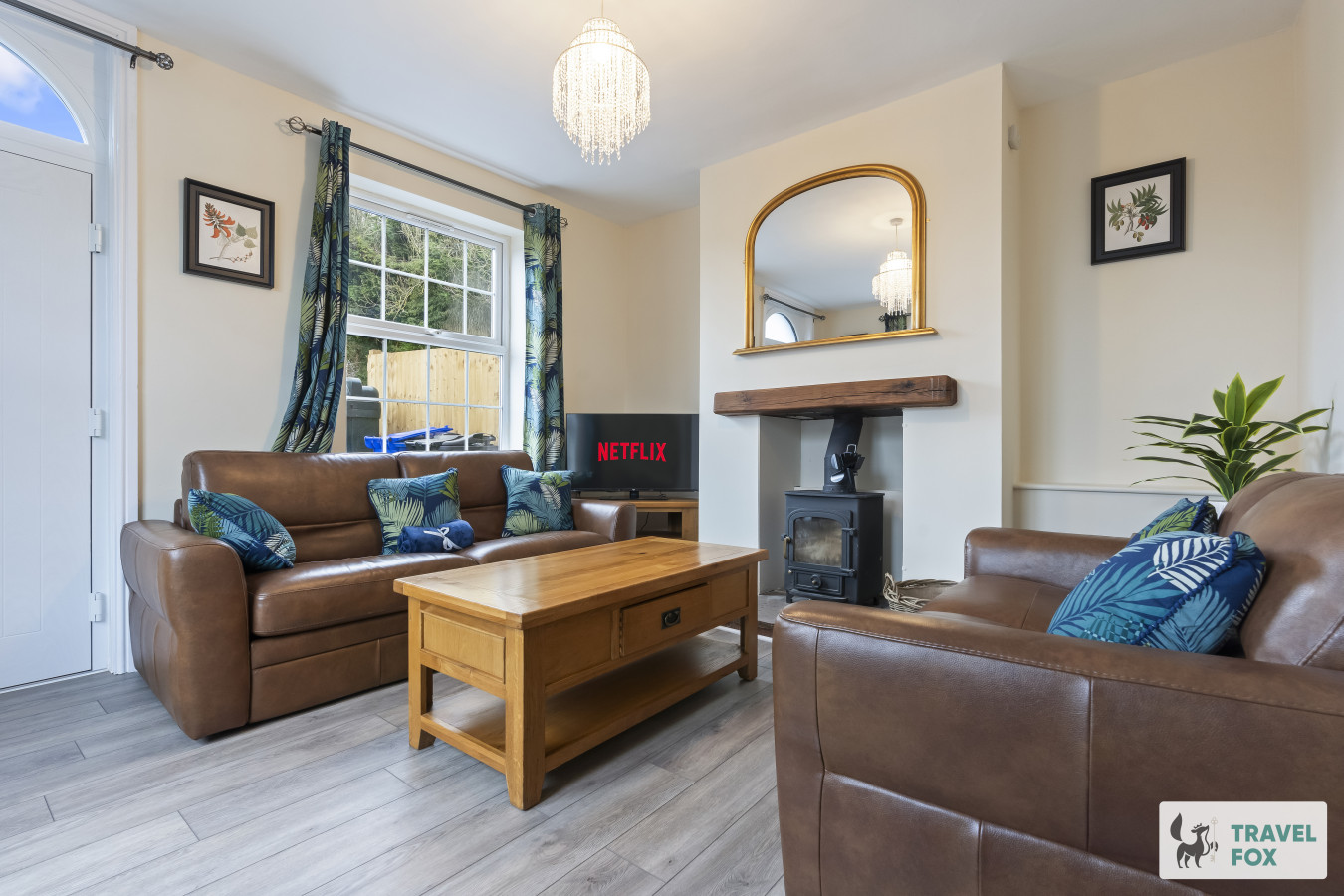
Rocester
Rocester Rest - Near to JCB+Alton Towers, Netflix
- Sleeps 4
- 1 bedroom
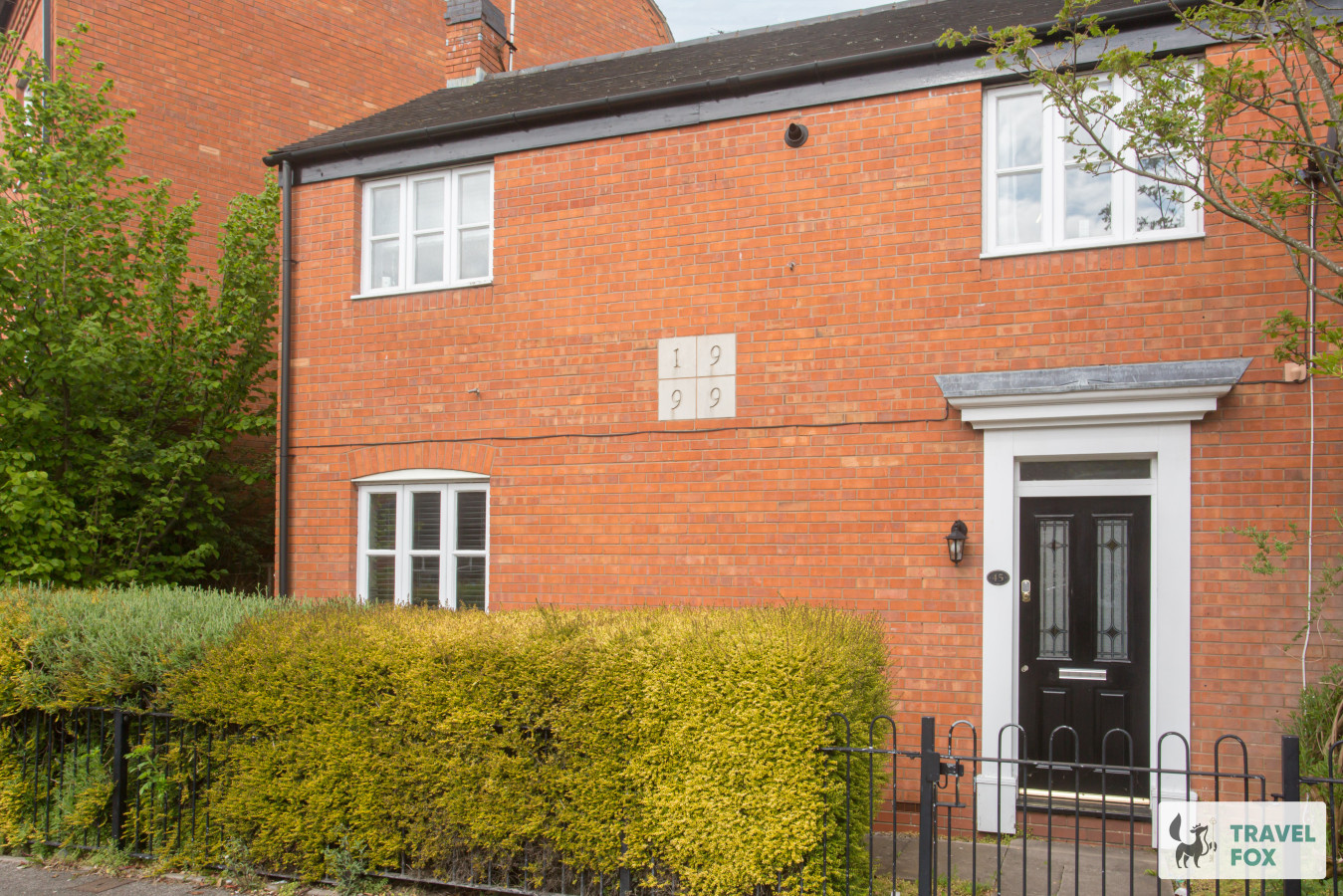
Rocester
Sarah's House: BBQ Parking 10mins To Alton Towers
- Sleeps 8
- 3 bedrooms
For homeowners
Own a holiday home near Uttoxeter?
We manage holiday lets across Staffordshire from 12% commission, charged after cleaning costs, with no lock-in. A co-founder visits before you decide.
Holiday let management in Staffordshire →
A guide with a point of view
Written from research. Edited for real journeys.
Use the Official site links for live practical details, then use this guide for context, ideas and room to explore.
Sources
Every place on this page is checked against a published source. Each entry links the record we used and names who publishes it.
- Redfern's Cottage — A Museum of Uttoxeter Life — redfernscottage.org operator, sector body or destination organisation
- St Mary the Virgin Church — historicengland.org.uk statutory register or public authority record not machine-readable; publisher restricts automated access
- St Mary's Catholic Church — historicengland.org.uk statutory register or public authority record not machine-readable; publisher restricts automated access
- Dove Valley Walk — uttoxetertowncouncil.gov.uk statutory register or public authority
- Exploring Uttoxeter Walk — uttoxetertowncouncil.gov.uk statutory register or public authority
- Uttoxeter Racecourse — uttoxeter-racecourse.co.uk operator, sector body or destination organisation
- Uttoxeter Leisure Centre — everyoneactive.com other published source
- Croxden Abbey — english-heritage.org.uk national body or asset manager
- Denstone Hall Farm Shop & Café — denstonehall.co.uk operator, sector body or destination organisation