
Outlaw history and open country
Ashby Folville
A small Leicestershire village where a traditional free house, a medieval church and the story of the Folville brothers meet gently rolling farmland.
- Best for
- Medieval history, countryside walks and a country pub
- Give it
- A village visit or a longer day on foot
- Don't miss
- The reputed tomb of Sir Eustace Folville
The Fox verdict
A quiet village with an unruly past
Ashby Folville pairs a traditional free house and rolling Melton countryside with the surviving traces of one of medieval England's most notorious families.
Come for the contrast: the Carington Arms still has its skittle alley and welcomes walkers and dogs, while Grade I-listed St Mary the Virgin contains the reputed tomb of Sir Eustace Folville. The Leicestershire Round passes through the area, and the nearby Burrough Hills add an ancient ironstone ridge and hillfort to a walking day.
Where to go
Places in Ashby Folville
Every place below is checked against a published source, listed with what it is and how long to give it.
Local signatures
3 placesThe Carington Arms
A traditional country free house with a separate restaurant and a skittle alley and function room. Its food offering spans a traditional bar menu and a full restaurant menu.
- Visit length
- Editorial estimate: allow around 75 minutes
- Locality
- Ashby Folville
- Access
- Walkers and dogs are welcome, and there is a beer garden to the side.
Leicestershire Round
A long-distance footpath passing through the area, with walking through gently rolling Melton district farmland.
- Visit length
- Editorial estimate: allow around 90 minutes for a local section
- Locality
- Via Ashby Folville and Thorpe Satchville
Folville Cross
A Grade II-listed wayside cross at a crossroads northeast of Ashby Folville. Historic England's GIS record identifies this cross as list entry 1061268.
- Visit length
- Editorial estimate: allow around 15 minutes
- Locality
- Northeast of Ashby Folville
- Access
- The GIS record does not establish public access; check rights of way before approaching the cross.
Walks & outdoors
1 placeBurrough Hills
An ancient ironstone ridge and hillfort, prominent in the Melton district and associated with far-reaching views.
- Visit length
- Editorial estimate: allow around 120 minutes
- Locality
- Burrough on the Hill, east of Ashby Folville
History & heritage
1 placeSt Mary the Virgin
A Grade I-listed church dating from the 13th century and later, with notable medieval stonework and fittings and the reputed tomb of Sir Eustace Folville.
- Visit length
- Editorial estimate: allow around 40 minutes
- Locality
- Ashby Folville
No places match this filter. Choose All places to reset the list.
Three ways to explore Ashby Folville
Signature outings
Pub food and a skittle alley
Settle in at the Carington Arms for its traditional bar menu or full restaurant menu, with the skittle alley capturing the pub's community role.
Eustace Folville's reputed tomb
Visit St Mary the Virgin for its medieval stonework and the reputed tomb of the outlaw lord whose family dominates Ashby Folville's story.
The Burrough Hills
Make the nearby ancient ironstone ridge and hillfort the outdoor focus of a longer walking day, with far-reaching views from a prominent Melton landmark.
The village story
Ashby Folville Village Guide
A village of pub hospitality, country walking and a medieval family that repeatedly crossed the law.
The pub at the heart of the village
The Carington Arms has a skittle alley. This is worth mentioning early because it tells you most of what you need to know about Ashby Folville — it's the kind of village where the pub still has a skittle alley, and where that skittle alley recently hosted a sit-down lunch for fifty-five people, which is quite possibly more than the village's permanent population.
The pub is a free house on the bank of a small stream, southwest of Melton Mowbray. It was originally thatched, rebuilt in 1892, and renamed from The Royal Oak to The Carington Arms three years later, after the Smith-Carington family who took over the estate. CAMRA lists it. Dogs and walkers are welcome. There's a beer garden to the side.
Food and practicalities
The menu is broader than you'd expect. The bar runs from fish and chips and scampi with homemade chips to steak and Stilton pie, and there's a full restaurant menu alongside it. The chicken tikka burger comes with oven-roasted tikka, paprika mayo, and crispy onion bhaji rings in a toasted bun. There's a lamb burger with onion bhaji topping, Punjab chicken, venison that the reviews single out specifically for the head chef's preparation. Curry nights feature butter chicken and aubergine dishes. Sunday lunches run all day. The apple crumble comes with custard, as it should.
Outside the pub, the village is small and quiet. Horse chestnut trees. A stream. No shops — Ashby Folville was merged into the parish of Gaddesby in 1936, and anything you need beyond a pint requires a short drive to Melton Mowbray via the A607. There's no railway station.
Country walking and the medieval church
For walking, the Leicestershire Round long-distance path comes through here and on through Thorpe Satchville. The countryside is gently rolling Melton district farmland, and the Burrough Hills — an ancient ironstone ridge and hillfort — lie about 3.5 miles east of Ashby Folville in a straight line, with a longer journey on the ground and wide views across the county.
St Mary the Virgin is Grade I listed, thirteenth century and later, with notable medieval stonework. It also contains the reputed tomb of Sir Eustace Folville, which is where the village's history takes a turn.
The Folville brothers
The Folvilles were not a respectable family. Eustace de Folville and his brothers ran what amounted to a criminal gang across the East Midlands during the reigns of Edward II and Edward III — theft, kidnap, extortion, murder. Their most notable achievement was the murder of Sir Roger de Beler, a Baron of the Exchequer, in January 1326. The brothers fled to Paris. When Isabella and Mortimer invaded and Edward III took the throne, the Folvilles were pardoned. The Folville Cross stands about a mile northeast of the village.
They flitted in and out of outlawry for years. Scholars at Cambridge have published papers on the family's crimes, and their exploits are thought to have fed into the Robin Hood ballad tradition. Of the brothers, only Richard — who was vicar of Teigh — met a violent end, beheaded in his own churchyard.
From Domesday to the present
The placename itself comes from Fulk de Folville, who held the lordship from at least 1137. By the time of the Domesday survey in 1086, the settlement had twenty-four villagers, three smallholders, two slaves, a priest, forty acres of meadow, and a mill valued at four shillings. The whole place was held by Countess Judith.
Nine centuries on, the pub and church still stand. The Folvilles are in the ground.
Stay around Leicestershire
Make a longer stay of it
Travel Fox holiday homes around Leicestershire, linked directly to their property pages.
Syston
Tilly's Townhouse with Parking
- Sleeps 4
- 2 bedrooms
Leicester
Rachel's House with Parking!
- Sleeps 12
- 4 bedrooms
Leicester
Upperton House - Central 5 Bedroom
- Sleeps 9
- 5 bedrooms
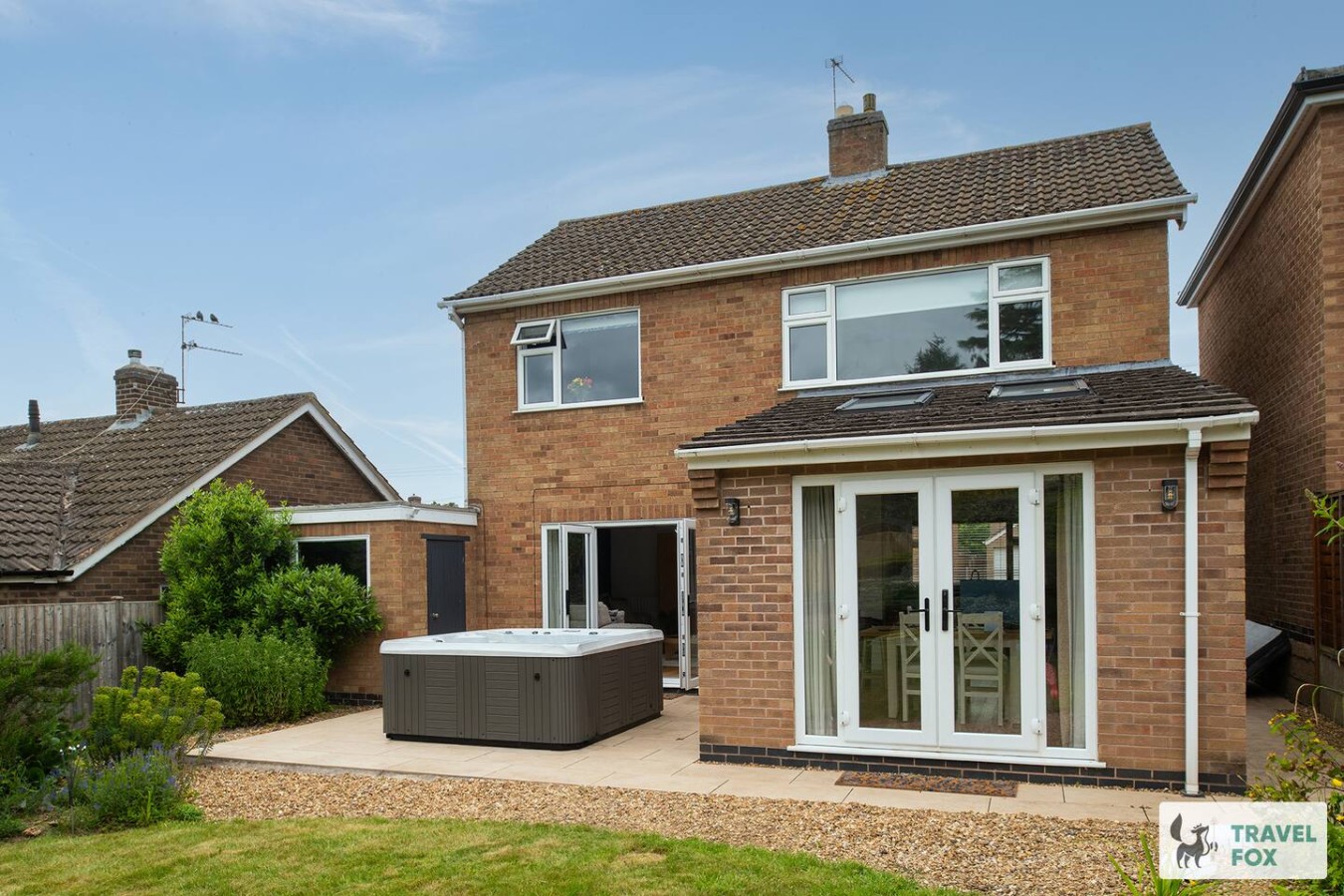
Rearsby
Vanessa's Haven - with hot tub and free parking for 3 cars!!
- Sleeps 5
- 3 bedrooms

Charnwood
UnPoplar House - Free in House Chris
- Sleeps 6
- 3 bedrooms
For homeowners
Own a holiday home near Ashby Folville?
We manage holiday lets across the UK from 12% commission, charged after cleaning costs, with no lock-in. A co-founder visits before you decide.
How our holiday let management works →
A guide with a point of view
Written from research. Edited for real journeys.
Use the Official site links for live practical details, then use this guide for context, ideas and room to explore.
Sources
Every place on this page is checked against a published source. Each entry links the record we used and names who publishes it.
- The Carington Arms — caringtonarms.com operator, sector body or destination organisation
- St Mary the Virgin — historicengland.org.uk statutory register or public authority record not machine-readable; publisher restricts automated access
- Leicestershire Round — visitleicester.info operator, sector body or destination organisation
- Burrough Hills — leicestershire.gov.uk statutory register or public authority record not machine-readable; publisher restricts automated access
- Folville Cross — Historic England NHLE Open Data Hub statutory register or public authority