
History on the moorland edge
Eyam
A gritstone village where church, graves and boundary landmarks make the story of the 1665–66 plague tangible.
- Best for
- Plague history, short walks and village heritage
- Give it
- A full day at an unhurried pace
- Don't miss
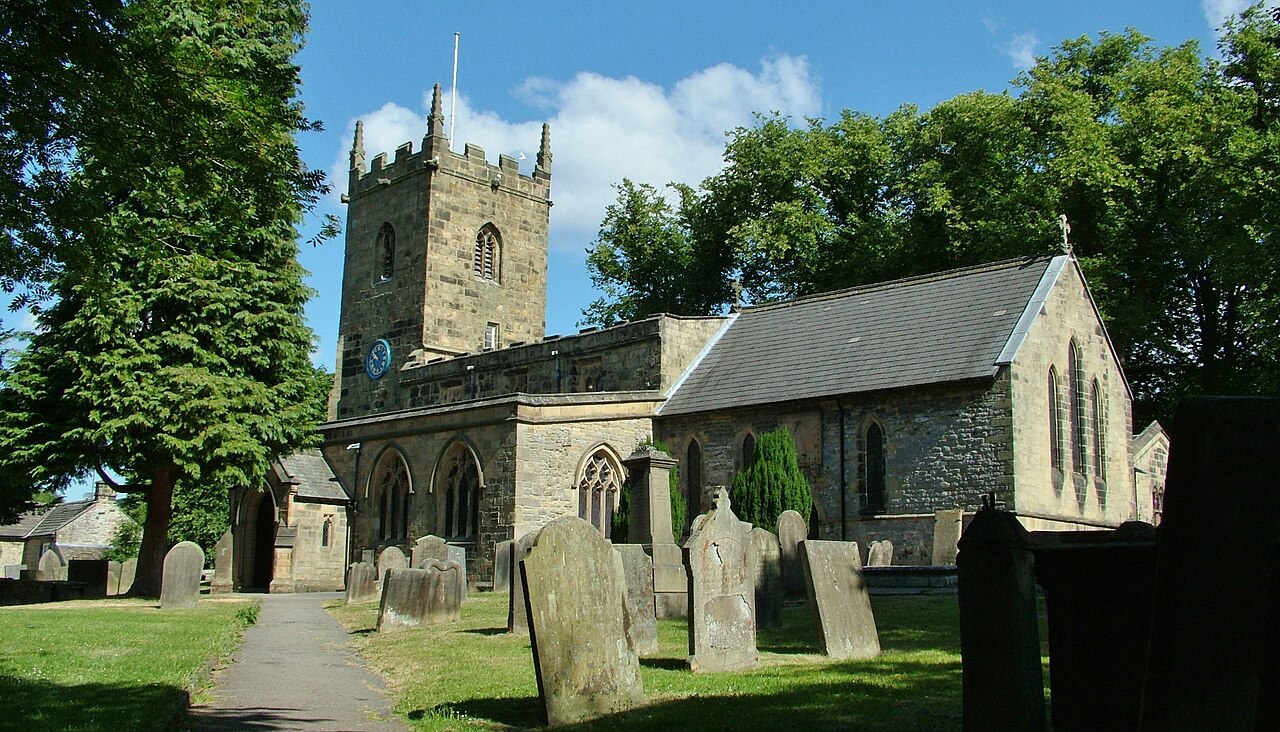
- The Anglo-Saxon cross at St Lawrence's Church
Photo: Peter Evans · CC BY-SA 2.0 · cropped
The Fox verdict
A village whose landscape still tells its story
Eyam brings together an unusually strong group of historic sites, a family-friendly museum and walks to the places where its quarantine was lived.
Start with the museum and St Lawrence's Church, then follow the story outdoors to the Riley Graves, Cucklet Delph, Mompesson's Well and the Boundary Stone. Eyam Hall's courtyard and the Miners Arms give the day a gentler counterpoint.
Your picks, your pace
Make Eyam yours
Choose a mood or build your own list. Your saved stops are an ordering aid, with a direct map route when you are ready.
Local signatures
3 placesEyam Museum
A family-friendly introduction to Eyam's plague story, lead mining and village life.
- Visit length
- Editorial estimate: allow around 60 minutes
- Locality
- opposite the sports field in Eyam
- Access
- Check the museum's current visitor information before travel.
Eyam Hall Craft Centre
A courtyard of independent shops in the Hall's former farm buildings, with homewares, plants, second-hand books and a café, bar and restaurant.
- Visit length
- Editorial estimate: allow around 60 minutes
- Locality
- the former farm buildings at Eyam Hall
- Access
- Check current courtyard and business opening details before travel.
The Miners Arms
Eyam's remaining village pub is a traditional 17th-century country inn serving cooked-to-order food and real ales, with dogs welcomed.
- Visit length
- Editorial estimate: allow around 90 minutes for a meal
- Locality
- Eyam village
- Access
- Check current food service and booking details before travel.
Walks & outdoors
1 place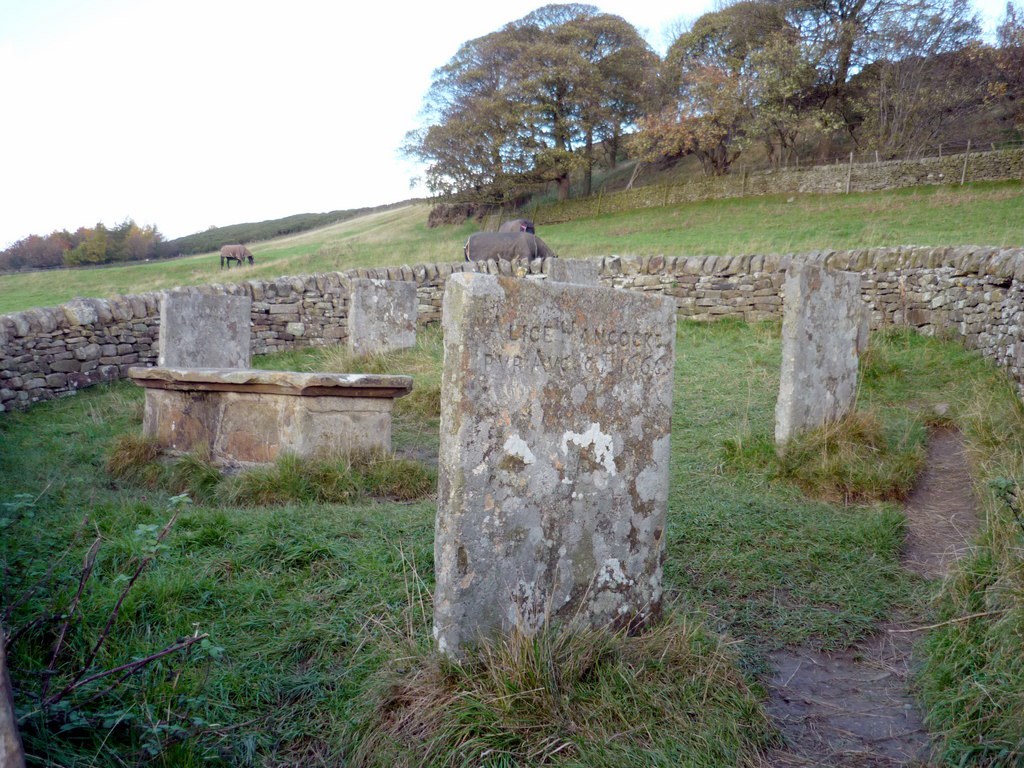
Riley Graves
An isolated, circular-walled burial place where Elizabeth Hancock buried her husband and six children during the plague.
- Visit length
- Editorial estimate: allow around 45 minutes at the graves
- Locality
- a short walk from Eyam village
- Access
- This is an outdoor field-side site; choose footwear for the conditions.
History & heritage
4 places
St Lawrence's Church
A Grade II* church with a notable Anglo-Saxon churchyard cross, the 1665 Mompesson Chair, a plague window and Catherine Mompesson's tomb.
- Visit length
- Editorial estimate: allow around 60 minutes
- Locality
- Eyam village church and churchyard
- Access
- Check current visitor access around services and events.
Mompesson's Well
A quarantine-era supply point where provisions were left and coins were paid through vinegar-filled holes.
- Visit length
- Editorial estimate: allow around 25 minutes at the landmark
- Locality
- on the village edge
- Access
- Visit as an outdoor walking stop and allow for the return to the village.
The Boundary Stone
A village-edge quarantine landmark associated with leaving supplies and paying with coins placed in vinegar.
- Visit length
- Editorial estimate: allow around 25 minutes at the landmark
- Locality
- on the village edge
- Access
- Visit as an outdoor walking stop and allow for the return to the village.
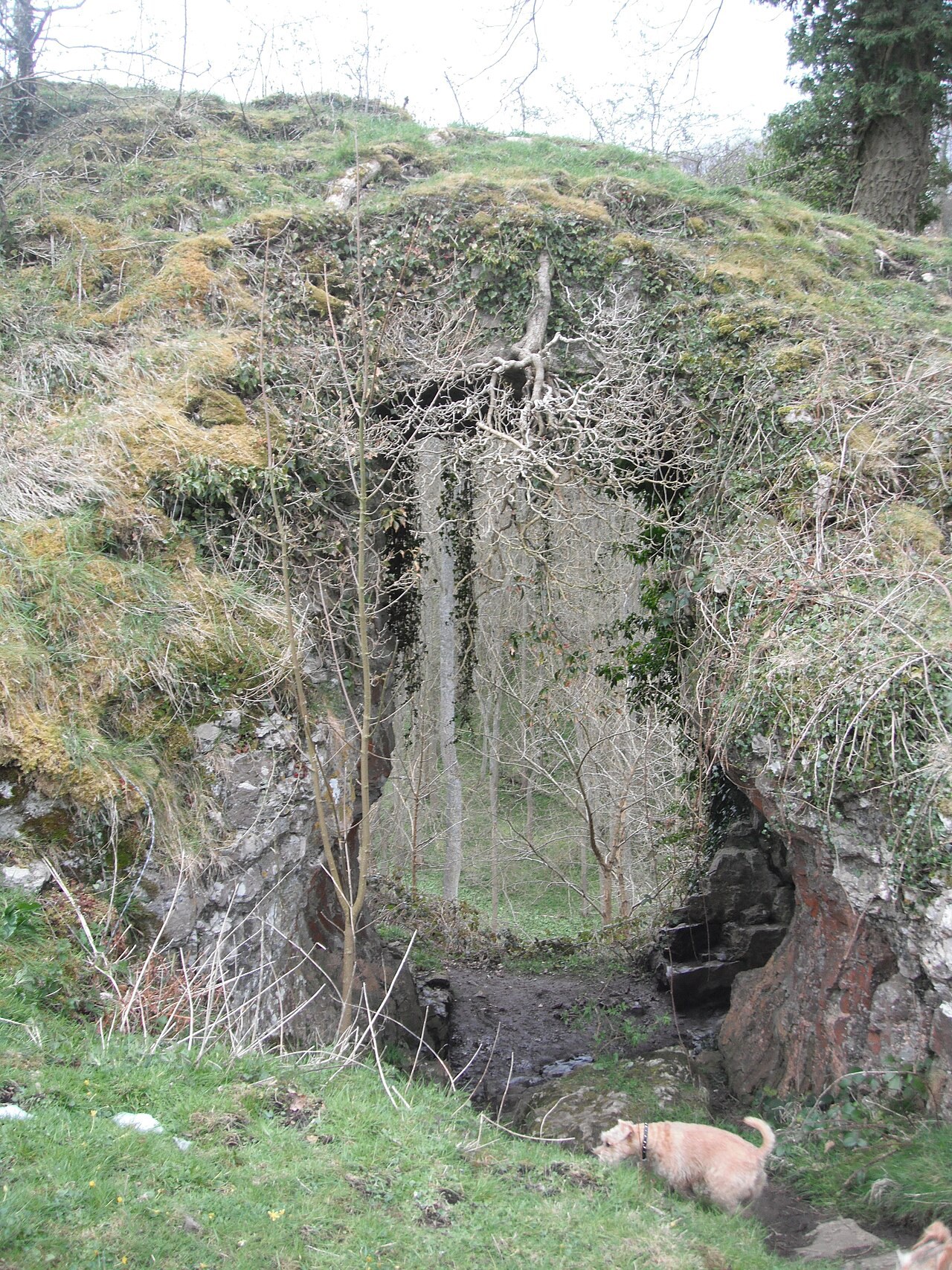
Cucklet Church (Cucklet Delph)
The named natural arch in Cucklet Delph where outdoor church services were held during the plague quarantine.
- Visit length
- Editorial estimate: allow around 30 minutes at the site
- Locality
- a walkable outing from Eyam
- Access
- The pin marks Cucklet Church arch in the Delph; follow the footpath and check ground conditions.
No places match this filter. Choose All places to reset the list.
On the map
Eyam at a glance
Tap a marker to jump to its guide card.
Three ways to explore Eyam
Signature outings
The Saxon Cross
Look closely at the nearly complete Mercian cross in St Lawrence's churchyard before finding the Mompesson Chair and plague window inside.
The Riley Graves
Follow the short walk to the isolated enclosure where Elizabeth Hancock buried her husband and six children.
Services at Cucklet Delph
Stand in the natural amphitheatre where Eyam's church services moved during the plague quarantine.
The village story
Eyam Village Guide
Food, moorland and an extraordinary sequence of plague landmarks shape this gritstone Peak District village.
Inn, Landscape and Village Setting
The Miners Arms was built in 1630, thirty-five years before the plague arrived, and it is the only pub left in the village. It was the Kings Head until 1764, when it was renamed after the lead- and fluorspar-mine owners who held their Barmote Court meetings here — the mining liberty of Eyam and Stoney Middleton still has its own court, twelve jurymen and a Barmaster, and this is where they used to meet. The landlord is Ian Jackson, locally born; the kitchen is run by chefs Rachel Nuttall and Eddie Abbott under manager Ruth Nuttall. The food leans French and Mediterranean with a lot of fish — tuna steak on ratatouille, herb-crusted salmon with sweet chilli — alongside hunters chicken, lamb tagine, steak and ale pie, and Bakewell pudding served hot with custard and ice cream. There are three well-kept real ales, usually one from a local brewery. Dogs are welcome in the bar and in the B&B rooms. The pub is reputedly haunted, and one TripAdvisor reviewer decided the matter for good: "The pub may be haunted but the atmosphere is so friendly they can only be good spirits."
Eyam is a gritstone village strung along a shelf on the north side of Middleton Dale, about 900 feet up, where the White Peak limestone meets the Dark Peak grit. Moorland rises to the north — Eyam Moor, Sir William Hill — and the limestone dales fall away to the south toward Stoney Middleton. The lanes are narrow and lined with stone cottages, and from the tops you can see clear across to Hathersage, Stanage Edge and Win Hill. It is a small place given largely over to visitors now, which is a change from what it once was.
Lost Inns and Eyam Hall
In 1842 the village historian William Wood counted five inns. The Miners Arms is the only survivor. The Bold Rodney, the Rose and Crown, the King's Arms and the old Eyam Bull's Head have all closed.
Up at Eyam Hall, the former farm buildings have been turned into a courtyard of independent shops that stays open all year except January.
Foolow and Eyam Walks
The Bull's Head in Foolow is about 1.8 miles west of Eyam in a straight line; the road journey is longer. The Bull's Head there dates to the mid-18th century and was once one of five pubs in that hamlet too — it is the last one standing. Nick and Jemma Beagrie took it over in 2023; the head chef is Blake Arnold, and the menu runs to celeriac and white truffle soup, slow-braised Derbyshire pork belly, chicken and smoked ham hock pie, and sticky ginger pudding. The house beer, Bull's Head Bitter, is brewed by Peak Ales over at Bakewell, and there is a pie and a pint for £21.95. Dogs are welcome at the bar, and the Stable Room is a dog-friendly space with water put down.
The walking starts at the front door. The gentlest outing is the Riley Graves circular, a short walk to an isolated, circular-walled plot where Elizabeth Hancock buried her husband and six children over eight days one summer, all of them dead of plague, all of them buried by her own hands. The National Trust maintains it. For a fuller day, the Eyam and Sir William Hill circular runs about seven miles with 450 metres of climbing, passing the Riley Graves before dropping into Stoney Middleton, and a shorter moorland loop has wide views north over the gritstone edges. The Eyam Plague Trail, six and a half miles, links Mompesson's Well, the Boundary Stone, the Riley Graves and Cucklet Delph — the four places where the quarantine actually happened.
Wet Withens and Family Days
About 1.7 miles from Eyam in a straight line, with a longer journey on foot, Wet Withens is a Bronze Age embanked stone circle over thirty metres across — the largest of its kind in Derbyshire. The Romans mined lead up here too, and coins bearing the names of many emperors have been turned up on the moor over the years.
Families do well for a week. The Eyam Museum, opposite the sports field, tells the story of the plague, the lead mining and the silk weaving, plus a room tracking the village men who left to fight in the First World War; admission is £6 for adults, £4 for children, £16 for a family. The ancient stocks still stand on Church Street. And at the end of August, during Wakes Week, three of the village wells are dressed with petal artwork and the whole thing builds to the Carnival, which is the Sports Association's biggest fundraiser of the year.
Church, Plague and Getting Here
St Lawrence's Church is worth an hour. The churchyard cross is Anglo-Saxon, Mercian work of the 8th or 9th century, one of the most complete in the country — about eight feet high now, with angels holding sceptres carved on the head and a Virgin and Child on the shaft. On the south wall of the chancel there is a large sundial of 1775 that marks not just the hours but the months, the days, the signs of the zodiac and the direction of distant places including Mecca, Tenerife and Quebec, signed by the churchwardens Willi Lee and Thomas Froggatt. Inside is the Mompesson Chair, dated 1665, and in the north aisle a stained-glass window telling the story of the outbreak. Catherine Mompesson's tomb is in the churchyard.
Her story is the one people come for. In late August 1665 a bundle of damp cloth arrived from London for the tailor Alexander Hadfield. His assistant, George Viccars, opened it and hung it by the fire to dry, and he was the first to die, on the 6th of September. As the deaths mounted, the young rector William Mompesson, then twenty-eight, and the ejected Puritan minister Thomas Stanley persuaded the village to seal itself off — no one to enter, no one to leave — so the plague would not spread to the surrounding communities. Services were moved outdoors to the natural amphitheatre of Cucklet Delph. Families buried their own dead. Food was left at boundary stones and at Mompesson's Well, and coins were paid into water and vinegar to disinfect them. Of roughly 350 people, an estimated 260 died over fourteen months; the parish records name 273. The plague did not spread beyond Eyam. Catherine Mompesson, who had nursed the dying, died on the 25th of August 1666, aged twenty-seven. Her husband survived. Since the bicentenary in 1866 there has been a Plague Sunday service at Cucklet Delph on the last Sunday of August, which is also Wakes Week.
None of this troubled the Domesday surveyors, who got here in 1086 and valued the whole place at one pound — exactly what it had been worth twenty years earlier, before any of it happened. The rectory where the poet Anna Seward was born in 1742 no longer stands; it was rebuilt in 1960. The village was once styled "the Athens of the Peak" for the four poets who lived here, which is a considerable claim for a village of stone cottages on a moorland shelf.
Getting here is straightforward. Eyam sits just north of the A623 through Middleton Dale, five miles from Bakewell and about fifteen from Sheffield. The nearest stations are Grindleford, about 2.5 miles from Eyam in a straight line, and Hathersage, about 3.1 miles away; both are on the Hope Valley line, and road journeys are longer. The 65 bus runs daily between Sheffield and Buxton through the village. Castleton is about 5.9 miles from Eyam in a straight line, with a longer road journey. Chatsworth House is about 4.7 miles away and Hathersage Swimming Pool about 3.3 miles away, both measured in a straight line; road journeys are longer.
Stay around Peak District
Make a longer stay of it
Travel Fox holiday homes around Peak District, linked directly to their property pages.
Leek
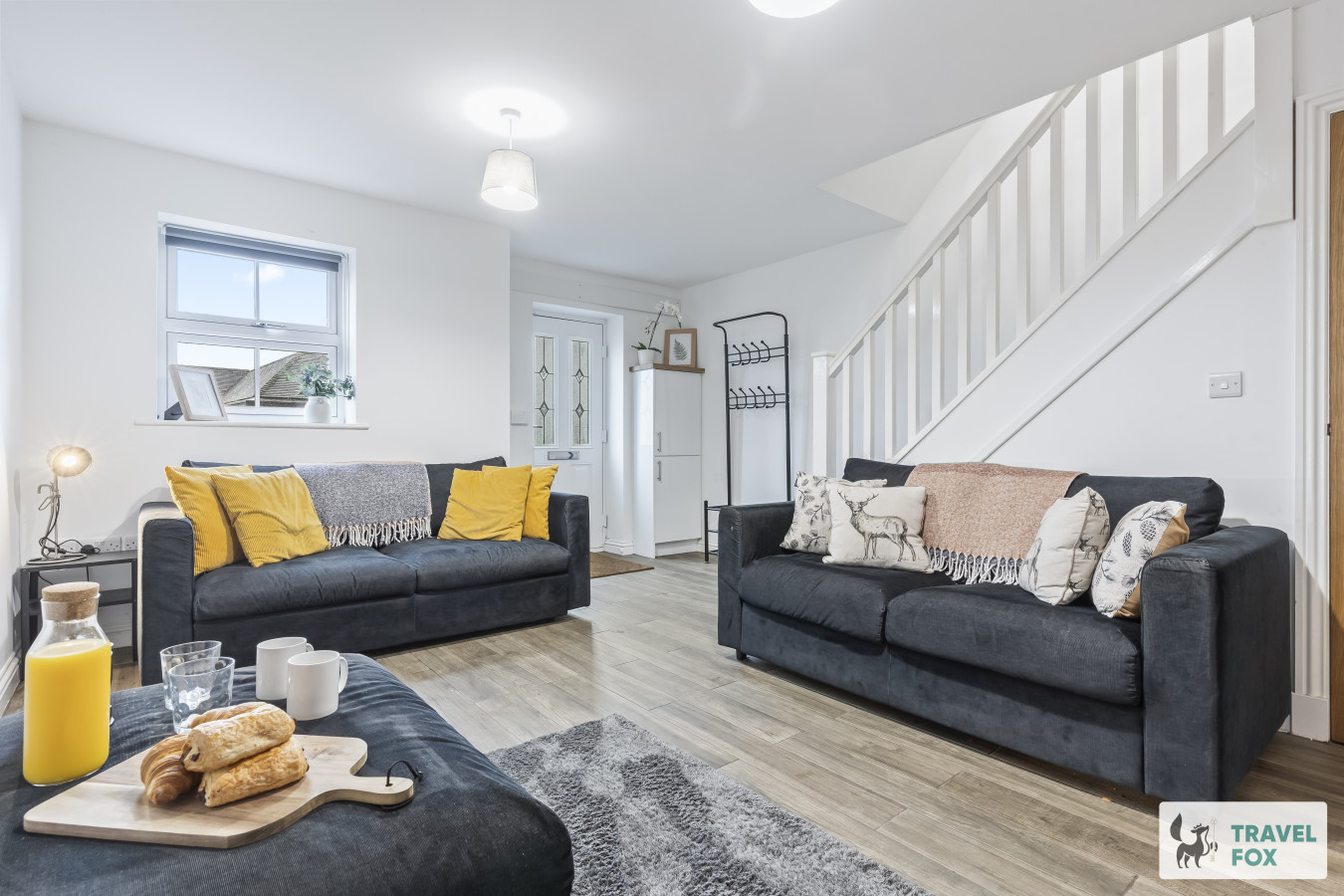
Lisa's House Leek: 20mins Alton Towers
- Sleeps 6
- 2 bedrooms
Leek
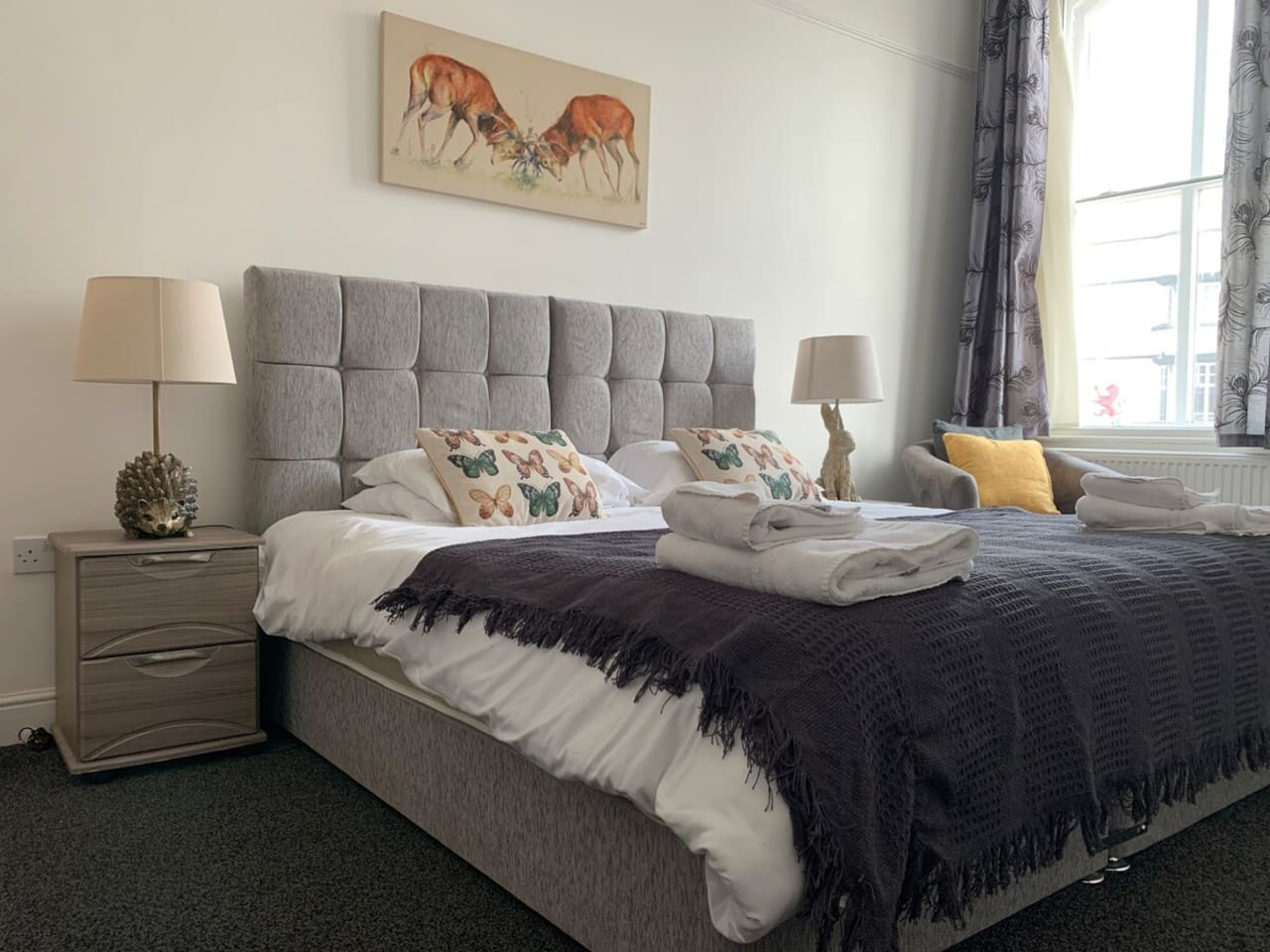
The Rudyard Suite - Large 1 Bed Apartment
- Sleeps 5
- 1 bedroom
Leek
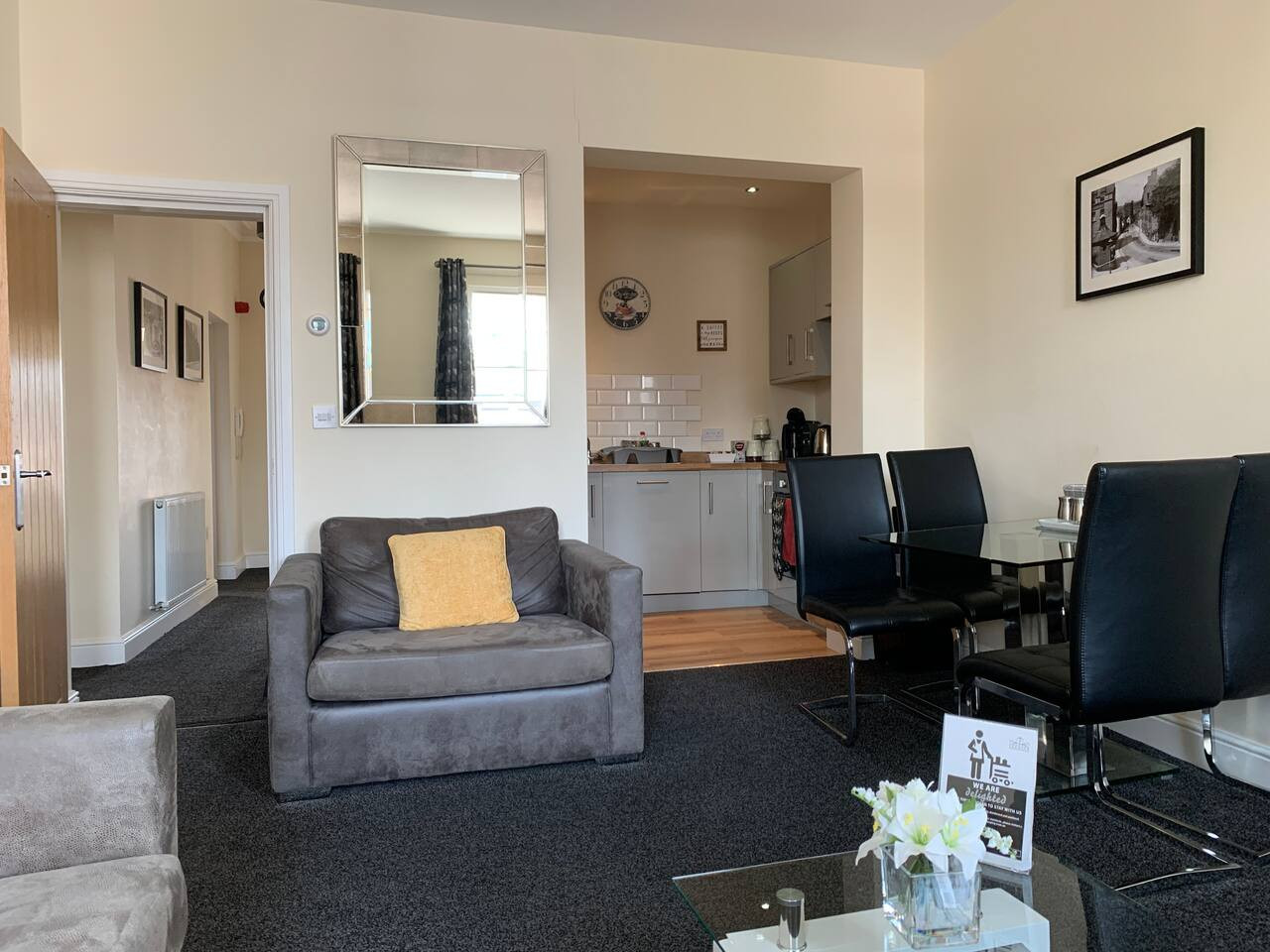
The Roaches Suite - Large 2 Bedroom Apartment
- Sleeps 7
- 2 bedrooms
Leek
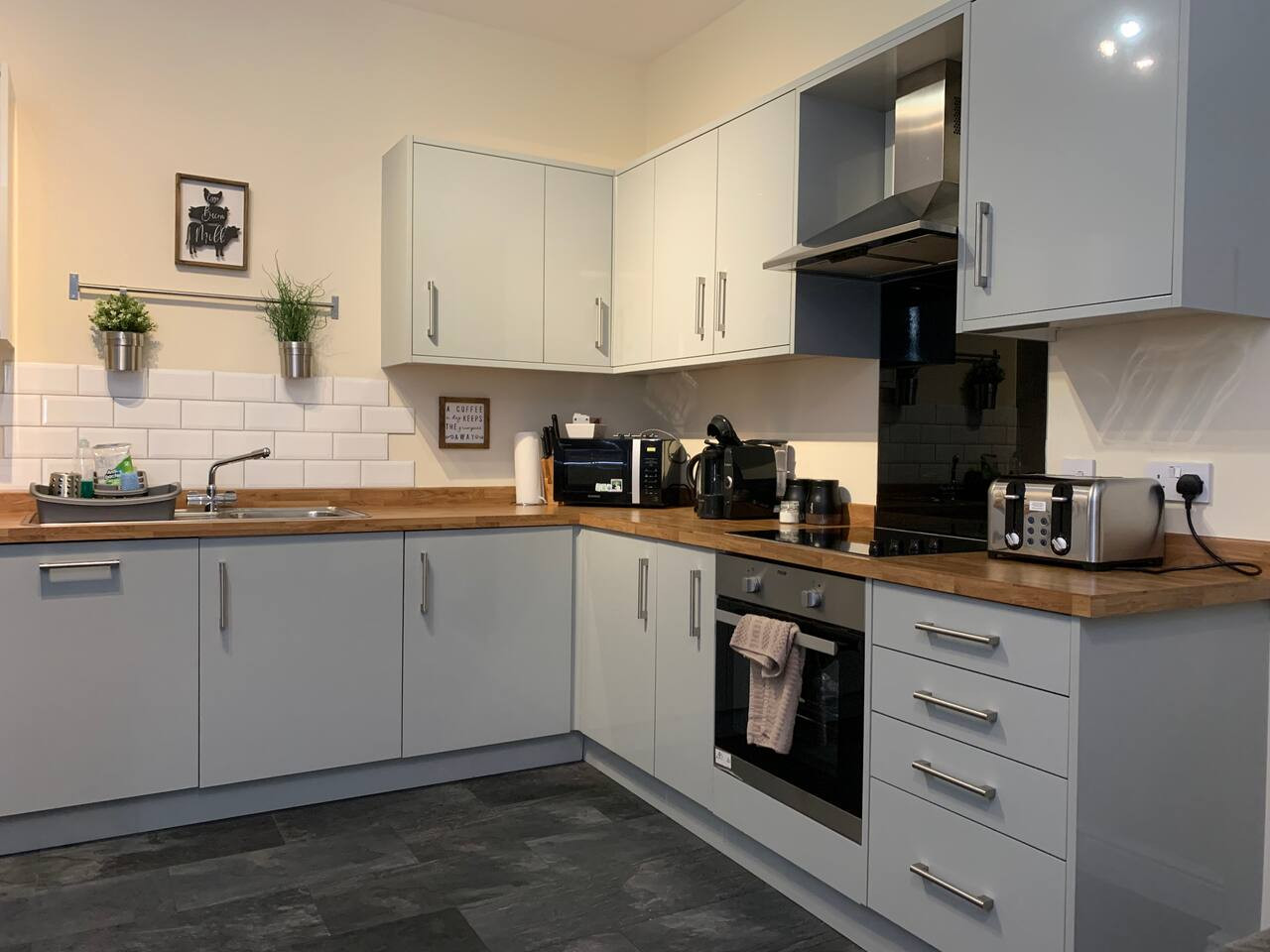
The Moorlands Suite - 1 Bed Apartment
- Sleeps 4
- 1 bedroom
Leek
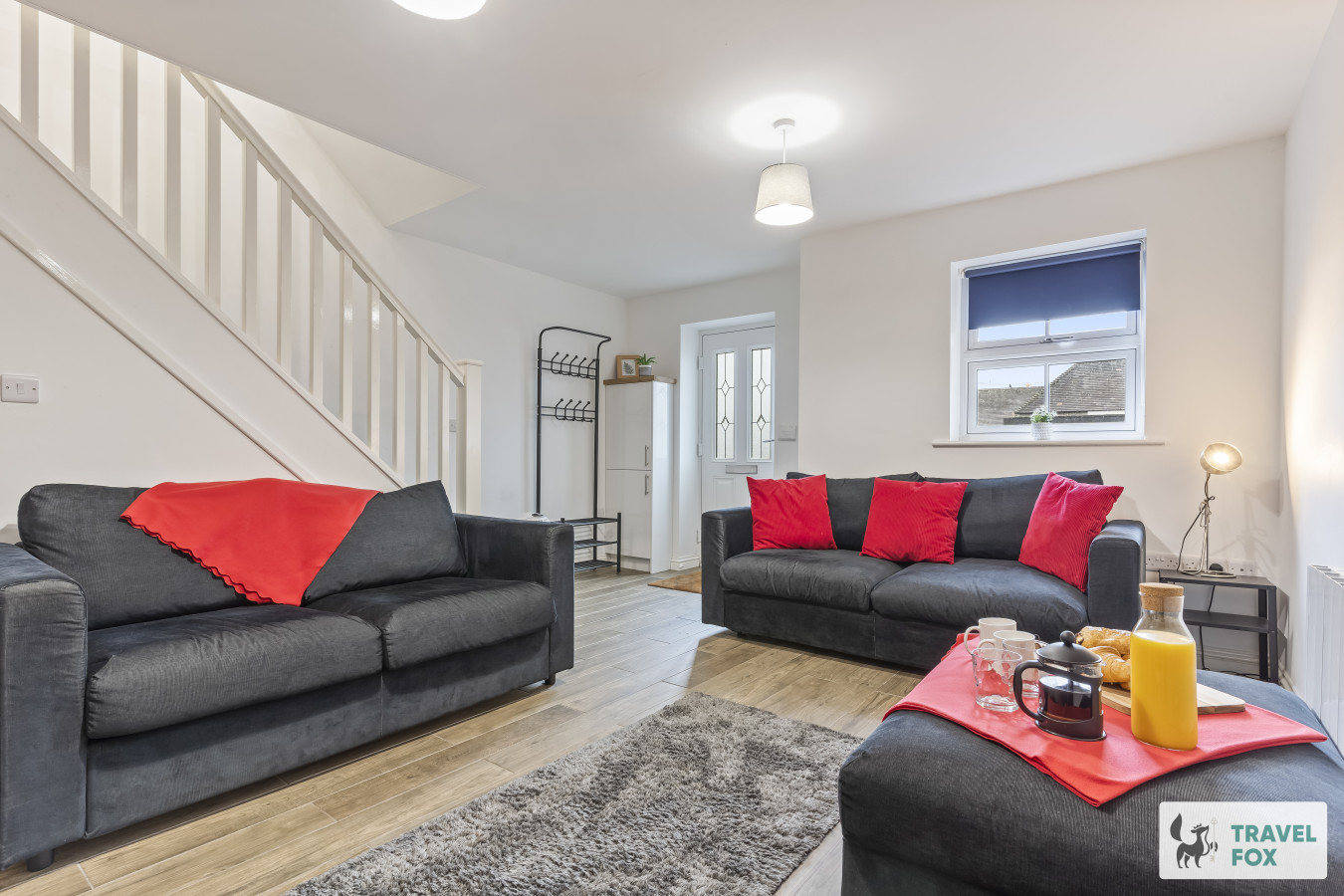
Amy's House: 20mins Alton Towers
- Sleeps 6
- 2 bedrooms
For homeowners
Own a holiday home near Eyam?
We manage holiday lets across the Peak District from 12% commission, charged after cleaning costs, with no lock-in. A co-founder visits before you decide.
Holiday let management in the Peak District →
A guide with a point of view
Written from research. Edited for real journeys.
Use the Official site links for live practical details, then use this guide for context, ideas and room to explore.
Photography credits & licences
Third-party photographs are credited to their named creators and reused under the linked Creative Commons licence or public-domain dedication. Travel Fox stores an optimised local copy; the file-specific changes and any browser-applied display crop are disclosed below. Reused photographs link both to the Wikimedia Commons source record and to the declared source image; Travel Fox's own photographs carry no such record and are marked as ours. These image licences do not cover Travel Fox text, branding or page design.
- File:Eyam. St. Lawrence's Church - geograph.org.uk - 5835550.jpg — photograph by Peter Evans; Eyam. St. Lawrence's Church by Peter Evans. Source record on Wikimedia Commons. Declared source image. Licence: CC BY-SA 2.0. File changes: Downloaded from Wikimedia Commons, resized to a maximum 1920px edge and encoded as an optimised JPEG. Display changes: Displayed with responsive CSS cropping.
- File:The Riley Graves, Eyam - geograph.org.uk - 2132042.jpg — photograph by Graham Hogg; The Riley Graves, Eyam by Graham Hogg. Source record on Wikimedia Commons. Declared source image. Licence: CC BY-SA 2.0. File changes: Downloaded from Wikimedia Commons, resized to a maximum 1920px edge and encoded as an optimised JPEG. Display changes: Displayed with responsive CSS cropping.
- File:Cucklet Church, Eyam Delf - geograph.org.uk - 2989198.jpg — photograph by Eileen Littler; Cucklet Church, Eyam Delf by Eileen Littler. Source record on Wikimedia Commons. Declared source image. Licence: CC BY-SA 2.0. File changes: Downloaded from Wikimedia Commons, resized to a maximum 1920px edge and encoded as an optimised JPEG. Display changes: Displayed with responsive CSS cropping.